
I’m All Lost In, #130: A 1960s art film; another Tsvetaeva poem; flossing and gummies; plus the week in X > Y, including tax breaks for developers > fees on developers.
I’m All Lost In …
the three things I’m obsessing about THIS week …
#130
The Week in X > (is greater than) Y
Tax Breaks for Developers > Fees on Developers Urbanist Mayor Katie Wilson is throwing out her slow-growth predecessor’s stubborn “I’m-from-here” comp plan so she can build “taller, denser, faster” instead. It’s why I voted for her. [I’m All Lost In, #107, 11/1/25.]
This renewed push for density and affordable housing gives me an opportunity to promote a policy I think should be front and center to any housing plan. I’ve editorialized for the concept many times on PubliCola: Funded inclusionary zoning, or FIZ. The idea pairs inclusionary zoning (the requirement that developers include affordable housing units in their developments) with the tax-break-incentive approach that rewards developers if they choose to build affordable housing.
Erica has a TLDR summary of the concept on PubliCola this week in her related article about a group of developers who are calling for a break from the fees they pay for affordable housing. Developers are currently penalized when they build housing; you’d think they were synthesizing opioids.
Erica writes:
The concept [FIZ] flips the script on development, treating density (i.e. apartments, i.e. renters) as a good thing while also ensuring that affordable housing gets built. Developers aren’t charitable organizations—if a project doesn’t make sense to them, they won’t build it—so instead of penalizing new housing with fees, cities like Portland are trying incentives to build new housing at all income levels.
Public Tennis Courts > Private Tennis Clubs Too good to be true, I kept warning myself after a friend of a friend told me one of his co-workers had recently joined a tennis club. Evidently, the colleague now has easy access to courts, tennis partners, leagues, and lessons.
Finding a regular tennis game and partner in Seattle is a tough draw. People are reluctant to commit to anything. And it rains so much. Would the Sand Point Tennis Center be a game changer? The $200 membership fee wasn’t unreasonable.
But I was right. It was too good to be true. The membership doesn’t get you anything other than more fees, including $54 to reserve a court and another $15 if you want to invite a non-member to play. By comparison: It costs $16 to reserve a court at a city park. Which I ended up doing in protest this week.
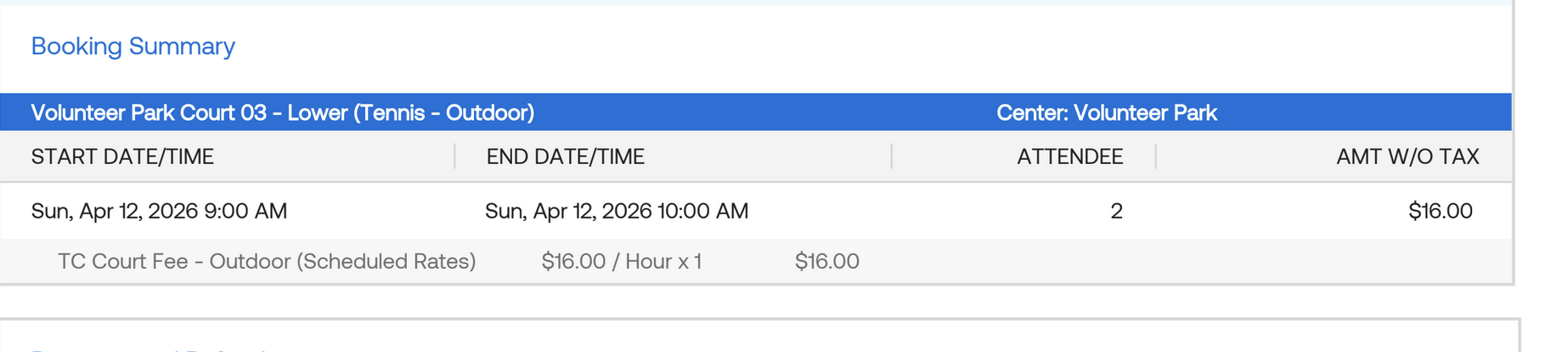
Also: The Sand Point Tennis Center’s website is insistently evasive. I got lost in the circuitous links, bewildering guidelines, and the unfriendly, gatekeeping jargon.
Individuals who wish to play on a team can submit a request to be added to the waiting list at your NTRP. When a volunteer captain needs another player, the TCSP Team Coordinator will pass on wait list player information.
Meanwhile, as far as I could tell, their flex leagues aren’t coed. This undermined the overriding reason for wanting to join in the first place.
My unforced error of the week? Unwittingly putting $200 on my credit card to become a TCSP member before I realized how absurd the place is.
Talking to Strangers > Remaining Aloof File this under city serendipity. I went to an art film classic at Northwest Film Forum on Wednesday night (more on that in a moment). As we were waiting for the film to start, the young, bearded guy sitting in the row behind me noted—amiably as opposed to unctuously—that one of the slides cycling through onscreen was an ad for a film his friend had made with Charli XCX. I set aside any grumpiness that a boring and braggadocious statement like that might prompt, and I took up the overture. I started chatting with him.
Let’s join the conversation midstream:
Him: I’m visiting from Boise.
Me (on a whim, but kind of figuring): Do you know Glenn ___? Him: I had dinner with him last night.
Me: Ah, yes. I was supposed to be there. Dinner with Glenn and his friend C___. But I couldn’t make it.
We immediately took a selfie from our movie theater seats and texted it to Glenn.
It turned out this fellow from Boise was a filmmaker himself and was doing reconnaissance on the Seattle art scene. He wanted to see if he should move here. He craves a collaborative culture where other people are looking to team up on projects. After living in Boise for 10 years, he’s decided that’s not the case there.
After the movie, he and I and XDX strolled through the Drag. XDX had joined me for the movie. She filled him in on the local creative technology and immersive art scene; XDX designs generative light shows [I’m All Lost In, #120, 2/1/26.] And I told him about my writing, including my past life as a news editor when I’d edited local filmmaker Charles Mudede’s crime blotter column, the basis for Charles’ notable film Police Beat. Charles is also Seattle’s all-star public intellectual [I’m All Lost In, #54, 10/25/24.]
Him: I saw a lecture by Charles before coming to the movie.
This Week’s Obsessions
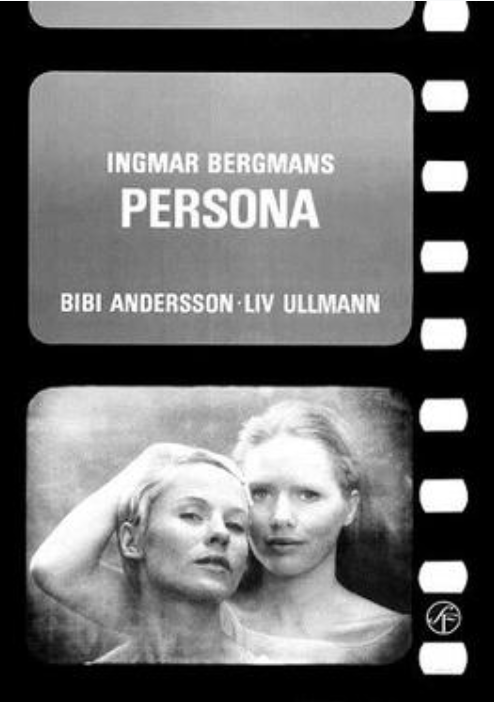
1966. Original poster.
1) Ingmar Bergman’s Persona at Northwest Film Forum
The movie I saw on Wednesday evening was Ingmar Bergman’s Persona. NWFF was screening Persona to celebrate the movie’s 60th anniversary.
At times psychedelic, at others ethereal, and mostly stark, Persona is a tense meditation on self reflection dramatized symbolically enough through the story of an actress in the throes of a personality crisis about her role in the world. Bergman echoes this universal narrative with hyper-meta touches of self-conscious cinema. This includes sampling spooky footage from old movies. And more dramatically, showing the machinery of film itself both functioning and going awry. Movie projector lamps. Film reels. And faltering, frozen, and eventually disintegrating frames.
I’m most interested in Persona as an instructive artifact of 1966, a monumental jump-cut year that—just like the aforementioned frames in this film itself—ripped the 20th century apart mid-stream and then continues on, .
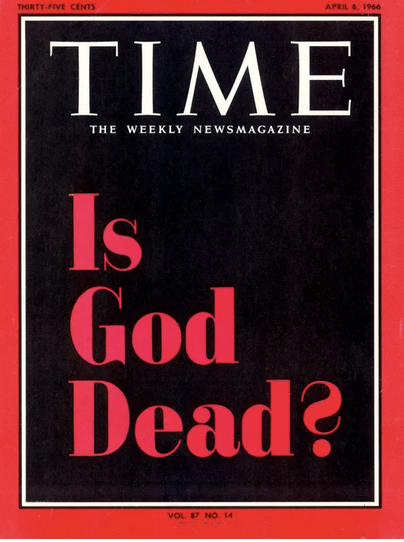
Zeitgeist Time cover. 1966
1966: In June, the civil rights movement flares into radical politics as militant spokesman Stokely Carmichael coins the phrase “Black Power.” The Velvet Underground are in the studio in the spring recording their seismic experimental debut LP. Second Wave feminists founded the women’s rights organization NOW. Teenagers riot on Sunset Strip against curfews. (There’s a poem in my first collection about this historic night of youth-movement consciousness.)
… Coltrane’s Meditations. Revolver. Pet Sounds. The Byrds’ 5D. Steve Reich releases Come Out, his groundbreaking exercise in sampling, looping, and mixing. Ralph Nader and the corporate accountability movement come to the fore with Nader’s investigative expose Unsafe at Any Speed. LSD is criminalized, ironically marking the emergent power of the counter culture. Three years before Stonewall, queers riot against police brutality at Compton’s Cafeteria. Susan Sontag publishes her critical theory masterpiece Against Interpretation.
And, along with two other groundbreaking art film’s—Jean-Luc Godard’s Masculin Fémininand Michelangelo Antonioni’s Blowup—Bergman releases his shattering film Persona.
Wonderfully, the theater was packed for this iconic movie. A good sign for Seattle on a Wednesday night.
Bad sign, though: There weren’t many places to get food afterward. Too bad the Boise filmmaker was looking for a late dinner. There were only a couple of places I could point him to at the witching hour of 9:30.
2) Russian Poet Marina Tsvetaeva, Week No. 2
For the second week in a row, the Poet Laureate of Night, early 20th century Russian poet Marina Tsvetaeva [I’m All Lost In, #129, 4/4/26] is on my list of obsessions.
Last week I was savoring Tsvetaeva’s odes to the feeling of hope that midnight stirs in the human heart. This week I’m reveling in her odes to the hope that despair stirs in the human heart.
Casting the ruthless desert as the personification of love, her 1923 poem Sahara shimmers: “we entered one another’s eyes/as if they were oases.” But reality sets in two stanzas later: “Don’t search for him./ All deserts forget the thousands of/those who sleep in them.”
There’s no evaporating Tsvetaeva’s soul, though. Even the “stifling” desert’s “reliable grave” cannot erase the “charming tremor” of the human spirit—and body. Tsvetaeva concludes: “the Sahara in one/seething collapse will/cover you also with sand like sprinkled/foam. And be your hill!”
Exclamation mark, hers.
3) Flossing
This is another repeat from last week; this one having transitioned into a fixation after first being on my X > Y list (flossing with a tooth-brush attachment > than flossing with a floss pick or a strand of floss.)
All I have to add to my earlier summary is this: Floss in the shower. Perhaps while the Anastasia Potapova v. Lilly Tagger match plays in the background on the Tennis Channel.
P.s. I could have promoted another recent X > Y item to an obsession this week: Gummies > Booze [I’m All Lost In, #125, 3/9/26.]
As I approach 50 days without drinking alcohol, gummies have taken whiskey’s spot on my regular Friday evening agenda. This past weekend’s highlight: Standing in front of Safeway’s spice shelf for 15 minutes late Friday.