
I’m All Lost In, #125: My translucent backpack; Aria Aber’s debut novel; Dave’s WTA overrated & underrated spreadsheet.
I’m All Lost In…
the 3 things I’m obsessing about THIS week
#125
First: The week in X > (is greater than) Y.
Gummies > Booze I marked two weeks of no booze by chuckling to myself all night on the couch at a Coachella Valley Airbnb in Indio, CA.
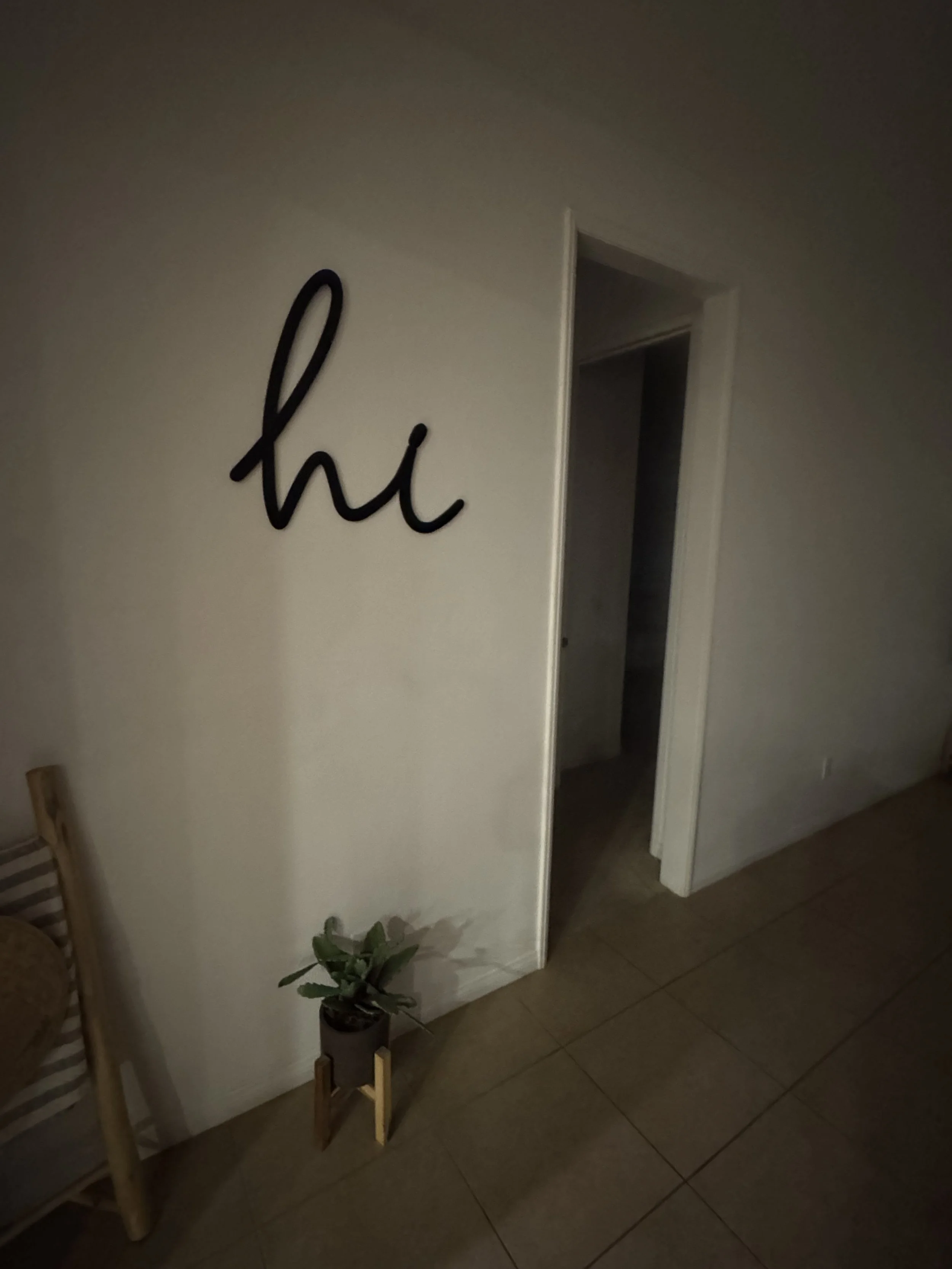
Four nights at a Coachella Valley Airbnb, 3/4- 3/7/26.
New Coffee Shops Off the Drag > New Coffees Shops On the Drag I’ve already declared the obvious: Late night coffee shops are better than your typical Seattle coffee shop. Those close at 6 pm [I‘m All Lost In, #119, 1/25/26.]
Time to add another coffee shop metric to my public policy agenda: Site the new shops on residential streets away from the main drag. As Seattle’s population continues to grow and diversify, and new cafes open: Let them be like Mintish!
Mintish is a new spot tucked away on Harvard Ave. E. one street west of the Broadway commercial strip. It’s on the ground floor of a new housing complex on a block with other low-slung apartment buildings and the neighborhood library.
With its date cakes, pistachio cookies, and Turkish coffee, plus its halloumi, olive, tomato, cucumber, and mint sandwiches, Mintish strikes a legit Levant mood. Drawing a sharp contrast to our country’s current juvenile turn to nativism, Mintish echoes the Yemeni coffeehouse wave that’s bringing late-night coffee culture to America [I’m All Lost In, #74, 3/15/25.]
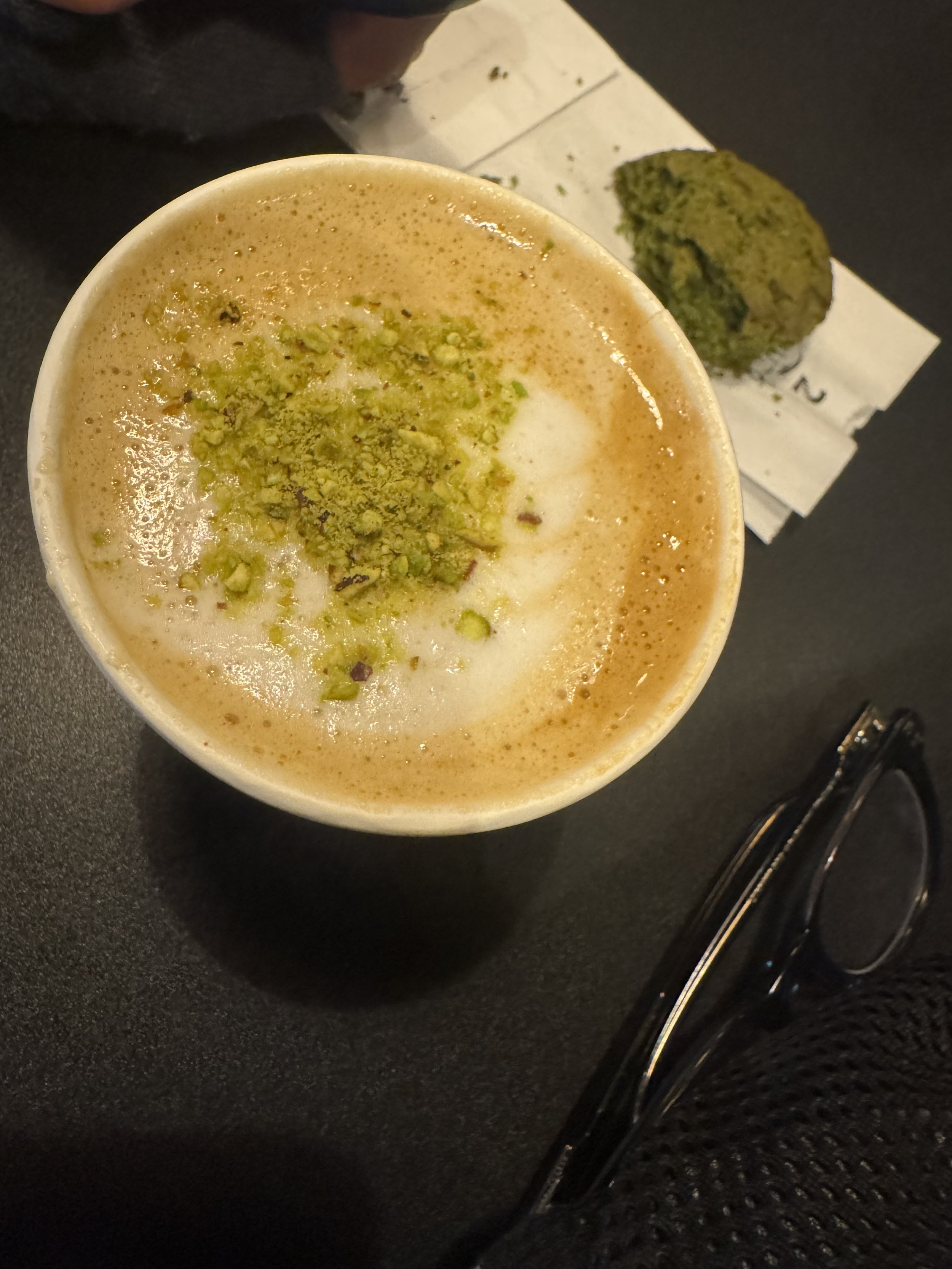
3/1/26 at Mintish
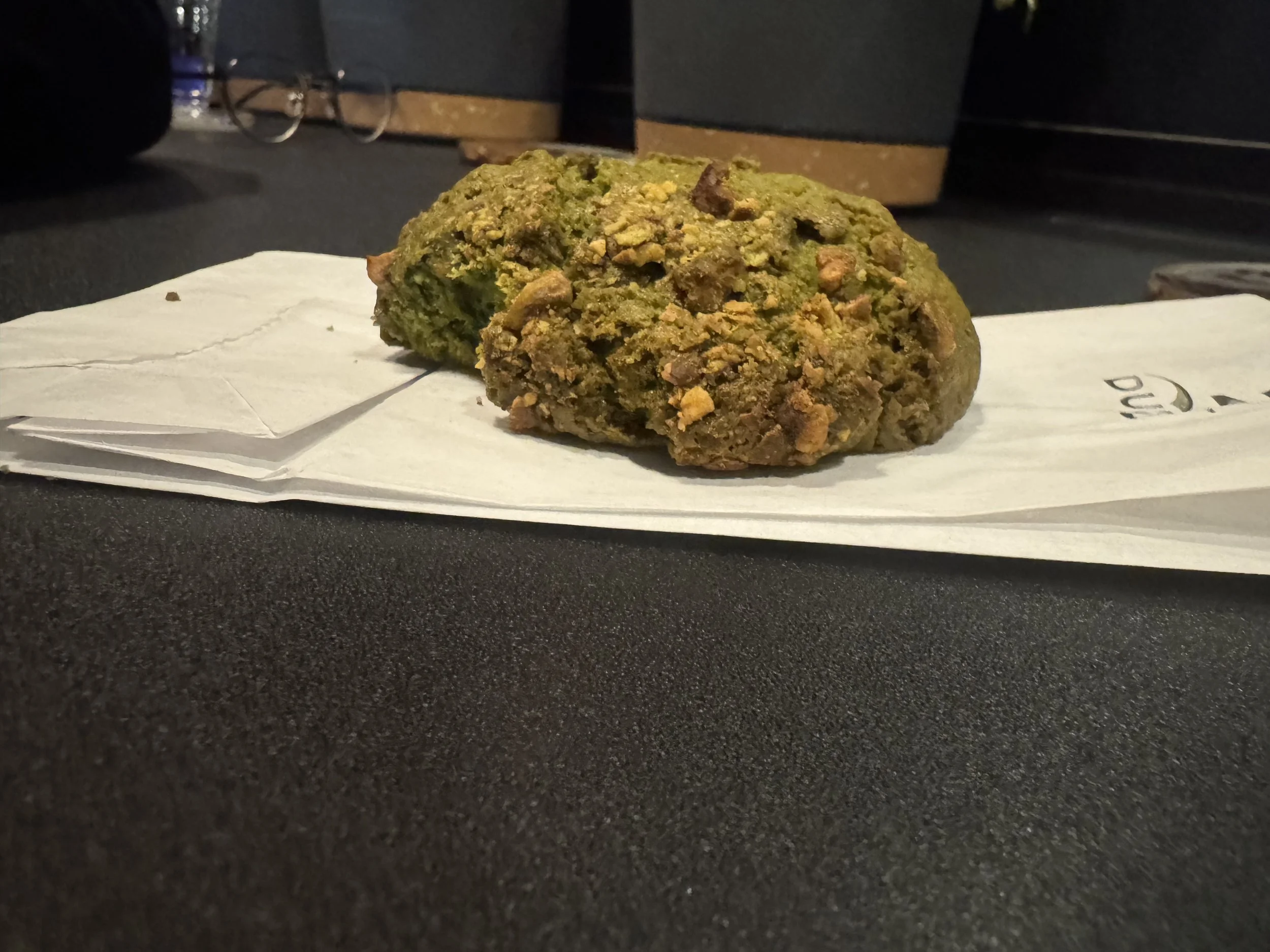
Indeed, just like the Yemeni coffee chain (Qahwah House) featured in the NYT link above, Mintish experimented with deep late-night hours during Ramadan for the daily break fast. I landed there on a recent Friday night simply because it was one of the few casual places still open at 11 pm as I was coming home from a show. I must have been grinning ear to ear when I ordered my pistachio almond milk latte because the barista suddenly started smiling at me. I proceeded to say how excellent I thought it was to have a place to go to so late.
It was packed.
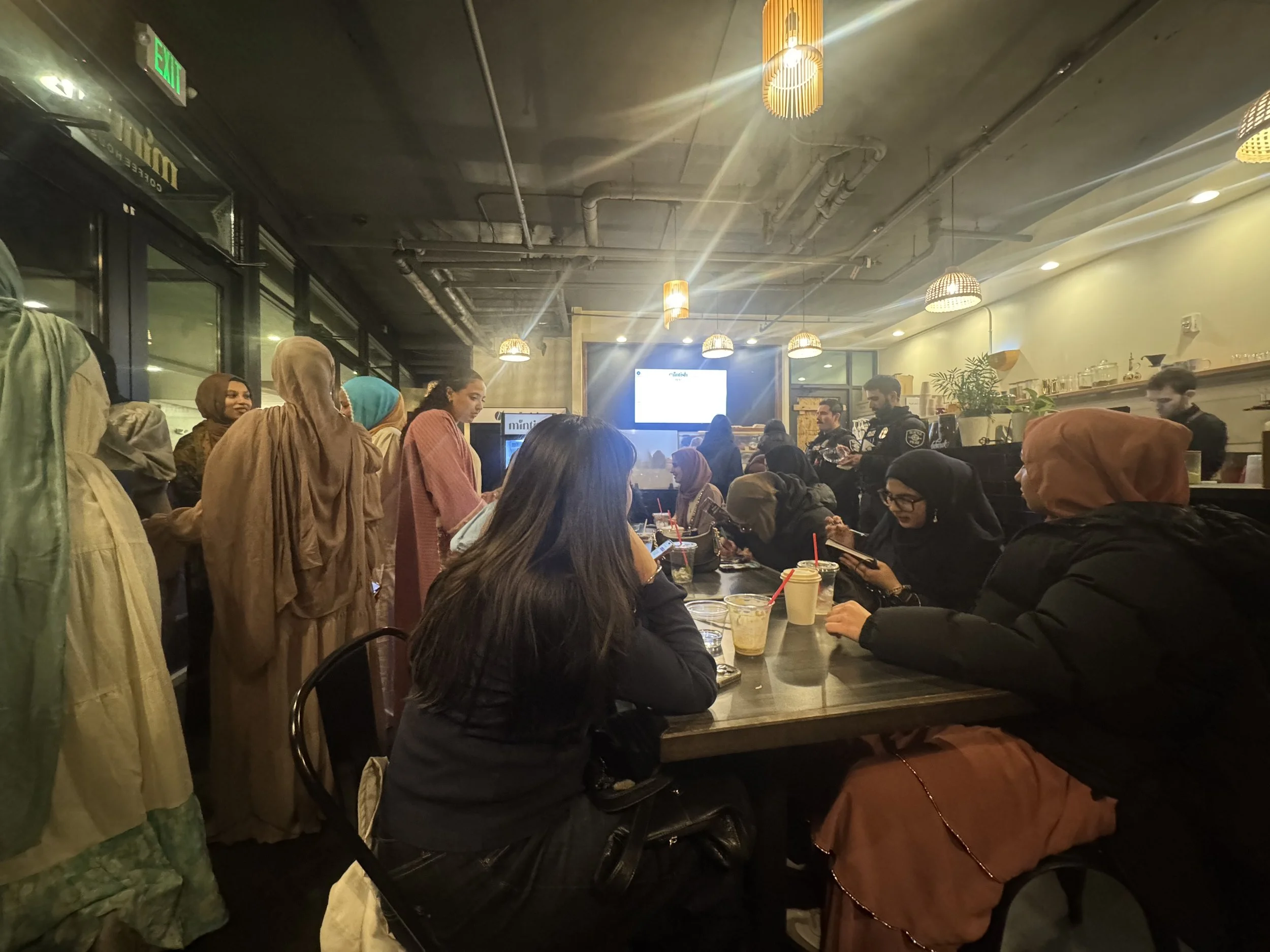
Mintish Cafe, 11 pm, 2/27/26
Footnote: I know I wrote this as an X > Y item, but Mintish nearly crossed over into an obsession this week. After the Friday night excursion, I found myself going back both Sunday and Monday morning.
Playing a Tiebreaker > Hitting Around The one-hour bloc of time you get at Seattle Parks’ tennis courts is awkward. It’s too short to play a full match, but it’s too long for just one set.
Thank you Bjorn Borg and John McEnroe for the joy of a tiebreaker. After Valium Tom and I finished a set last Saturday at Volunteer Park, we still had ten minutes left on our reservation. Sensing how sad I was about the prospect of leaving the court early, Tom quickly asked: Should we hit around?
How about a tiebreaker, I cried; Coco Gauff’s recent 15-13, 28-point tiebreak against Elina Svitolina was still pirouetting in my brain.
A tiebreak’s high stakes, first-to-seven, must-win-by-two format is such a rush in its own right there’s no need for the prerequisite deadlocked set to give it meaning.
Tom beat me 8-6.
Onto this week’s obsessions.
1. My New Translucent Backpack
They don’t allow traditional backpacks at the Indian Wells tennis tournament. So for this week’s getaway to Southern California’s “tennis festival,” as my friendly Gen Z barista called it when I tried to explain where I was going, I bought a $9 stadium-approved, small-scale (12X6X12), translucent backpack from Amazon.
It looks like a tween-fashion fashion statement. And after relying on it all week to secure my phone, Propranolol, phone charger, wallet, sunscreen, Indian Wells’ grounds map, notebook, paperback, and gummies as I crisscrossed the tournament complex without ever losing a thing, it occurred to me how ingenious purses are. The fact that it’s also a see-through purse staved off the panic attacks I was bound to have when I inevitably believed I’d lost my phone. Nope. One quick look and all is in order.
Possessions intact and anxiety free is a revelation in living as I trekked from stadium 3 to stadium 9 to the food court’s vegan counter back to Stadium 3, from stadium 2 to the very berry smoothie stand to the player practice courts to stadium 7 and to the chill-out fountain area.
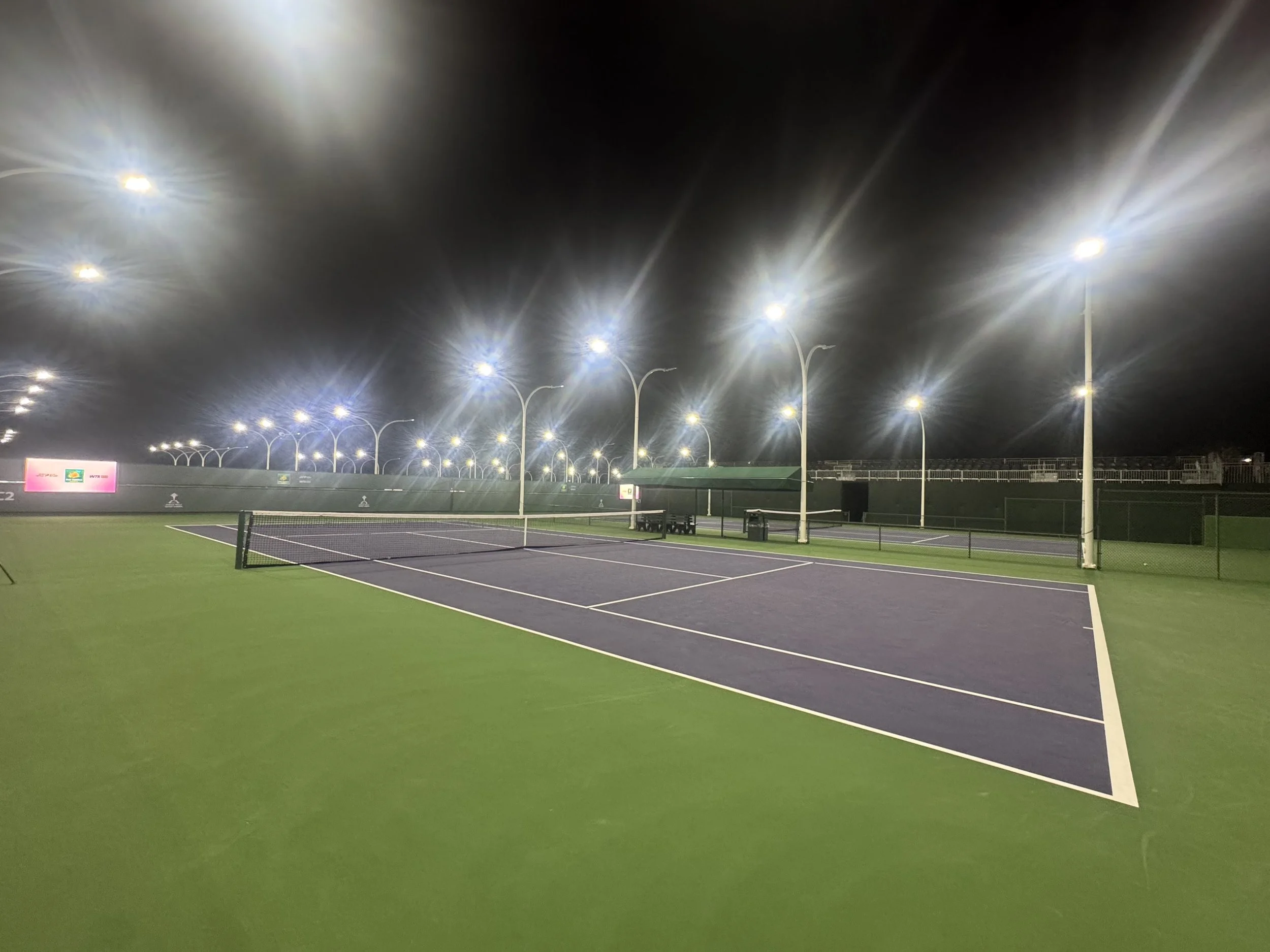
Indian Wells, 3/5/26
2. Aria Aber’s Debut Novel
Before I committed to Aria Aber’s 2025 debut novel, Good Girl, which I held in my hands at the Elliott Bay new-paperbacks table a few weeks ago, I chose to go with her award-winning 2019 book of poetry first. Her poetry, while perhaps youthful and didactic, was very often beautiful [I’m All Lost In, #121, 2/7/26.]
I started the novel this week on the two-and-a-half-hour flight from Seattle to Palm Springs; when we landed, I was already 100 pages in. It’s a salacious though oddly staid coming-of-age tale about fucking, clubbing, drugs, and crushes. Hopefully, Aber’s stand-in first-person narrator Nila, the 19-year-old daughter of Afghani immigrants in Berlin, comes to her senses soon. Because so-far, Nila’s crush is a banal stereotype of an aging, know-it-all hipster named Marlowe (i.e., the 16th century English poet and playwright). He’s an ex-novelist. I don’t know yet whether to blame Nila or Aber for the bad taste in men. Brooding and controlling, Marlowe is a hunk who teaches Nila photography, mostly by having her pose nude. And he sets all the idiosyncratic rules of their budding relationship.
Like Aber’s poetry, the novel is youthful (well, at least Nila is.) Though it’s not didactic (well, Marlowe is.) But it too is very often beautiful. Or that is: More like poetry than a novel.
Boys who looked like they could be my brothers, who were just as lost as me, and as hungry for joy and violence.
Aber’s expertise isn’t so much in long-form story telling—I’m not interested in Marlowe’s pain and suffering—but in expanding isolated incidents into meaningful, lone vignettes. Like when she describes the poignancy of riding the subway home high after the sweaty club with her former schoolmate bestie Anna. As they fail to reconnect.
“She rested her head on my shoulder, took my hand in hers. ‘Are you mad at me?’ I asked … ‘No, oh my God, is this about your birthday? I’m sorry I forgot it! I’m not mad at you.’ … But generally, I stood clutching my bottle of beer or listening to a random man with a wrinkly forehead tell me about how he missed his girlfriend while he put a hand on the nude part of my shoulder where the strap had slipped off.”
And later, another scene from the club the next night as Nila disingenuously bonds with Marlowe’s actual girlfriend:
We hugged and, in that moment, because of the ecstasy and the horse tranquilizer and the perfect little camellia in her hair, because of the hi-hat and the disco sample mixed into the techno track, and because Anna had left me, I loved her.
3. Dave’s Underrated Overrated Spreadsheet
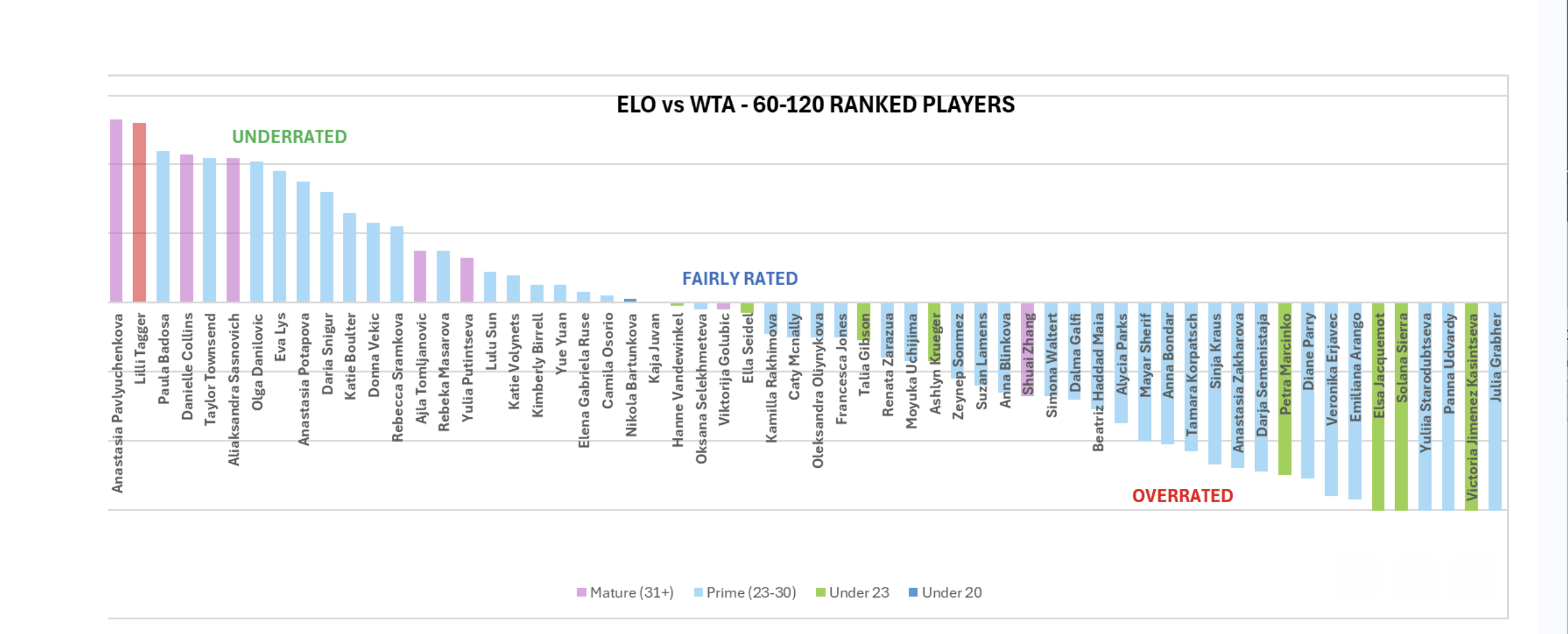
Remember my Brooklyn friend Dave, the numbers guy [I’m All Lost In, #118, 1/18/26]? Well, he showed up to the Indian Wells tennis tournament in Coachella Valley this week brimming with stats for our gang’s three-day vacation. Specifically, he had a spreadsheet and some color-coded charts he’d created during his six-hour plane ride from JFK. His graphs and numbers tracked the most over- and underrated players on both the women’s and men’s tours.
Prompted by my long-standing and bratty claim that Jasmine Paolini is overrated [I’m All Lost In, #63, 12/28/24], Dave delved into the WTA’s official player rankings. Those rankings are based solely on points players accumulate by winning matches over the course of the year; the WTA assigns a different fixed set of points for different matches. Dave then compared each player’s WTA ranking to the deeper-dive Elo ratings compiled by Jeff Sackmann at Heavy Topspin (subhead: The Tennis Abstract Blog, Tennis Analytics by Jeff Sackmann.) Instead of just awarding points based on the official value of a match, Sackmann’s numbers add context by considering factors such as “the quality of the opponent.” In other words, in the Elo system, if you beat a higher ranked player, you get more points than if you beat a lower ranked player.
Looking at the difference between the more generic WTA rankings and the fine-tuned Elo ratings, Dave charted each player’s change in status from biggest point gain to minimal change to biggest drop. Thus, he was able to plot the WTA’s most underrated, fairly rated, and overrated players on the tour.
I was right. World No. 7 Paolini is overrated. She’s still in the top 20 at No. 13 on the Elo scale, but falling 6 points in that rarified group—an 85% decrease—constitutes a significant drop. And for the record, according to Dave’s stats, the most underrated WTA player turned out to be one of my favorites, Markéta Vondroušová; she’s ranked No. 46 by the WTA, but No. 16 by Elo.
More important, over the course of the 18 matches I watched during our three days at the tournament, Dave’s system largely checked out. For example, according to Dave’s chart, American player Taylor Townsend is one of the most underrated players in WTA with a 42-point difference between her conventional rank (No. 85) and her Elo rank (No. 45.) No surprise to anyone privy to Dave’s charts: Townsend easily beat the much higher-ranked World No. 33 Marie Bouzkova in the first round, 6-1, 6-2; Bouzkova is actually No. 47 when you go by her Elo rank, a 13 point drop which put her squarely on the overrated side of the equation. Also not a surprise: Townsend lost in the next round when she faced World No. 28 Marta Kostyuk who’s No. 15 by Elo standards. That 13 point jump makes Kostyuk, like Townsend, one of the most underrated on Tour.
Dave’s rankings account for these different levels of underrated players; he made two charts, one for the WTA’s top 60 players like Kostyuk and another for the players ranked 60 through 120 like Townsend. Kostyuk is the 8th most underrated player in the WTA’s top 60 while Townsend is the 5th most underrated player in the 60-120 tier. No wonder Kostyuk beat Townsend so convincingly, 6-3, 6-2.
For even more context, Dave also color-coded the charts to show a player’s age group; this additional detail can help forecast how much momentum a player might have to either leap further up the ranks or fall further down. Younger players, for example, have more room for improvement than older players.
The combo of a young player who’s also high up in the underrated ranks is a keen way to identify a relative unknown to pay attention to. One of those players I went to see at Dave’s prompting was a young Austrian named Lilli Tagger. She’s ranked No. 119 by straight WTA standards. But No. 67 by Elo. Which gives her a plus-52 point difference. This makes her the second most underrated player in the 60-120 tier. And lo and behold: We watched her sail through her opening round match 6-2, 6-4 against the official World No. 58, Varvara Gracheva. And then two days later, we saw Greek star Maria Sakkari beat Tagger. Handily. Sakkari is underrated herself. She’s World No. 34 by the traditional standard, but World No. 28 by the Elo standard, a 17.6% jump. While it evidently took Sakkari a set to get used to 18-year-old Tagger’s stunning one-hand backhand (!), she quickly adjusted and posted a convincing 7-5, 6-0 win over the teenager.
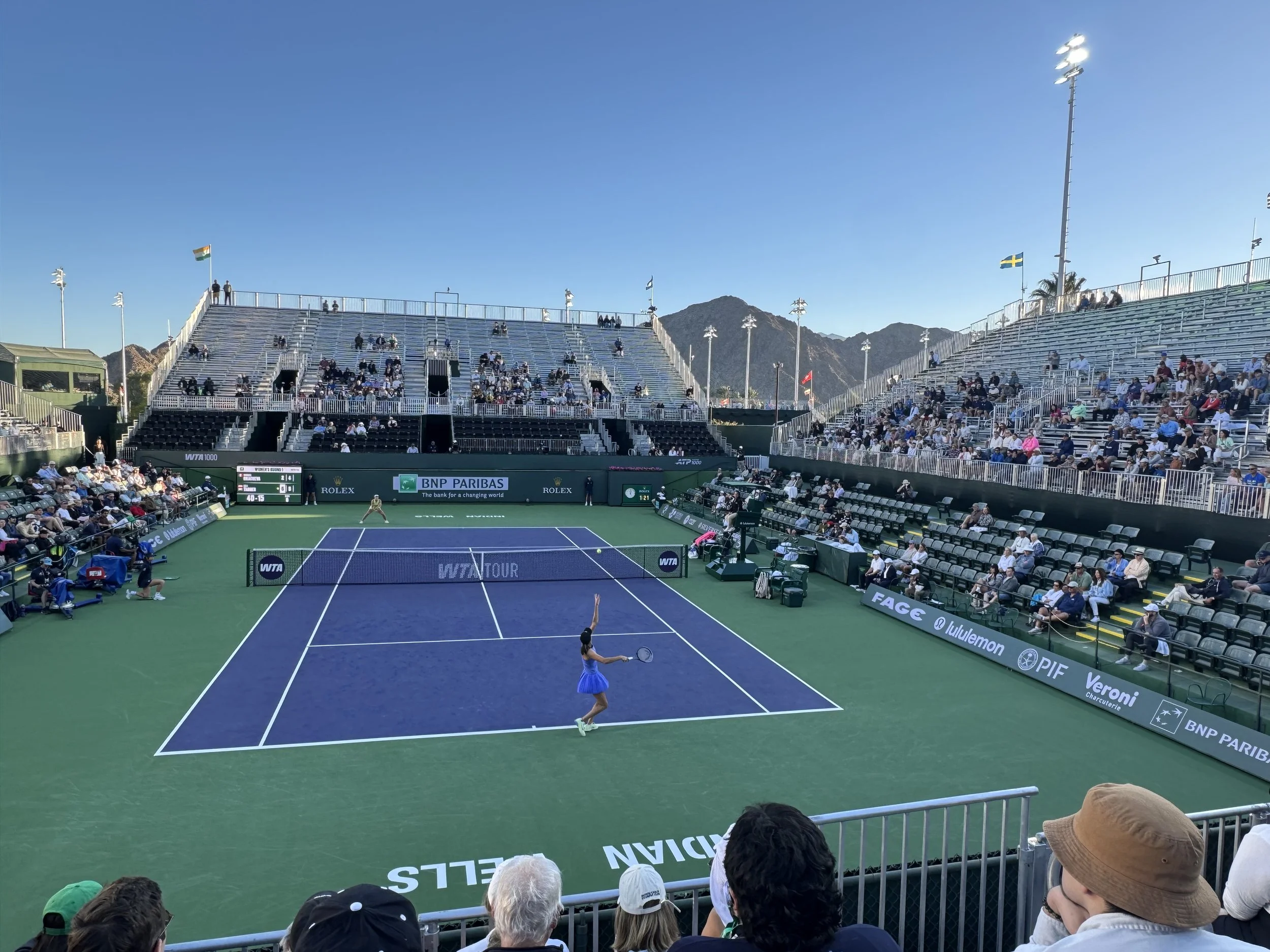
One-to-watch, Lilli Tagger on Court 3 serving and winning against the supposedly much-higher-ranked Varvara Gracheva, 3/5/26.