
I’m All Lost In, #124: Triangulating Wilde, Schumann, and the Transit app. Plus: This week in X > Y.
First, this week in …
X > (is greater than) Y:
Hacking for Affordable Housing > Rezoning for Affordable Housing
Given how difficult it is to do proper urban upzones in traditional single-family-home neighborhoods, I’m hopeful about an emerging tactical and practical way to usher in the dense, multifamily housing we need for addressing the affordability and climate crises: Instead of fixating on wholesale land use changes, focus on discrete housing regulations with piecemeal reform. Devious density.
I’m not advocating for timid tinkering around the edges. I’m thinking of ingenious hacks that are possible within the restrictive height limits, contorted floor area ratio guidelines, and setback requirements that currently define and limit the number of units you can fit into an apartment building. Like rearranging how you pack your suitcase rather than buying a bigger suitcase, affordable housing advocates should change the construction equation inside apartment buildings themselves.
Pro-density progressives in Washington state have already had success with this sneaky inside-out approach. In 2025, they won parking reform, which maximizes the square footage available for housing by lowering building costs and forgoing the need for carports and underground garages. Similarly, in 2023, advocates succeeded in passing the nation’s first-ever single-staircase bill, a reform that frees up space for more units by getting rid of unnecessary mandates for two staircases.
In the current legislative session, pro-housing advocates are now on their way to passing elevator reform, which will lower costs for developers, hopefully hastening construction of more units.
As I reported on PubliCola this week: While the elevator industry stripped out a push for universal reform, urbanists are still set to pass a deceptively specific change at the ground level. The legislation will change elevator size guidelines for six-story apartment buildings. This detail-oriented code change will open the doors to multifamily housing in neighborhoods where the the macro zoning remains antagonistic to this type of renter-friendly development.
Vegan Ice Cream > Ice Cream Ice Cream
That’s my conclusion based on the scoop of black sesame ice cream I had for dessert Wednesday night at Ramie, a sleek Vietnamese restaurant on 14th. Their rich after-dinner delight, dappled with peanut crumbles and topped with light coconut-cookie wafers, has the body of a malty, craft beer.
Rather than calories, you’ll be measuring each woozy dollop in dopamine.
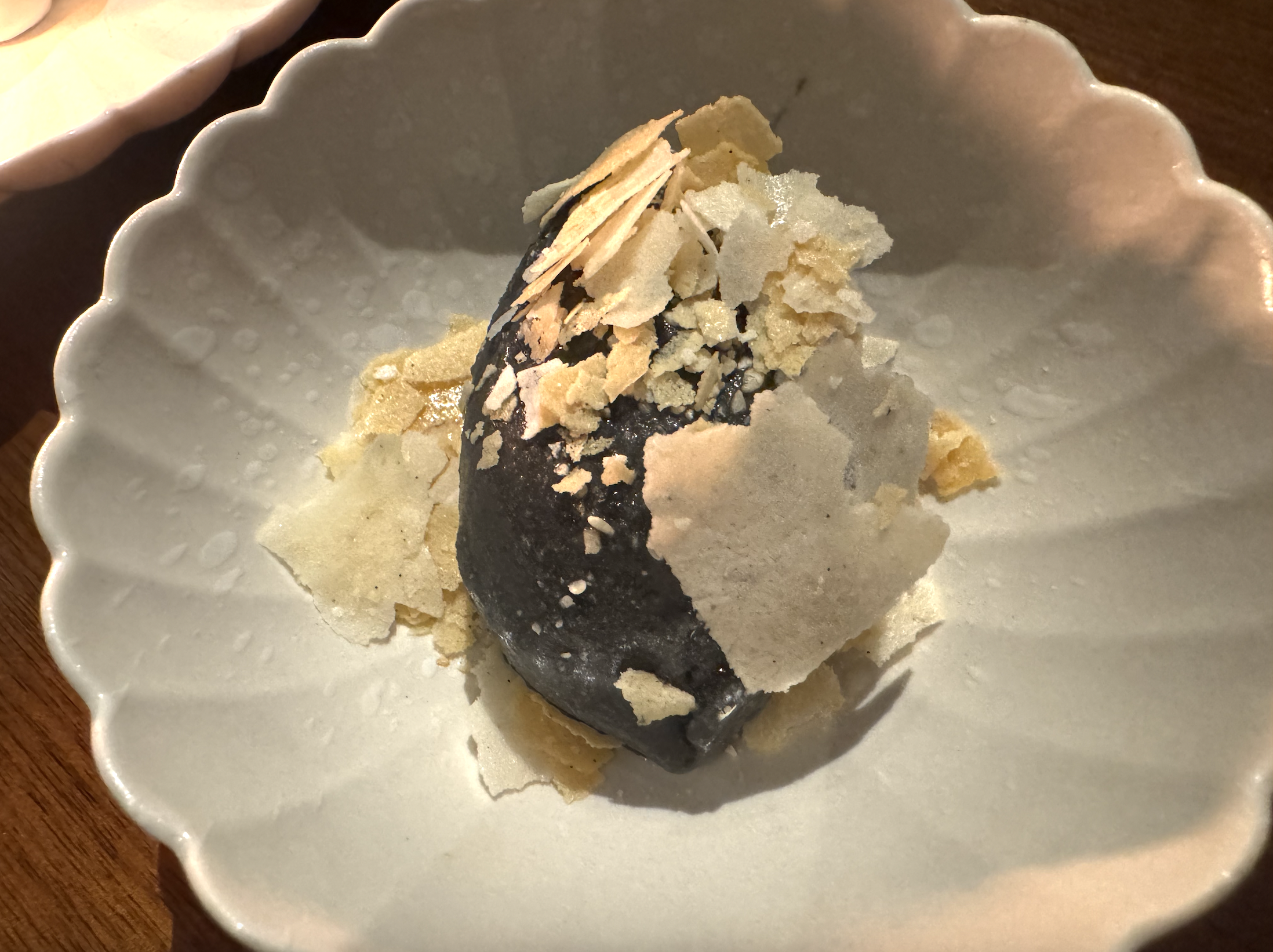
XDX’s birthday dinner at Ramie, 2/25/26. Footnote: Ramie is unobtrusively located—even elusively located—between Pike & Pine on 14th. Walking in is like entering Platform 9 and ¾ at King’s Cross.
1 Week without Booze > 1 Week with Booze
I didn’t set out for a week of sobriety on purpose. But after I drank too much whiskey on Friday night (and the previous Thursday, Wednesday, and Tuesday nights), I decided not to drink on Saturday night, 2/21/26. From there, I segued into a week of abstinence.
My no-booze resolve was fortified the following Tuesday night, 2/24/26, when a former regular bartender at Bimbo’s showed up as a sub for one of the current staffers. I hadn’t seen N— since 2023. He looked 10 years younger. I was agog. He reported he’d given up alcohol these past two years.
Realizing I hadn’t had a drop of alcohol since the previous Friday night’s shipwreck, I decided to continue my liquor-free streak. I ordered a club soda and grapefruit juice instead of my regular whiskey.
At that point, my impromptu detox turned into an insistent one. I continued to stay away from booze for the rest of the week. I can’t claim to feel any magical transformation, but I do keep finding excuses to extend the booze boycott.
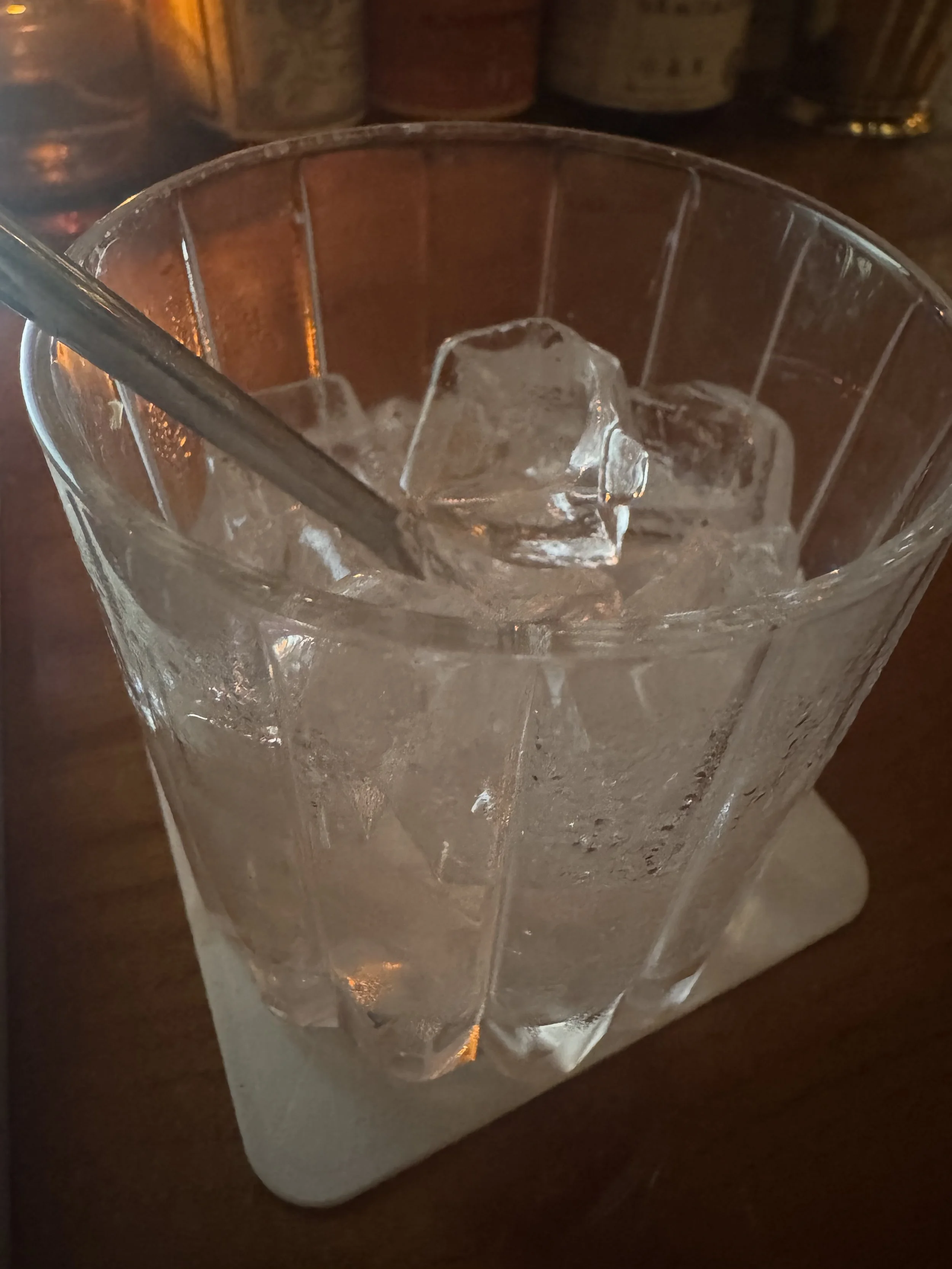
Going with soda water and grapefruit juice, Friday night into Saturday, 2/27 into 2/28/26.
Onto this week’s obsessions:
1) The Picture of Dorian Gray
It seems symbolic of the oddly mellow mood I’ve settled into in 2026: I’m not getting annoyed by Oscar Wilde’s petulant parade of contrarian oxymorons. In fact, as I calmly savor his 1890 novel The Picture of Dorian Gray, I feel invigorated by his smart-ass aphorisms:
I can believe anything, provided that it’s quite incredible;
the true mystery of the world is the visible, not the invisible;
the only difference between caprice and a life-long passion is that caprice lasts a little longer;
I adore simple pleasures. They are the last refuge of the complex;
the only things one never regrets are one’s mistakes.
I was particularly struck by that last one. It has me surveying a supercut of memories, reflecting on questions of agency versus fate, and contemplating my own personal space-time continuum versus the universal one.
A quick note on the “hideous Jew” antisemitism afoot in this novel: I must say, I prefer this brand of antisemitism to the more ubiquitous puppet masters version. As opposed to the prominent 19th century and early 20th century Rothschild story line that casts Jews as conniving international capitalists, Wilde’s anti-Jewish bigotry flows from a separate, though equally prevalent strain at the time: Jews were reviled as conniving gutter-district, Tin Pan Alley hustlers. It’s actually a bit of underworld chic if you ask me. And I suspect, with Wilde’s flair for contrarianism, he saw it that way too.
“Don’t run down dyed hair and painted faces,” Lord Henry, Wilde’s stand-in, responds to Dorian in defense of a tawdry theater run by “the horrid old Jew.” Henry concludes: “There is a extraordinary charm in them, sometimes.”
2) The War of the Romantics
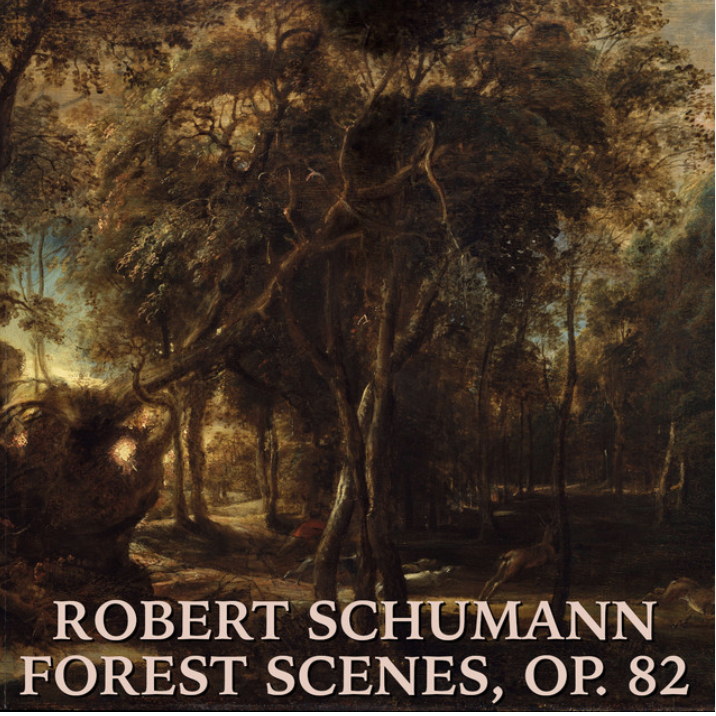
Forest Scenes, 1850-1851, or Op. 82. Nine solo piano pieces by Robert Schumann.
Chapter II of Dorian Gray begins with this sentence: “As they entered they saw Dorian Gray. He was seated at the piano, with his back to them, turning over the pages of a volume of Schumann’s Forest Scenes. ‘You must lend me these, Basil,’ he cried. ‘I want to learn them. They are perfectly charming.’”
I immediately sought out and streamed these nine thoughtful yet playful late-Romantic piano pieces. And then, inspired by their confidence, I mischievously added them to my 21st century neoclassical playlist knowing full well they’d show up on shuffle as Easter Eggs for unsuspecting listeners.
I also read about these Schumann pieces. It turns Forest Scenes was a flashpoint in a 19th century debate between the traditionalist Romantic composers like Beethoven-loyalist Brahms and the new Romantics like Liszt and Wagner.
The conceptual split—which reminded me of the analog v digital fixation in the early 1980s guitar magazines—was between the traditionalists’ notion of “pure” music versus the new idea of “program” music. The “pure” music camp believed compositions were an expression of beauty in their own right. The “program” camp believed compositions were representations of specific things in the material world.
Such as forests.
This debate played out in a standoff over how to title pieces. The purist camp preferred literal catalog titles. Piano Sonata No. 14 in C-sharp minor, Op. 27, No. 2, for example. Whereas the new Romantics were keen on evocative titles like the Moonlight Sonata, a title that was given to Beethoven’s aforementioned Sonata No. 14 in C-sharp minor, Op. 27, No. 2 five years after his death.
It’s no wonder a picturesque title like Forest Scenes would be at the center of this debate.
It’s also no wonder that Wilde’s fable on the supernatural relationship between a portrait and its subject—a de facto manifesto on the meaning of art—would call attention to a piece like Forest Scenes that figured so prominently in a defining artistic debate of his century.
Not so subtly, the book opens with a slam-poem preface of sound bites about art. A snippet: “There is no such thing as a moral or an immoral book. Books are well written, or badly written. That is all”
Wilde’s seminar on the philosophy of art continues with Lord Henry’s non-stop decrees about artists, such as this typical one about inferior poets (“absolutely fascinating”) living “the poetry they can’t write” while great poets (“the most unpoetical of all creatures,”) write poetry about lives “that they dare not realize.”
So far (I’m only halfway through the novel), my favorite exposition on the arts in Wilde’s immoral book is spoken by neither Wilde nor Lord Henry. It comes in Chapter 7 from theater-district actor Sybil Vane. Her backstage lament about “the empty pageant” and “the false orchard” where she “knew nothing but shadows” frantically and eloquently lays out Wilde’s thesis on the discrepancy between real life and artifice. “The words I had to speak were unreal, were not my words, were not what I wanted to say,” Sybil Vane tells Dorian Gray.
Full circle: There's also a line in The Picture of Dorian Gray about classical composer Richard Wagner, the aforementioned new Romantic. Lord Henry’s wife tells Dorian Gray: “I like Wagner’s music better than anybody’s. It is so loud that one can talk the whole time without other people hearing what one says.”
3) Triangulating the Bus App & the #8
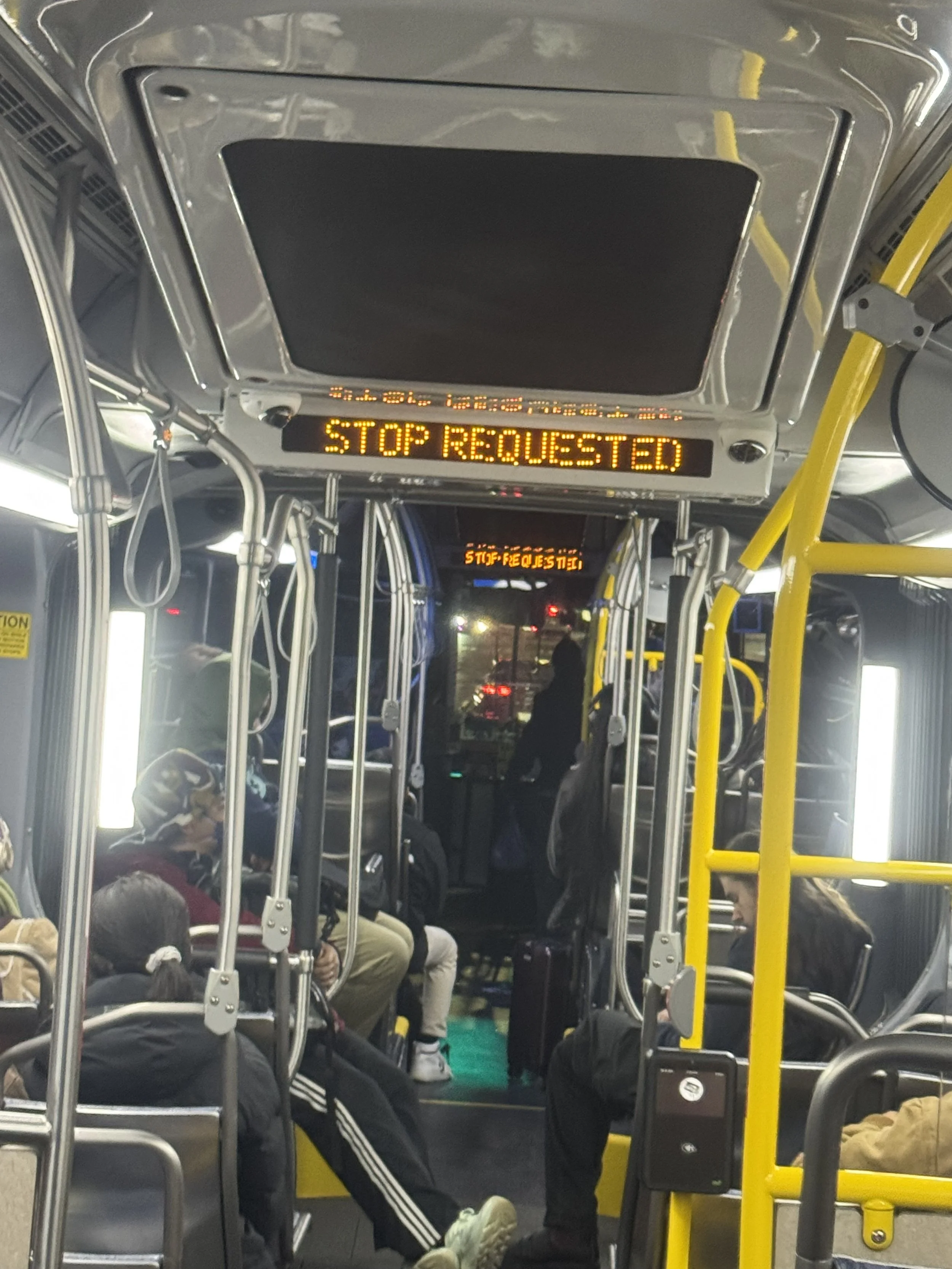
Triangulating The Picture of Dorian Gray and Schumann’s Forest Scenes is definitely an easier trick than triangulating the capricious #8 bus and the fluctuating arrival times on the aggravating Transit app.
But I have it down to a science. Mark the moment when the wait time suddenly shifts from 45 minutes to 4 minutes with one whimsical tick as it invariably does. Subtract (-) the difference between the scheduled arrival time of the subsequent bus and the original arrival time of the bus you’d been waiting on. Then add (+) the 10 minutes it takes to walk from XDX’s to the stop at 5th & Denny. Lastly, subtract (-) feeling slightly anxious about the oddball characters who are out and about in Belltown at this hour. Patiently following this formula will (=) get you to the stop 5 minutes before the bus arrives.
At least it did last Wednesday night after I obsessed over the app from XDX’s apartment as I tracked several buses come and go before mastering the rhythm of this meterless cadence.
———Quote of the Week: Circa the mid-1970s
I was watching Youtube this week of the 1976 women’s U.S. Open final between World No. 1, American Chris Evert and World No. 2, Australian Evonne Goolagong when a collision of feminism, sexism, and eventually some enlightened commentary about Goolagong’s Aboriginal identity served up a slice of mid-1970s perfection.
Of course, it was the female broadcaster, Julie Anthony, who schooled the male broadcaster, Tony Trabert.
Early in the second set (at the 5:37 mark), Anthony attempts to promote the growing prominence and savvy of the newly established WTA with a comment about Evert’s and Goolagong’s women-centered business prowess.
Julie Anthony: One sign showing how big tennis has gotten is that both of these girls are wearing their own personal line of tennis dresses.
Trabert misses the point and utters this classic: Both very attractive.
Cue my quote of the week: Anthony, a pro tennis player herself, blows by Trabert’s stupid comment. Without missing a beat, she hits back with a quote that pulls the focus away from the dresses as pretty set pieces and puts it back onto a substantive element of the branding. And then, shazam!, she turns the moment into a quietly political nod to Goolagong’s Indigenous heritage:
Anthony: Evonne’s logo is a tall tree by still waters, which is what her name means in Aborigine.