
I’m All Lost In, #120: Elevators as transit infrastructure; the NYT’s latest Trump failure; Doo-wop reels; and a fortnight of Australian Open nights.
I’m All Lost In …
the 3 thing I’m obsessing about THIS week.
#120
Before I get to this week’s obsessions, I’ve got two coffeeshop notes.
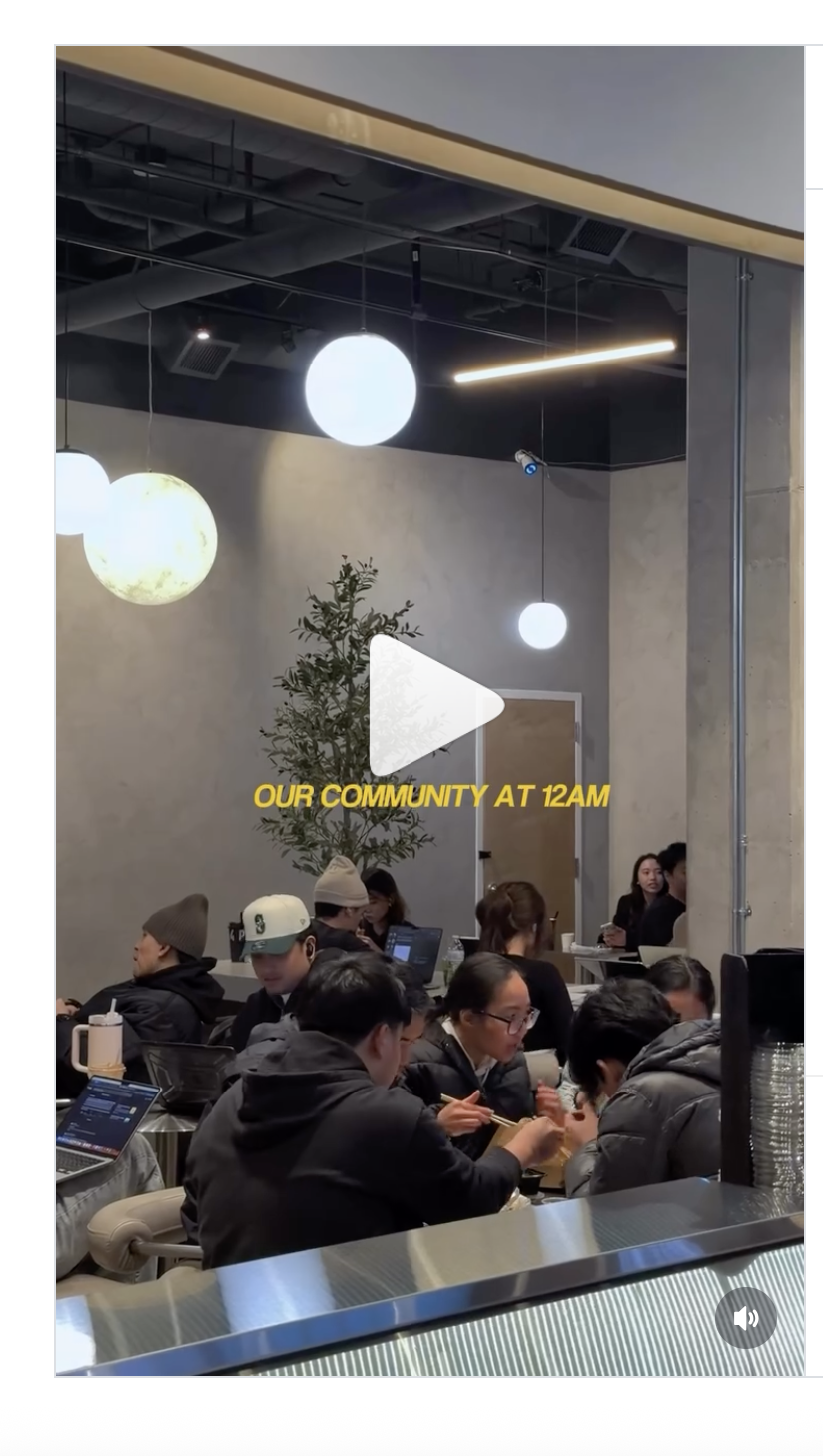
Start your night with Coffee from Plus84
First, a follow up to last week’s rave about Plus84, Belltown’s late-night Vietnamese coffeehouse [I’m All Lost In, #119, 1/25/26.] Unbeknownst to me, they were celebrating their one-year anniversary this month.
Accompanied by the hashtags #latenight, #seattlecoffee, and #vietnamescoffee, Plus84 posted a reel this week showing off scenes of their night-time crowds. As a caption to the reel, they wrote this [bolds mine] :
Everyone said it wouldn’t work. But we believed late nights deserved a space too. A place to study, talk, unwind, or just sit with a warm cup when the day isn’t done yet. So we took the risk and tried. One year later… this is what our late nights look like.
My second coffeeshop note is about another place that stays open later than your typical Seattle coffee spot. 8pm in this instance. And more importantly, it’s a third-place space where they hold evening events and shows.
On Thursday night, Capitol Hill’s Gearhouse [I’m All Lost In, #59, 11/30/24] hosted Ambient Craft Night, a dimly-lit evening where people settled in to the spacious coffeeshop’s couches and booths to work on their own cozy hobbies, like knitting or sketching. The cheeky advert for Gearhouse’s craft night announced it as an evening of “parallel play.” I was reading a book by the light of my iPhone. The couple next to me was quietly doing origami.
The real reason I went, though: There was live music. “Chill music and shifting lights,” as the notice also said. Singer Isla Vidal patiently looped her Cocteau Twins-friendly vocals over ambient tones set to Iron Butterfly visuals.

Generative light show by SoftPortals
Full disclosure, the digital visual artist with the psychedelic screens was my besty XDX, aka SoftPortals.
Okay. On to this week’s list of obsessions.
1) Elevators are Essential City Infrastructure
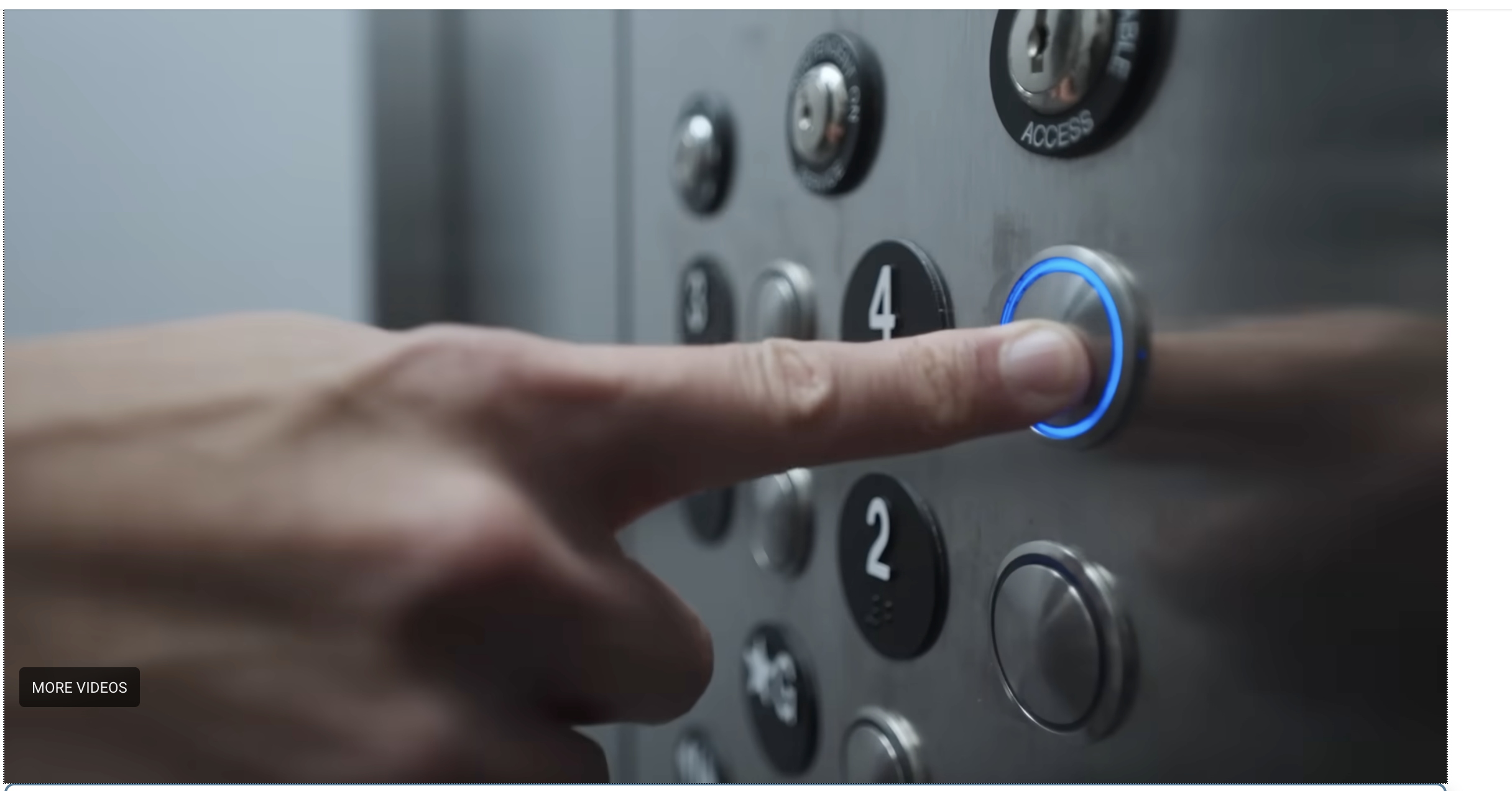
Pro-city agitprop video artist Uytae Lee, stage name About Here, has produced a new youtube short promoting Washington state Senate Bill 5156. The legislation, sponsored by Democratic State Sen. Jesse Salomon (D-32, Shoreline), attempts to address our affordable housing shortage by reforming elevator code. Specifically, this elevator-liberation bill would free elevators from provincial rules that de facto limit builders to buying from a manufacturing oligopoly.
According to the video, the result of the elevator syndicate’s hold on the North American construction market, which cuts out the bevy of reputable and safe elevator makers who serve the rest of the world, translates into a lack of affordable, multifamily housing. The logic goes like this: The restrictive elevator regulations specify arbitrary and unnecessary square-footage mandates along with propriety installation and repair standards. This makes elevators larger and more expensive. Meaning A) developers often forgo elevators, creating too many elevator-free apartments. And this makes housing inhospitable to the broader universe of people looking for affordable housing. Or B) developers include the pricey, larger elevators in their projects, which raises building costs and makes multi-family developments too expensive for the broader universe of people seeking affordable housing.
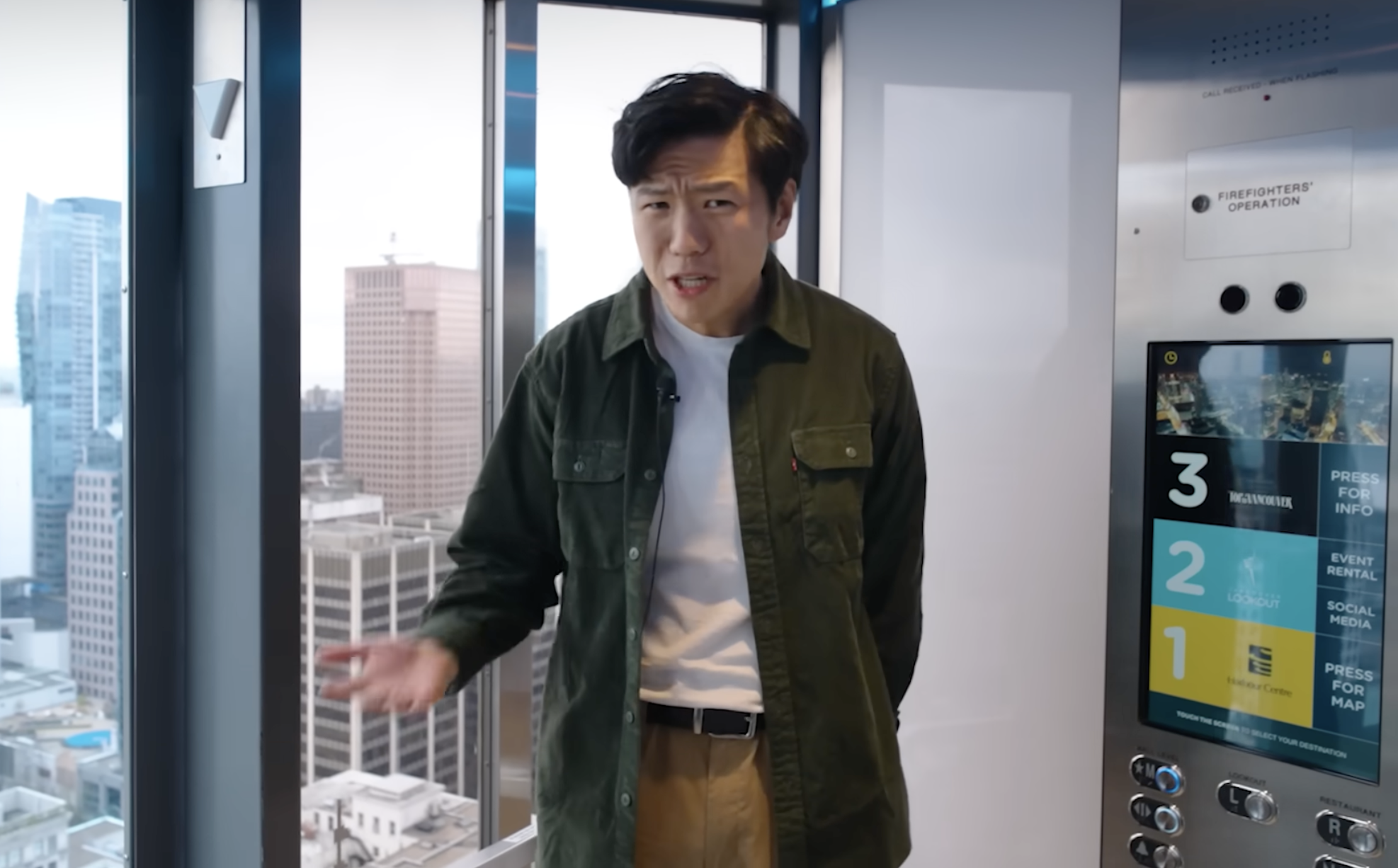
Shafted! Urbanist videographer Uytae Lee says outdated elevator rules are making housing more expensive.
Lee dropped his video on behalf of local pro-housing group Sightline. They teamed up to make the case—and this is the crux of the SB 5156—that the clunky elevators dictated by current code are incompatible with producing the relatively smaller mode of multi-family housing needed to increase housing stock: Four-and six-story developments known as “missing-middle housing.” This is the kind of housing that urbanists contend would fit seamlessly into traditional low-density single-family zones. Neighborhoods where by definition and political design the housing stock currently and infamously excludes lower-income families.
Lee says elevators make more buildings, i.e. more places, accessible. They are like mass transit in that sense, he says, concluding that elevators are “a core part of a city’s infrastructure.”
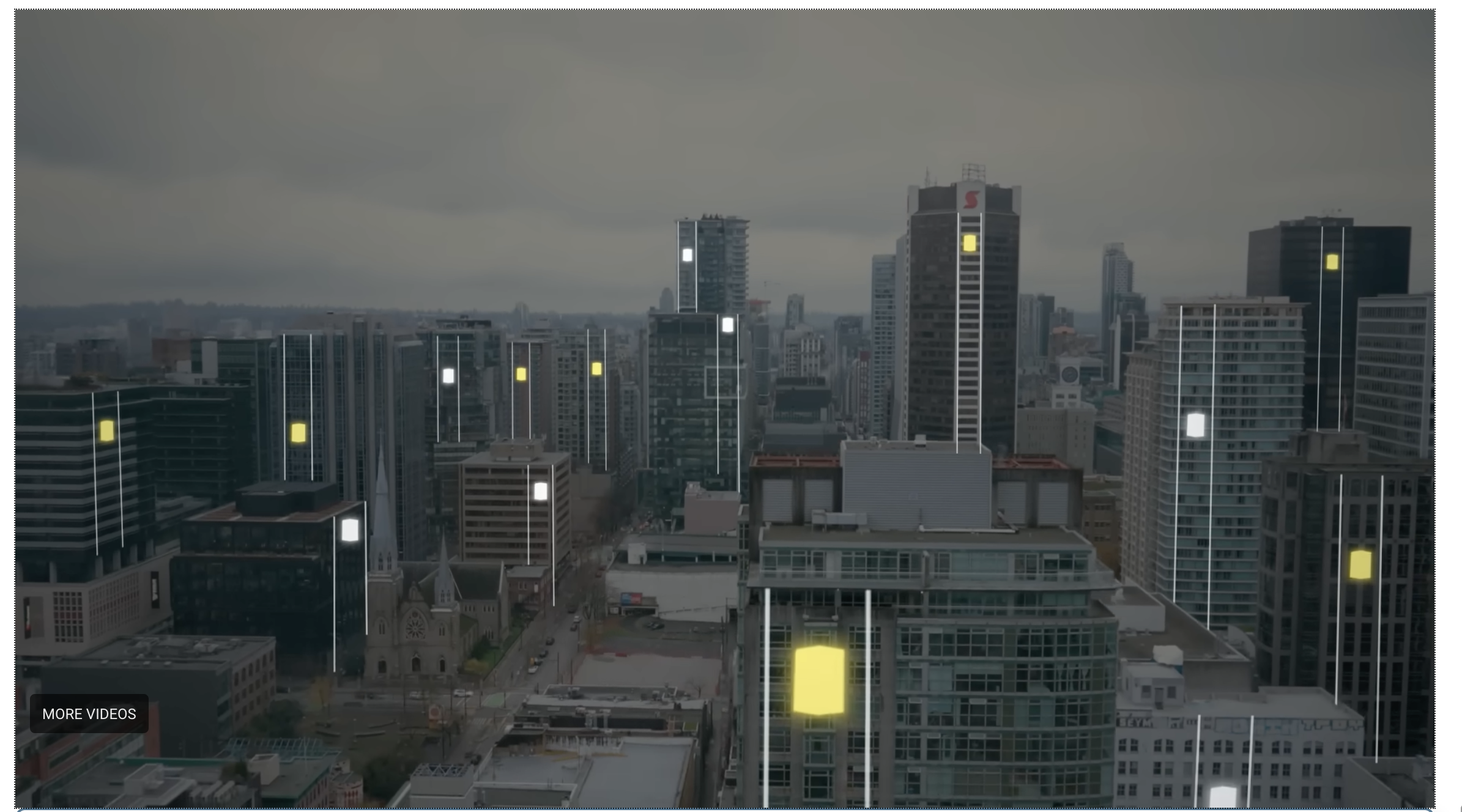
Elevators, an invisible and central part of your city’s infrastructure.

2) The Latest NYT Failure
The New York Times’ skittish Trump coverage embraces feigned naivete as a way to diminish the hard facts about Trump’s assault on American democracy. The most recent example is this week’s story about Trump’s FBI raid on the Georgia election office. The NYT’s tortured headline? F.B.I. Search in Georgia Shows Trump’s Willingness to Pursue 2020 Grievances.
More like the NYT shows its willingness to make a fool of itself.
The FBI search doesn't "show" Trump's "willingness to...” It shows Trump pursuing his 2020 grievances in earnest, something he's been pursuing outright since November 2020. In other words, it’s not news that he’s “willing” to do something he’s already doing.
And, by the way: “Grievances?” Trump’s conspiracies about the 2020 election aren’t “grievances,” they’re lies. Lies that Georgia’s own Republican officials and the courts have debunked numerous times already; remember how FOX got taken to the cleaners for $787 million by the voting machine company Dominion for airing Trump’s lies about the election?
The headline should state the literal news: FBI Raids Georgia Election Office.
Don’t think that’s damning enough? Don’t worry. Tracking the facts over time, including tracking what the FBI and Trump say throughout, will give journalists the opportunity to interrogate and reveal Trump’s abuse of power.
I should add, while it may appear that the NYT’s subhead on the FBI raid story goes hard on Trump, it’s actually another abdication of basic journalism. The NYT subhead reads: The search might also be a harbinger of things to come, signaling the president’s disposition to use the powers of law enforcement to intervene in election matters as the 2026 midterms approach.
This speculative tack obscures what’s actually happening.
Rather than turning conjectures into news headlines, the paper should stick to the facts. How about going with the realities the NYT’s queries into the raid turned up. The facts they reported in the story itself. That subhead would look like this: Top Justice Department and F.B.I. leaders refuse to say Trump lost the 2020 election and would not say what prompted them to raid.
So, here’s my recommended headline and subhead in full: FBI Raids Georgia Election Office. Top Justice Department and F.B.I. leaders refuse to say Trump lost the 2020 election and would not say what prompted them to seek a warrant.
See how that works? Sticking to the news and the facts goes much further in demonstrating how reckless and out of control the Trump administration is being than the NYT’s combination of denial and soothsaying ever will.
3) Doo-wop Reels
I’ve curated a 16-hour playlist called Sound of the City, Indie Rock 1947-1957. It started out as a xerox of the playlist in the back of a 1970 book called The Sound of the City by Charlie Gillett. The book, which began as Gillett’s grad school thesis at Columbia University, was one of the earliest academic studies of rock & roll’s breakout 1950s heyday.
Gillett’s list consisted of about 90 songs. Over time, my list has grown into a 350-song collection of both well-known and obscure rock & roll records released on the groundbreaking independent labels of post-WWII America. I once shared the playlist with my friend Annie. I’m not sure if she was in earnest when she told me: This is just a blues playlist.
Of course, it’s not that simple. There’s rockabilly, jump blues, jazz, country, gospel, electric blues, country blues, calypso, Ruth Brown, Chuck Berry, the Soul Stirrers, Big Maybelle, Arthur Big Boy Crudup, Count Basie, the Vocaleers, the Moonglows, doo-wop…
Doo-wop might be my favorite sub-genre on my early rock & roll playlist. And I thought I had it covered. One stand-out interlude: A section of 1953 and 1954 doo-wop that starts about 120 songs in. 1953, like say 1975 for punk, is the first year doo-wop showed up on record. The genre blew up in 1954. And this section of my Sound of the City set goes about 80 songs deep into that year.
Enter Dennis Groft’s collection of reels: a seemingly inexhaustible source of 1950s and early 1960s jukebox singles that leans doo-wop. Groft’s collection is where, this month, I first heard The Dubs, a band on George Goldner’s indie NYC R&B label, Gone Records. Thank you Dubs for 1957’s Don’t Ask Me to be Lonely. Thank you George Goldner for your ears. And Thank you Dennis Groft for all the miraculous doo-wop I’m about to discover.
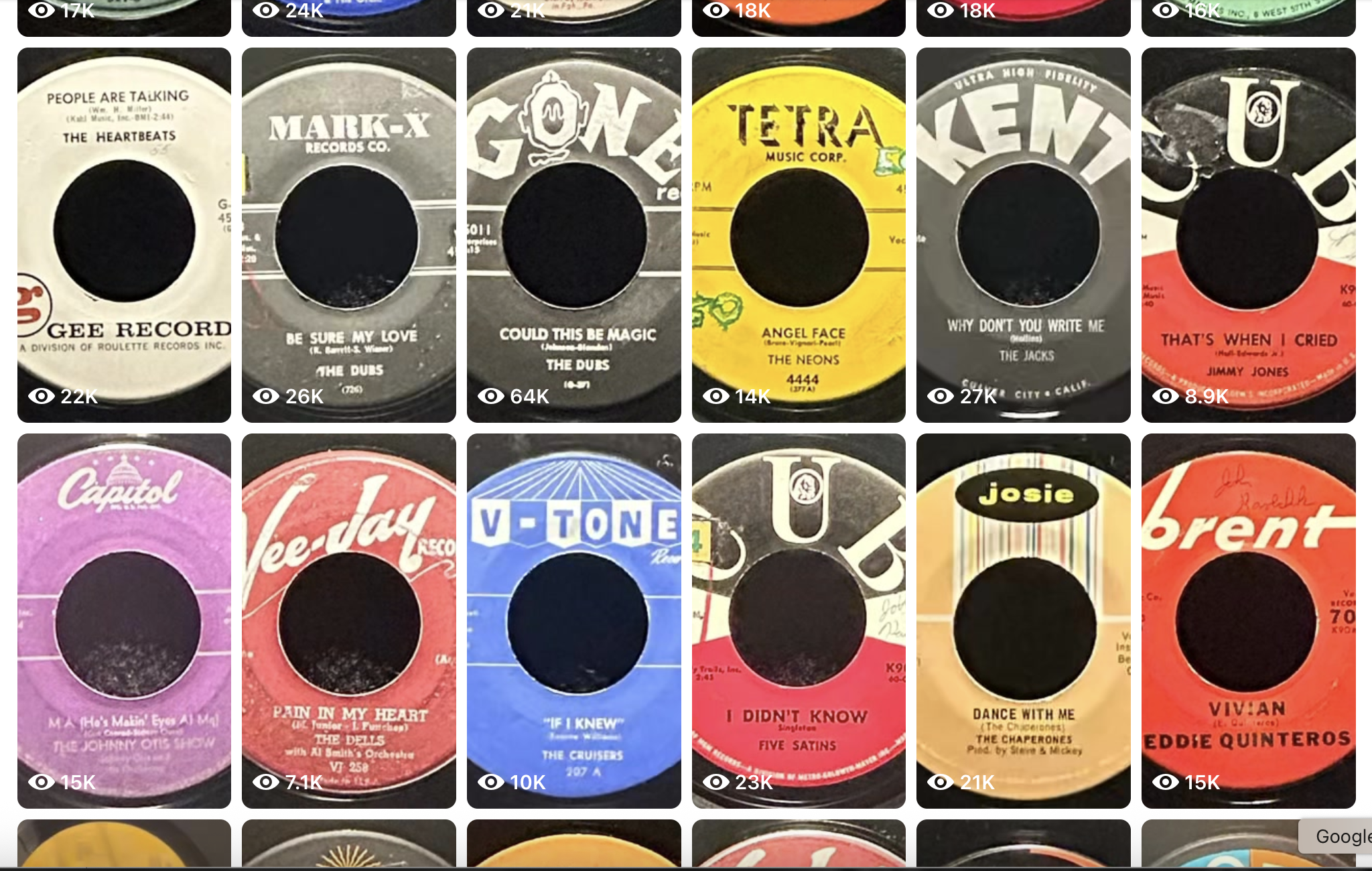
Indie Rock circa 1954, Courtesy of Dennis Groft …
… None of the proceeding items were actually obsessions. Consider them finds. The only thing I was obsessing about this week—for the past two weeks—was the Australian Open.
For example, I Stayed up until 3am on Friday night to watch my favorite player Aryna Sabalenka in the WTA final. To watch her momentarily take control, wining five games in a row as she came from behind to even things up at one set a piece against red-hot Elena Rybakina. Making it 3-0 in the deciding set before Rybakina took over. So close, Saby. So close.
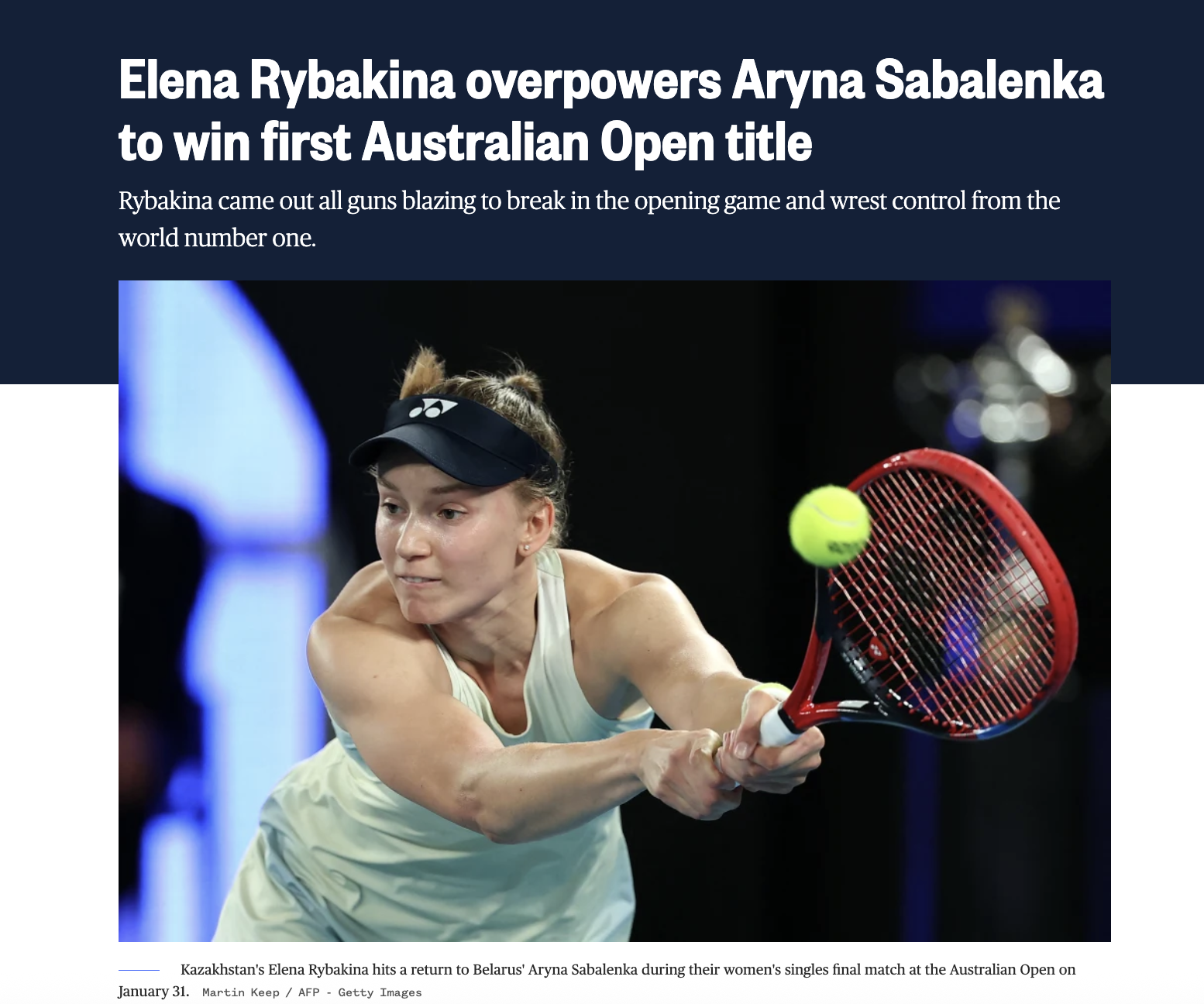
Rybakina takes over late in the 3rd set to win the Australian Open.
In fact, I stayed up late several nights for the past two weeks to watch the matches from Melbourne, often falling asleep to the blissful sounds of tennis on ESPN. The murmuring announcers and lulling thud of serves, forehands, and backhands accompanied by squeaking sneakers.
Appropriately then, this week’s X > (is Greater Than) Y recap is an All-Australian-Open edition:
The Female Reporter’s Question at Elena Rybakina’s Press Conference > the Questions from All the Male Reporters.
World No. 5 (now No. 3) Elena Rybakina’s creepy controlling coach Stefano Vukov [I’m All Lost In, #71, 2/23/25] could not stop barking instructions at the Kazakhstani tennis star from his court-side perch. Watching his meddling made me feel nauseous; Vukov was suspended from the tour for several months in 2025 as the the WTA investigated him (over Rybakina’s objections) for alleged “abuse of authority and abusive conduct” toward Rybakina. The allegations included “compromising or attempting to compromise (Rybakina’s) psychological, physical or emotional well-being.” The WTA eventually allowed Vukov to return to the tour late last year.
At a mid-week press conference after Rybakina’s big quarterfinal win over World No. 2 Iga Swiatek on Tuesday night, a clearly concerned female reporter broached the tricky subject. (Go to the 3:20 mark here.)
The reporter started out tentatively: I wanted to ask you about having your coach’s box so close to you during the match. Is it a calming influence? How does it play for you?
Rybakina shrugged off the question telling the reporter it was good to have her coaches close by because she can hear their advice.
Clearly hoping to crack Rybakina’s apparent Stockholm Syndrome, the reporter re-worded the question: Do you feel sometimes that you could be getting too much information? Does there come a time in a match that you want to say “Stop?”
Rybakina dodged again. She said only that more information was better than none.
TV commentators Chris Fowler, Mary Joe Fernandez, and Rennae Stubbs noted Vukov’s voluble presence during Friday night’s championship match between Rybakina and World No. 1 Sabalenka. They called out with some disbelief how Vukov continued smothering Rybakina with advice even though she had just played a stunning first set, winning the opening round 6-4 after breaking Sabalenka’s serve in the first game.
Diligent tennis journalist Ben Rothenberg also noticed. In a post titled “Elena Rybakina Stood by Her Man” that he published shortly after Rybakina won the whole thing, he wrote: “Vukov did not address the crowd or stop to pose for any photographs with his trophy, maintaining the public silence he’s kept over the last year—well, if you don’t count the near-constant talking he does toward Rybakina during her matches and practices.” Rothenberg’s article went on to summarize the sometimes alarming details of Vukov’s relationship with Rybakina.
The Tennis Podcast > The Tennis Podcast with Special Guest Charlie Eccleshare from the Athletic.
Serving theories, insights, and hilarity, Catherine Whitaker, David Law, and Matt Roberts, the hosts of The Tennis Podcast, have been recording their show from a lounge at Melbourne Park in the wee hours all week. The sounds of the night crew whirring in the background while announcements to Have a good night and a safe trip home come over the PA.
Whether it’s the casually profound Roberts using literary personification to describe World No. 6 Jessica Pegula’s shots as 3rd-person narrators (at the 8:29 mark) …
or whether it’s Whitaker using the word “distance” (at the 16-minute mark) to describe both time and space as a poetic echo of her feels for Men’s World No. 6 Alex de Minaur who looked like a ghost after a devastating loss …
it’s beyond me why the charming trio ever feels compelled to invite underwhelming Athletic tennis reporters Charlie Eccleshare or Matthew Futterman on to the show as guests. Wordy yet with nothing to actually say, these normie bros interrupt the flow.
The WTA’s Top Players > The Rest of the WTA Field
It may sound obvious to point out that WTA superstars like Sabalenka, Iga Swiatek, and Rybakina play in a different stratosphere than the rest of the women’s field. But as opposed to the reverent view everyone has of the men’s top players, conventional wisdom has it that the WTA is defined by parity. In short, that the talent level doesn’t drop dramatically as you dip below the top 5 into the top 40.
After staying up watching as many women’s matches as I watched this fortnight, I can tell you: That’s an inaccurate assessment. And likely a sexist one.
I was hardly surprised, for example, that the tournament’s eventual finalists, World No. 3 Rybakina and World No. 1 Sabalenka, crushed World Nos. 6, 21, and 44, and World Nos. 12, 17, and 29 respectively, and in straight sets, as both players ascended to the championship. This was a re-match of their previous Melbourne grand slam final showdown, which Saby won back in 2023. Rybakina won it this time, beating Saby in three sets, 6-4, 4-6, 6-4.
Watching the Australian Open on the Big-Screen Bar TV > Watching at Home on My Computer
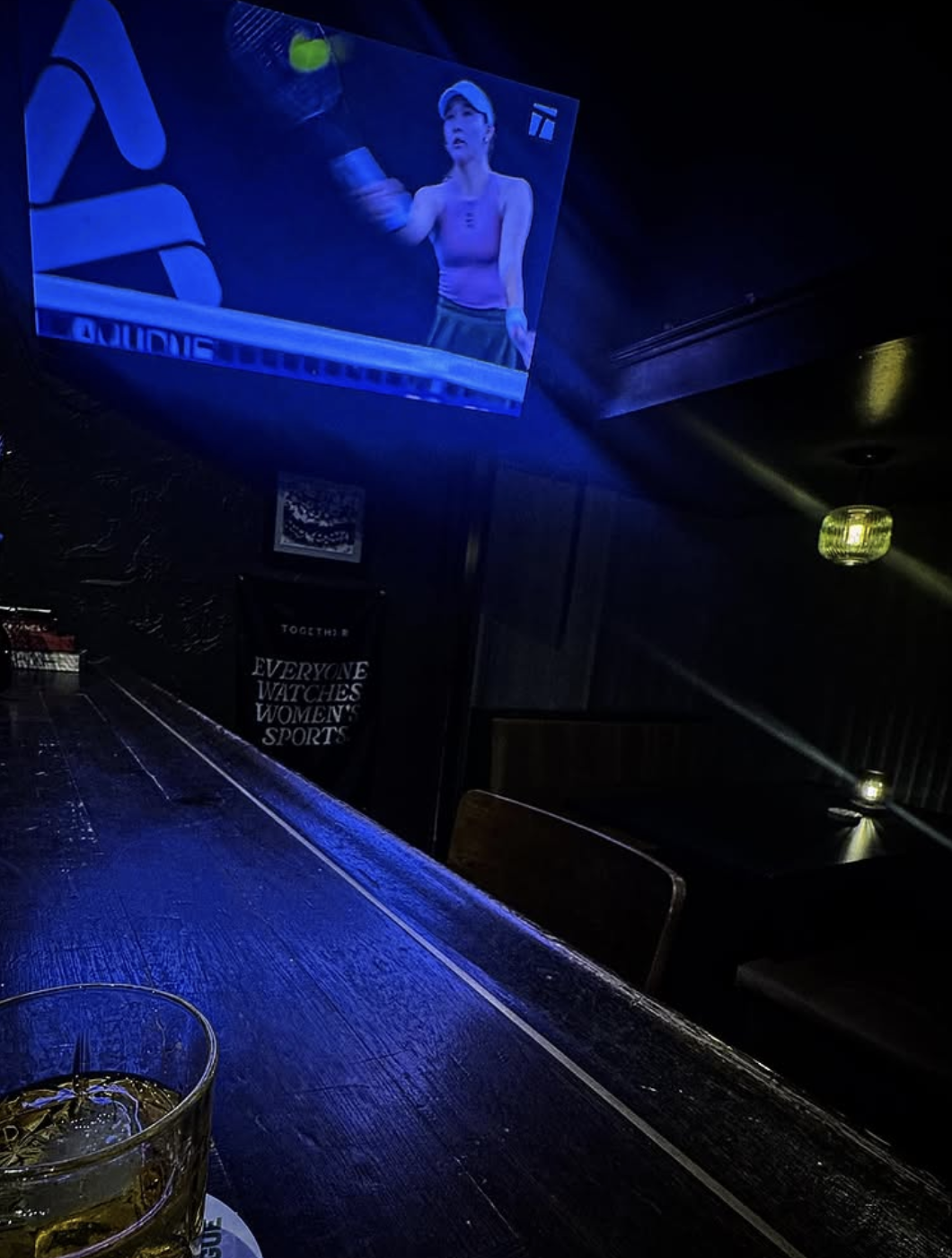
Melbourne on 19th Ave. E., Seattle, WA
This may also sound like an obvious point. But I mention it as a way to note some surprising neighborhood news. For months, I’ve been convinced (and sad) that the new women’s sports bar on my block appears to be failing miserably. It’s not that women’s sports is unpopular. To the contrary.
It’s that the food isn’t good. The hovering owner takes up too much oxygen. The TVs are often tuned incongruously to men’s sports. The games and often the music are too loud. And the service is erratic. The bartenders veer between inexperienced and unconcerned (like when they don’t have a menu item nor know how to find the channel you want) or harried and slow (despite all the empty tables and ghost-town bar.)
To be fair, there are a couple of new bartenders now who seem competent and friendly. It’s mostly the vacant tables that bum me out. The kitchen is closed, one nonchalant staffer told me at 8pm on a recent night; the cook had evidently left early unannounced.
And so I feel compelled to report that there’s been a noticeable uptick in energy this week at Pitch the Baby. (That’s the confusing name of the place.) Rather than going with my regular routine—tucking into bed with my laptop to watch Australian Open matches—I ended up at Pitch the Baby on two occasions this week. I was drawn by an uncommon sight at this neighborhood spot: A lively crowd inside.