
I’m All Lost In, #131: A Bowie song; a Goethe novel; and a different podcast than usual. Plus the week in X > Y and two music recommendations.
I’m All Lost In…
the three things I’m obsessing about THIS week
#131
Before I get to this week’s roundup, here’s a pair of music recommendations:
The first one came up this week as a reverent Yes, please while I was going through my Abstract R&B playlist looking for an album that could ease me into the night: The Ahmad Jamal Trio’s casual live record, 1958’s But Not for Me.
The second recommendation is for when night actually comes: Code, a 2014 release from the slightly mysterious electronic musician Jun Nushimura.

Ahmad Jamal, 1958. Maybe skip sprightly track 2. Otherwise this album is the height of Cool jazz.
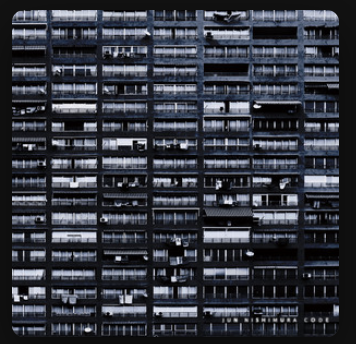
Jun Nushimura’s 2014 debut, Code
The Week in X is greater than Y
Voice Memos > Texts Dictating texts can be more efficient than typing them. Unfortunately, playing CEO on your phone in public is obnoxious and absurdist. And the mondegreen mess of typos you get is just as bad as the typos you get from eking out texts on the iPhone keyboard.
Better to try voice memos—an outright upgrade to full-fledged recordings. This throwback to voice mail constitutes a dignified dispatch of TLC between friends or loved ones. And it doesn’t create the anxiety of an incoming call.
Voice memos whisk in with the mini-dopamine thrill of text messages. They can also come with the intimate din of someone banging around their kitchen or hustling to catch the bus while their familiar voice provides a clarity that’s often missing from ambiguous texts.

Replacing the Tooth on the Right Side > Replacing the Tooth on the Left Side 2026 in dental surgery continues apace [I’m All Lost In, #119, 1/25/26 & I’m All Lost In, #130, 4/12/26.] On Thursday morning, I went for step 2 in getting a tooth implant on my upper left side. This was a follow-up to my January visit when they initiated the treatment plan, yanking the tooth (the first left-side bicuspid) to deal with an infected root canal below. An alarming blister had formed on my gums there which is what roused me into serious dental care. I think the root canal got screwed up because I’ve actually been missing the first bicuspid on the upper right side for a decade, and I’ve been avoiding chewing there. That likely traumatized the left side thanks to excessive wear and tear.
During Thursday’s visit, I told the dentist that if the replacement on the left went well, I’d finally replace the longstanding MIA tooth on the right too. But when he looked at my x-ray, he suddenly recommended replacing that one first.
Improv at the oral surgeon’s doesn’t seem like the best move, but he convincingly explained that swapping sides would allow more time for the bone to grow back on the left above the spot where he’d yanked the tooth in January. The additional bone marrow would make it easier to do the implant next year, whereas the right side was ready to go now.
And so upon leaving the appointment I had a post that looked like a plastic divot from an Ikea shelf screwed into the marrow on the upper right rather than the upper left as first planned.
Aryna Sabalenka’s Serve > Aryna Sabalenka’s Serve My favorite tennis player Aryna Sabalenka, or Daffy Saby as she’s known in my household, has been World No. 1 for a solid year and a half.
Conventional wisdom holds that Sablenka, as reiterated in a surprise Esquire cover story this week, is unbeatable right now because she’s chilled out. Specifically: As opposed to being the power-hitting, hot-headed Goliath she used to be, she’s more Zen these days. The commentators say Sabalenka’s tennis enlightenment has shown up in the guise of her more evolved game: Playing the net, using drop shots, and being a more nimble mover. She’s no longer just standing there blasting from the baseline.
Sure. But I think this narrative belies the fact that Sabalenka’s power game, especially her devastating serve, now comes with even more thunder than it used to. The data bears me out. Saby’s serve is about three miles-per-hour faster this year than her career average (109 mph v 106 mph). And she’s hitting more aces (4.9 per match v 4.7).
I think this reliably heroic serve is making the difference in 2026. I’m not discounting the theory that Daffy Saby is a more well-rounded and relaxed player than she used to be. But it hasn’t come at the expense of her power game. To the contrary: She’s gotten more powerful as she’s mellowed. Her return speeds have ticked up too. (Footnote and a sign-of-the times confession: I used A.I. to find these comparison numbers.)
Speaking of lightning-bolt serves: I’m happy to report I hit an ace myself last Sunday morning during my match at Volunteer Park’s Court 3 against Valium Tom. And not just any ace. It was down the center T on game point.
“Clearly,” Tom said after I felt compelled to announce that I’d placed the hot-shot serve on purpose—as opposed to my usual speculative approach.
This Week’s Obsessions
1) The Chorus to Bowie’s 1972, Post-Ziggy-Stardust Single: John, I’m Only Dancing on Piano
I’ve written about practicing this self-consciously comely bit of rock & roll camp before [I’m All Lost In, #36, 6/21/24.] This time I’m specifically fixated on the archly artistic finale to the chorus. I’ve spent several hours this week trying to match the walking B-down-to-D (and then back up again) half-steps melody in the right hand with the syncopated E-to-E octave bobbing in the left.
And if I can get the melody and the bass working at the same time, I want people to stop telling me how hip the past is. *
*A re-mix of one of my all-time favorite lines: “And if we can get Sonny, Trane and Ornette Coleman working at the same time, I want people to stop telling me how hip Paris is!" —LeRoi Jones, Original review of Coltrane Live at Birdland, 1964, collected in Black Music, 1967.
2) Wilhelm Meister’s Apprenticeship by Goethe
Notwithstanding: the past does include the novel I’m currently reading. Goethe’s Wilhelm Meister’s Apprenticeship (1795.) It’s the German literary giant’s first (and some would argue literature’s first) coming-of-age novel. It’s about an idealistic theater kid named Wilhelm Meister who wants to escape his bourgeois trajectory to pursue a life of art instead.
The opening chapters track pre-teen Wilhem’s fascination with puppet shows. When he figures out that the puppets aren’t moving or speaking on their own, he wonders “but, then, how came it all to be so pretty, and to look just as if they both spoke and moved themselves?”
Mesmerized by the makeshift theater and curtain his father had set up, he “lifted the…screen, and poked in my head” trying to fathom: “Where were the lights and the people who managed the deception? I wished to be at the same time among the enchanters and the enchanted, at the same time to have a secret hand in the play, and to enjoy, as a looker-on, the pleasure of illusion.”
Soon enough, Wilhelm is regularly enlisting his siblings and other neighborhood kids to help turn his parents’ sitting room into a stage for his own productions. These rudimentary affairs—unintentionally comedic to the grown ups assembled—turn into Goethe’s metaphors for the mechanics of human artistry. They’re also prompts for Wilhelm’s yearning discoveries. On one opening night when the motley troupe suddenly realizes they’ve forgotten to memorize their lines—they thought their costumes alone would compel them to inhabit their assigned “personages”—Wilhelm attempts “in the heat of invention” to bail them out by reciting lines from a different play they’d performed. He’s hoping to superimpose one play onto another. It may be the world’s first mashup.
In addition to anecdotal allegories like this, Goethe also presents more straight-forward moments to lay out Wilhem’s (and I’m guessing Goethe’s own) inquiry into the life of an artist. When—as a sophisticated teenager now—Wilhelm is wrestling with his dreaded preordained life in commerce, Goethe scripts a philosophical back-and- forth between Wilhem and his clever, more practical best friend Werner about the standoff between art and capitalism. A snippet:
Werner: I know of nothing in the world more rational than to turn the folly of others to our own advantage
Wilhelm: Perhaps it were a nobler satisfaction to cure men of their follies.
3) Not the Tennis Podcast I Usually Listen To: The Player’s Box
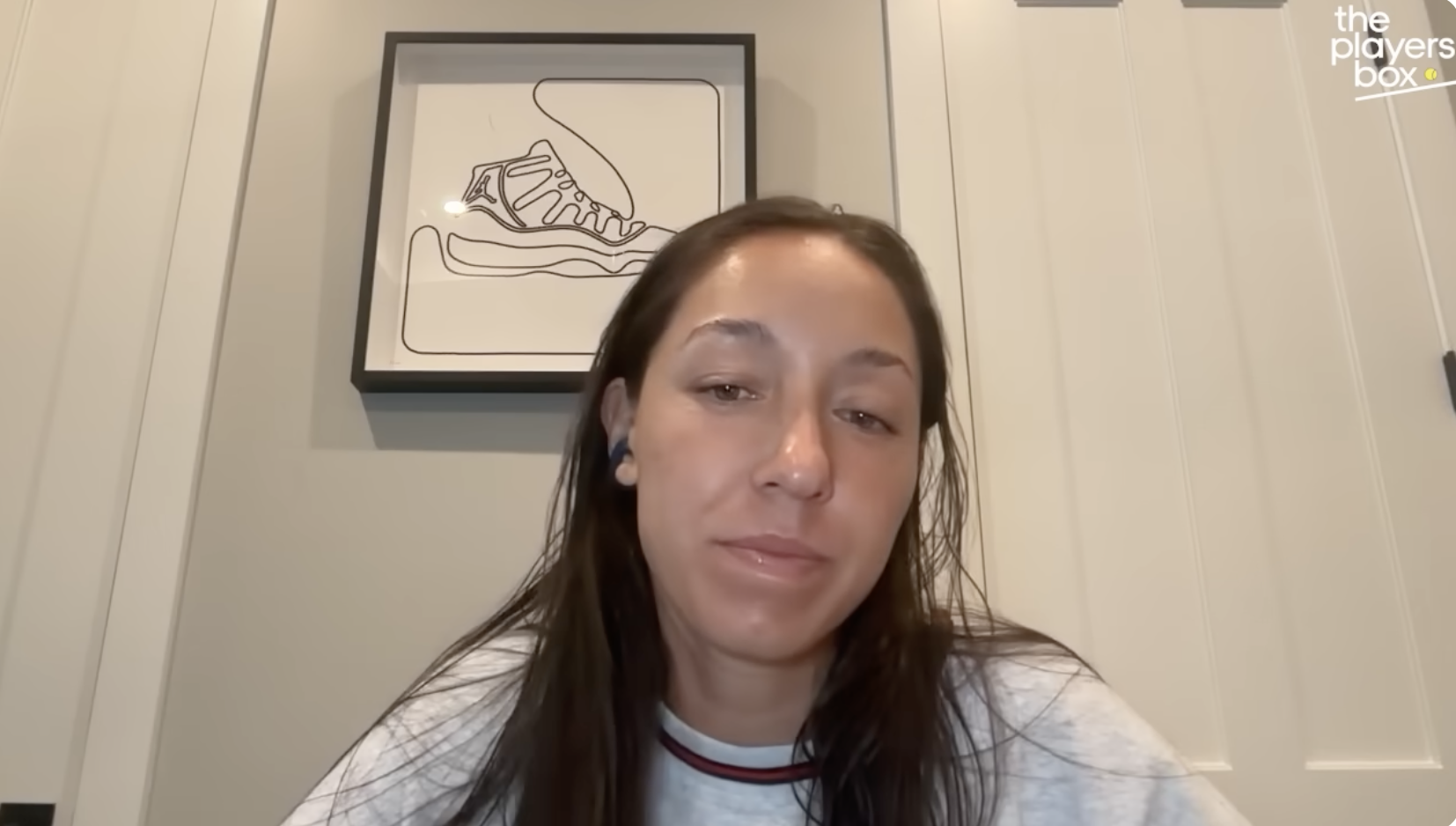
Jessica Pegula in typical eye-roll mode.
I check in on the WTA website several times a day. I have a subscription to the Tennis Channel (I signed up for it when I got back from Indian Wells in early March, and I haven’t stopped watching since.) And of course, I religiously tune in every new epidose of The Tennis Podcast when it hits on Monday morning. Still. it’s not enough tennis content for me. So, I’ve started listening to another podcast: The Player’s Box.
This boisterous show, which comes out every Tuesday, stars four American WTA normies, and besties: World No. 5 Jessica Pegula; World No. 17 Madison Keys; doubles star Desirae Krawczyk; and veteran doubles specialist Jennifer Brady.
The Player’s Box distinguishes itself from typical hot-take analysis and tennis news roundup podcasts with the free-wheeling group’s high-school-cafeteria camaraderie, inside-the-tour-locker-room knowledge (and cheekiness), and low-level sarcasm about pro tennis and life in general. They’ve also got a battery of playful, regular conceits such as “Unforced Error of the Week” or sometimes “Winner of the Week.” These are sit-com-style mishaps or mini-success stories from their personal lives, which is largely what this entertaining podcast is about. Many of their blunders are airport related, given their lives on tour.
It’s a treat to have a superstar in the lineup like Pegula; she won the 500-level Charleston Open right before last week’s episode. And even as she regularly idles in teenage eye rolls, she has the warmth of a mom and a vet (she’s 32) and the last-word insights of a calming head coach.