
I’m All Lost In, #148: Girl group royalty; DIY folk; and jet-age architecture. Plus the Week in X>Y, including light rail to Bellevue.
I’m All Lost In…
the 3 things I’m obsessing about THIS week.
#148
The Week in X > (is Greater Than) Y
Keeping the “Police & Thieves” Bass Line in My Back Pocket Until the 2nd Verse > Introducing it in the 1st Verse I now wait until the second verse to play the bass-line reveal in my piano cover of the Clash’s version of Junior Murvin’s “Police & Thieves.” Combining the ricocheting bass groove with the sweet, right-hand pop hook midway through the jam boosts the song’s energy while simultaneously turning the lights down.
520 > I-90 / I-90> 520 If you’re driving to Bellevue from Seattle, which I was on Friday morning taking XDX to an appointment: SR 520 is the much calmer, easier route than I-90; I live slightly closer to 520, but both highways are a quick, straight shot from my apartment.
I-90 to Bellevue is nerve-wracking: Claustrophobic lanes. Encroaching barrier walls. Tunnels that make me think of the Lady Di paparazzi chase. And a surprise confluence of indistinguishable exits which leave you in a suburban hall of mirrors where the arterials are just more highways on a grid.
By comparison, SR 520 coasts along with the elegance of what I imagine an Irish motorway to Lake Isle of Innisfree might be like. And the exit to Bellevue drops you on an intelligible landscape of straightforward lefts and rights to your nearby destination.
At the macro level, though: I-90 is the superior route because you can take light rail. Which we did on Wednesday to see a movie at the Lincoln Square Cinemark in downtown Bellevue.
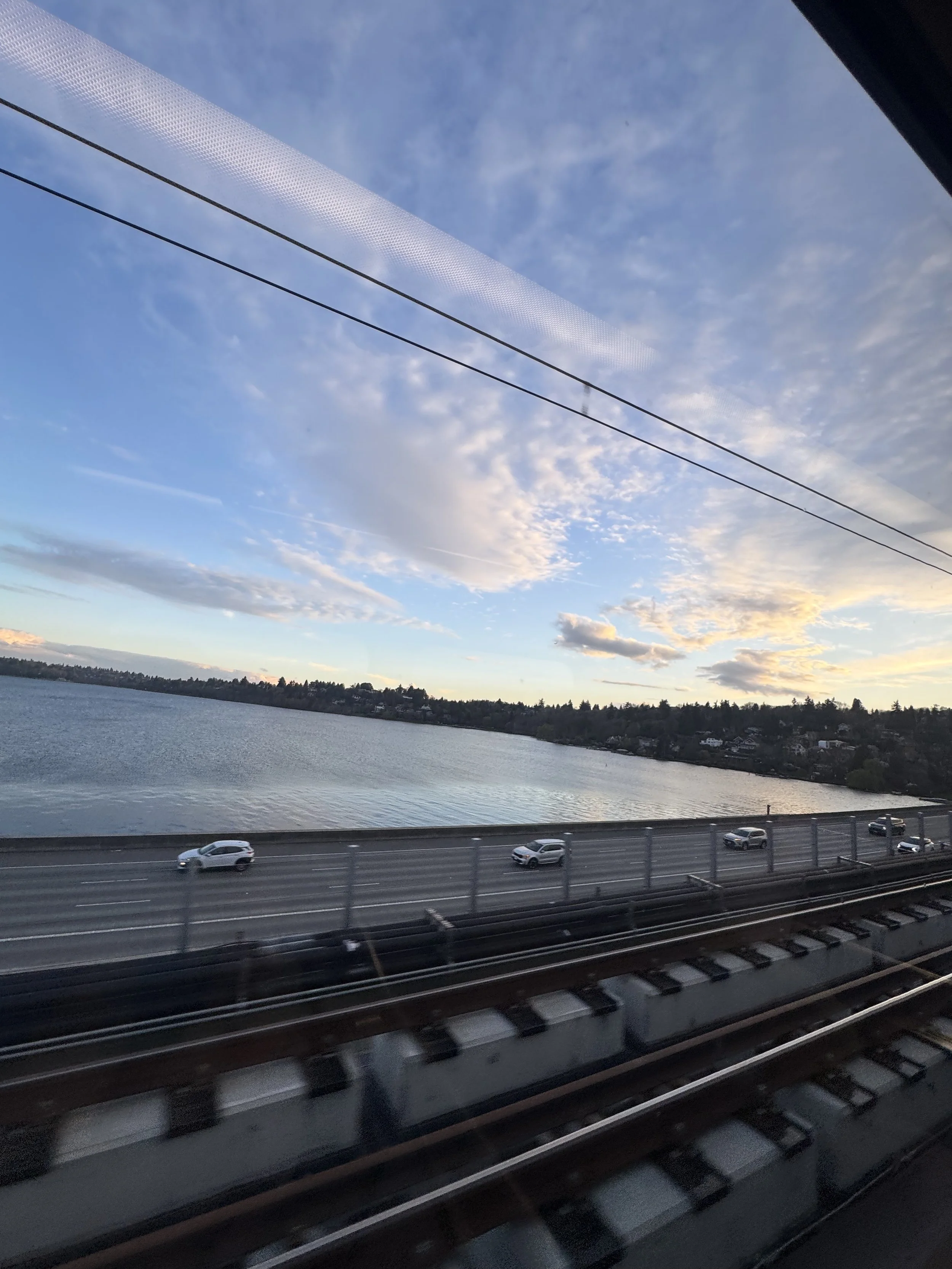
I actually didn’t snap this photo on the way to the movie—Olivia Wilde’s The Invite. I took this picture from the Link light rail 2 Line on opening weekend, 3/28/26, [I’m All Lost In, #129, 4/4/26.]
Taking light rail across I-90 is especially necessary if you’re traveling from downtown Seattle. Otherwise, by car, you have to take I-5 to get to I-90, a route that should be included on the Odyssey’s travel warnings alongside whirlpools and sea monsters.
Iga Swiatek > Marta Kostyuk, Elina Svitolina, and Elena Rybakina You remember Iga. She’s the one I decided to channel in my recent tennis match against Valium Tom instead of channeling my pop-psychology “Self 2” [I’m All Lost In, #139, 6/14/26.] Iga is also the former World No. 1 who had spiraled into an emotional tennis slump over the last year and a half [I’m All Lost In, #127, 3/22/26] slipping in the rankings.
Well, she’s back. Iga Swiatek just cruised through the Toronto Open this week to win her first 2026 title, an 1000-level title at that, after dispatching a slate of top-ranked players. She beat World No. 11 Kostyuk (3-6, 6-1, 6-2) and World No. 9 Svitolina (6-3, 1-6, 6-3); both Kostyuk and Svitolina are in top form right now. And in the final, Iga crushed World No. 2 Rybakina; Rybakina hasn’t been playing her best lately, but Swiatek’s dominant 6-2, 6-3 straight-sets victory to cap this title run should frighten the rest of the WTA field; Iga also beat World No. 15 Diana Shnaider (6-2, 6-1) on this Toronto comeback tour.
Pro tennis’ best color analyst Andrea Petkovic wrote an exciting Substack post about Iga’s Lazarus look.
Before the tournament, I asked Hawkeye for a bunch of numbers on Iga’s tennis because I wanted to make sense of why she hadn’t been able to reach a final this year. There were numbers about groundstroke speed, height above the net, serve numbers, return numbers. Interestingly, they were not much different to some of Iga’s numbers during her best years. Some were down by a very small margin of points, but others were up so they should’ve balanced each other out. When I came across breakpoints saved and breakpoints converted, though, I saw the biggest discrepancy. That’s where she had fallen off. To me, this meant one thing: the barrier in front of Swiatek was not her tennis, it was her belief.
This Week’s Obsessions
1) We are the Chantels
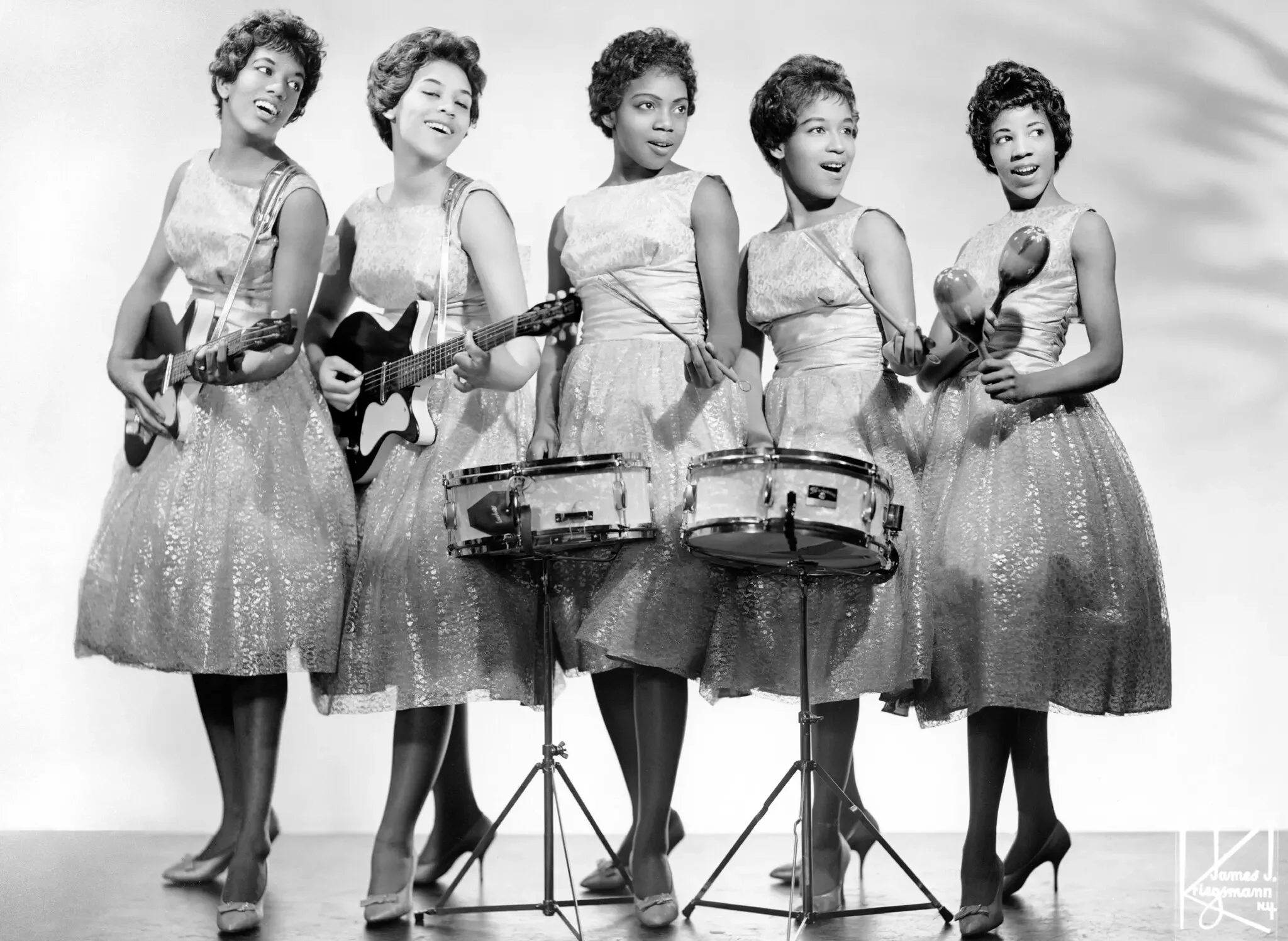
The Chantels. Arlene Smith, left.
RIP Arlene Smith, the powerhouse lead singer and talented 16-year-old songwriter for the Chantels, one of rock & roll’s first girl groups. Smith’s yearning blockbuster single “Maybe,” which went to No. 15 and No. 2 in 1958 on the Billboard and R&B charts respectively, ushered in the Kennedy-era girl-group hey day of Shirelles, Marvellettes, Ronnettes, Crystals, and Shangri-Las at a time when teenage-heartbreak doo-wop had been dominated by boy bands.
I’ve written lovingly about early rock & roll, doo-wop, and girl groups before, most recently about Queens, NYC’s early ‘60s one-hit wonders, the Butterflys [I’m All Lost In, #133, 5/3/26.] I knew the Chantels’ hit mainly because of the Shangri-Las 1964 cover version. However, with this week’s news about Smith, I listened to the group’s sole LP We Are the Chantels for the very first time. And then on repeat. .
The best comparison to this pop tour de force would be the Sex Pistols lone LP, Never Mind the Bollocks, Here’s the Sex Pistols. The similarity? Like that seismic Pistols record, 1958’s We are the Chantels is relentlessly committed to a singular sound. In the case of the Bronx-based Chantels, the jam is overwrought-torch-song doo-wop driven by simple piano chords, blues shapes, minor-sixth melodies, and Smith’s ardent and classically trained voice.
We Are the Chantels has only one miss, a much too-punchy backbeat jam that tries to be playful—as opposed to the remaining, mournful 11 tracks (including “Maybe”) that stick to Smith’s melodramatic songwriting signature. Most of these tunes either sound like an early draft or subsequent revision of “Maybe.”
A particularly flawless sequence comes at songs 6-9: ”He’s Gone” (the group’s initial single, released in August 1957), “I Love You So,” “Every Night (I Pray),” and “Whoever You Are.” The last song on the record, “If You Try,” is also a knockout.
‘“I Love You So” is actually a cover of an early doo-wop hit by Harlem boy band the Crows. The Crows were signed in 1953 by the legendary indie NYC record producer George Goldner during the first days of doo-wop [I’m All Lost In, #33, 6/1/24.] In 1957, Goldner signed the Chantels.
2) The Cradle Show at Cowpine Theater
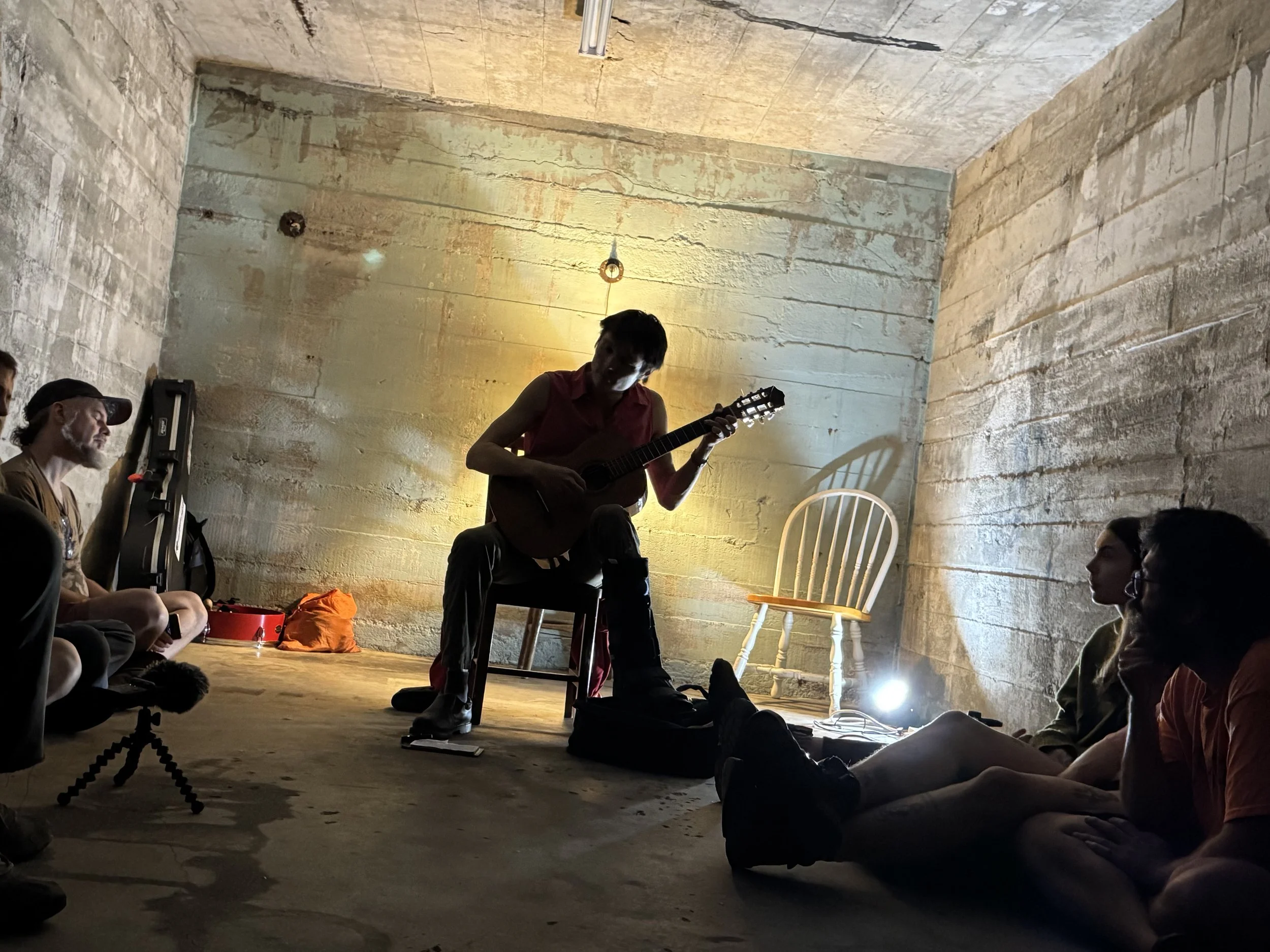
Paco Cathcart, aka the Cradle, carport show, Seattle, 8/8/26
Full disclosure about this rave review: Paco Cathcart, the singer-songwriter who performs as the Cradle, is something of a nephew to me; Paco, who I once name-checked in a poem as “my young avant-garde friend,” is the stepson of a longtime pal.
While Paco’s touring compatriot, alto-saxophonist Carolyn Hietter (aka Financial Collapse), opened Paco’s Seattle house show last weekend with a Martha Graham-meets-free-jazz performance that can certainly—and accurately—be called avant-garde, Paco themself has settled into a more traditional genre: folk music.
I say “settled” because Paco’s formidable and idiosyncratic catalog of indie releases includes everything from experimental music to rock music to indie rock to emo to punk, and, going way back to high school, Dungeons & Dragons metal. Paco even once composed some dub remixes for a set of poetry reels I made back in 2019. One of Paco’s electronica tracks, “The Name of Willis Reed” (from the Cradle’s 2019 NNA Tapes release The Glare of Success), may be my favorite electronica piece of all time. … My friend Valium Tom has suggested that Paco was trolling me with that one, as it’s a tribute song to the 1970 New York Knicks…
But folk troubadour it is. Paco’s flawless shredder chops—translated on classical nylon-string guitar and mixed with South American folk music and clinical, biblical civil-rights-era Dylan—captivated the crowd last Saturday night at the Cowpine Theater, a DIY venue in a carport just north of the U. District in the tree-lined Roosevelt neighborhood.
The Dylan comparison isn’t generic shorthand. Paco’s jams are patiently crafted parables that remix language and meaning in epic, insightful stories written with a poison pen against a world that’s been excavated by vicious vanity capitalism. “Man in the Mirror,” Paco’s song about the 2023 subway murder of Jordan Neely, a homeless Michael Jackson impersonator, is Dylan’s “The Lonesome Death of Hattie Carroll” updated for the Trump years.
3) Designing TWA, Eero Saarinen’s Airport Terminal in New York, Park Books
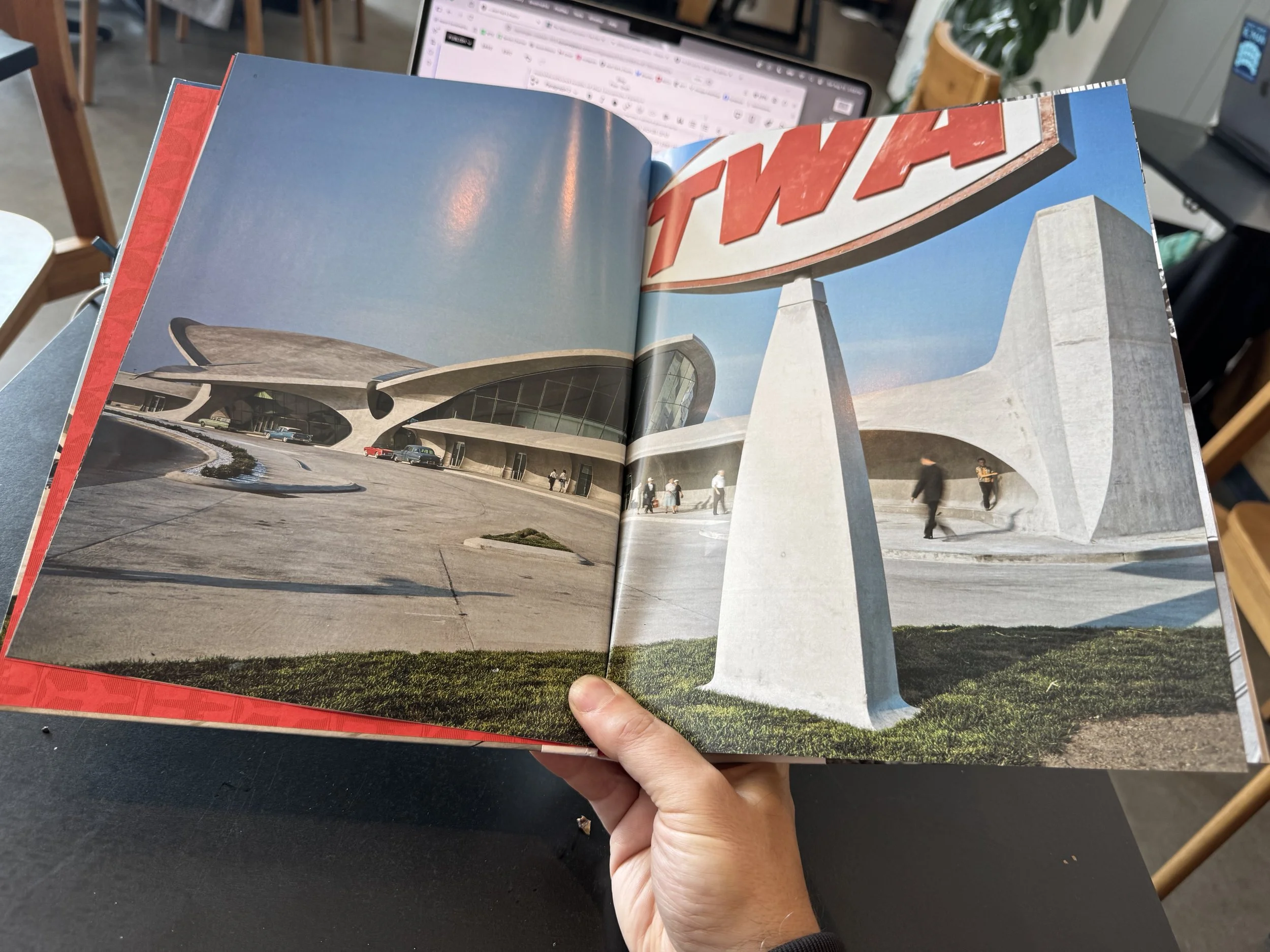
8/15/26
Upon having my mind blown at JFK’s TWA Hotel [I’m All Lost In, #145, 6/27/26], I ordered this coffee table book of photos and academic essays that chronicle the construction and 1962 debut of Finnish architect Eero Saarinen’s iconic JFK (née Idlewild) terminal. Though the prompt for Saarinen’s design is the shared infrastructure of Idlewild’s “Terminal City” concept, the story is framed in this account with cynical references to “corporate design,” “corporate architecture,” and “corporate communications” as “Airports [became] facilities for handling people not airplanes.” But exuberant Jet-Age capitalism is part of the beauty of the TWA terminal, which the authors acknowledge perhaps subconsciously by narrating in the present tense. “The preliminary design anticipates the arrangement of uses.”
With machine efficiency as the ideal, Saarinen went for “a barrier-free spatial continuum of zones flowing into one another” that both shrank and “fragmented” the airport process into discrete functions that paradoxically combine into one. The result? The mythical, avian split-level conception of moving walkways, tunnels, and parallel wings.