
I’m All Lost In, #127: Low-brow capitalism; Low-IQ AI; and the paradox of empty houses; plus the week in X > Y.
I’m All Lost In…
the 3 things I’m obsessing about THIS week
#127
The Week in X > (is greater than) Y
Umm Kulthum > Fleetwood Mac Seattle's coffeeshop soundtracks need to change. It will be a welcome day if I never hear Fleetwood Mac nor Steely Dan in a coffeeshop again. Or any Velvet Underground/David Bowie/Joy Division-induced 1980s alt-radio jams either.
And so it was a tonic to hang out at the excellent new Palestinian-owned coffeehouse Mintish [I’m All Lost In, #125, 3/9/26] once again last Sunday where Nasser-era Egyptian diva Umm Kulthum starred as the morning radio prompt. As the ouds, zithers, violins, and tambourines backed her melismatic pop-opera vocals with micro-tones, my morning became one with the cafe.
I’m not suggesting that every coffeehouse in Seattle play Middle Eastern music in the morning. But both Stevie Nicks and the alt-rock classics have become interminable.
Baristas of Seattle: It’s time to take advantage of the music catalogs at your fingertips in the 21st century. Give us coffeeshop moods rather than rock radio.
Upright bass > Tanpura More from the land of micro-tones by way of an experimental gig at Wallingford’s reliable underground arts space, the Good Shepherd Chapel. This past Thursday night, local guitarist Trevor Eulau, aka Sh'ma (sh’ma is the Hebrew prayer word for “hear”), performed a complex yet somehow casual set of Eastern mode jams; he was seated on a meditation pillow.
Turning sitar-influenced guitar fingerwork into a hybrid of flamenco rhythms and Yiddish folk, Eulau anchored his playful guitar pyrotechnics to the passionate upright bass flow of Tony Lefaive.
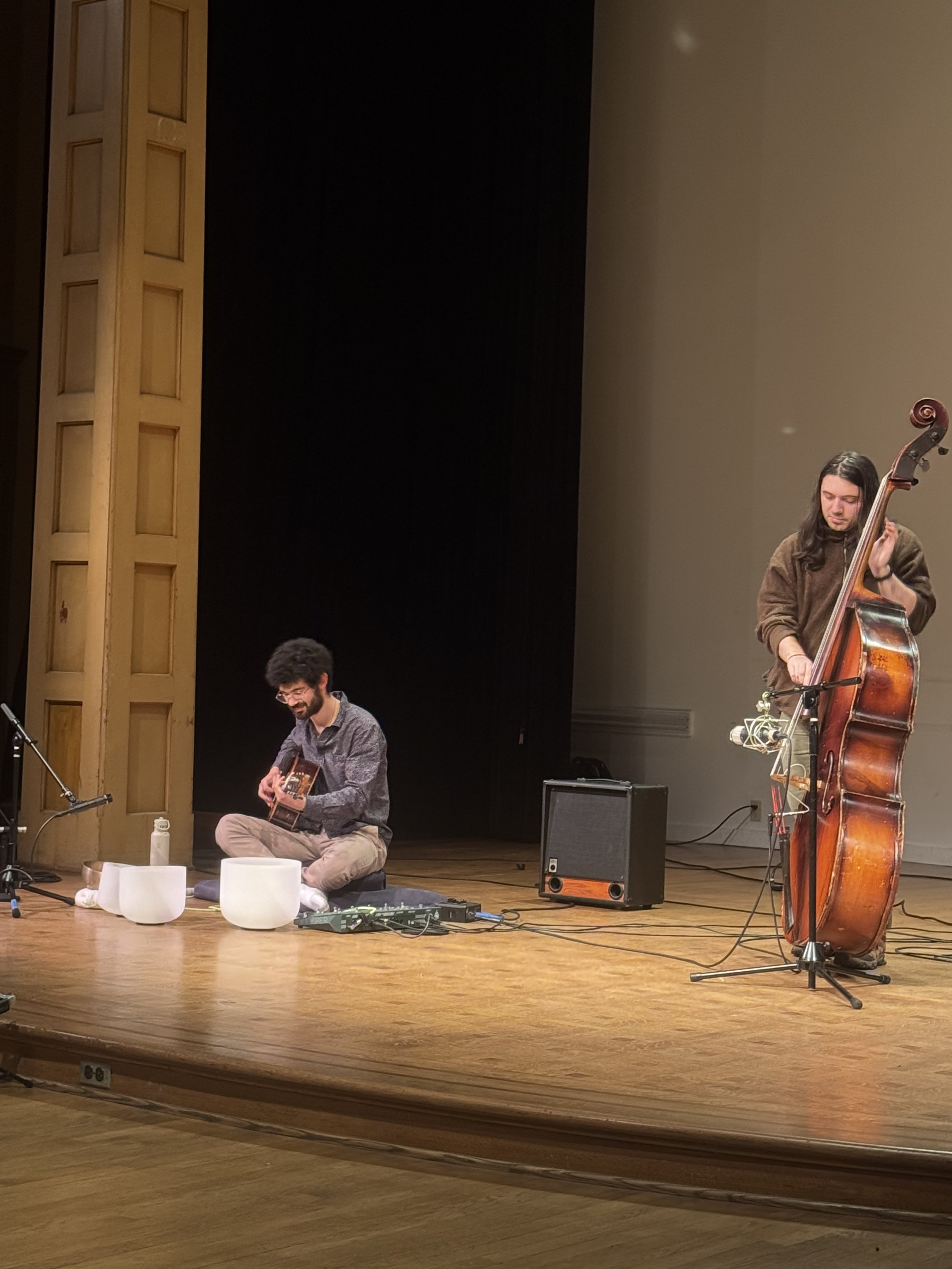
Sh’ma, aka שמע, at the Good Shepherd Chapel, 3/19/26
As Elau’s Indian classical music expertise transformed his open-ended guitar compositions into ragas, it was hard not to imagine a tanpura drone in the mix. Elau’s decision to go with slappy, action-packed bass playing instead was a lovely mind scramble. American jazz rather than a meditative drone was the perfect choice for the international mashup.
Magda Linette > Iga Swiatek Tennis star Iga Swiatek—unbeatable in 2023 and most of 2024, and also the reigning 2025 Wimbledon champion—has always been a mysterious sort [I’m All Lost In, #54, 10/25/24.] Officious. Simmering. Robotic. In the habit of whispering to herself during her clinical and joyless wins, she’s a picture of inner turmoil and anhedonia.
This week at the Miami Open, World No. 50, Magda Linette beat Swiatek in the opening round. Linette, a 30-year-old journeyman from Swiatek’s native Poland, ended Swiatek’s 73-game streak: Swiatek, who’s 24, hadn’t lost a round-one match at a WTA tournament since 2021.
Tennis journalists ranging from the in-depth data-nerd blogger Ben Rothenberg, to an earnest Instagram Reels mason who goes by Christian’s Court, to the NYT’s tennis desk were all agog. (Me and my tennis fanatic bosom buddy Lee were texting about it right away.)

Urgent incoming text from fellow tennis fanatic Lee, 3/19/26
Admittedly, the tennis media had already been psychoanalyzing Iga. After her towel-tossing meltdown during her trying quarterfinal loss at Indian Wells to World No. 9 Elina Svitolina two weeks ago, Swiatek had suddenly lost her last five matches against top-10 players. She’d slipped to World No. 3.
In the larger scheme of things, World No. 3 is an exceptional ranking. But in the Iga-Swiatek scheme of things, the combination of her strained and remote personality with her downward trajectory was a story.
The media wants to know: What’s wrong with Iga?
The story is fascinating because Iga herself, like an AI suddenly achieving consciousness, is asking the question as well. On Thursday night, her existential mind poured out to the reporters in Miami:
This is like the worst nightmare a top tennis player can have, dropping in matches in terms of the level…
Honestly, now tennis feels complicated in my head…
I just must—I don’t know; unconsciously or consciously it’s hard for me to say—change things, and then my tennis kind of collapses….
I feel like I carry a lot of expectations, and I can’t really fulfill them right now. I need to get rid of them, because my game hasn’t been good enough to have any expectations….
I think I’m a bit confused, but there’s no way but forward…
I’ve always been an overthinker; lately it’s just been really intense… It’s hard for me to get rid ofmany thoughtsthat I have…when you overthink stuff on [the] tennis court, you’re never going to be smooth, you’re never going to be loose, you’re never going to have a good timing.
I feel like I make so many bad decisions or mistakes that it’s hard for me not to think. And later on—when you feel like your level is dropping and the stress comes in and your body gets tense—it’s even harder. So it’s been like a circle that I’ve been going through in matches.
After beating Swiatek, Linette lost in the next round in straight sets to Alex Eala, the World No. 31.
This week’s obsessions:
1) Empty Houses with the Lights On

3/16/26
Something is happening where nothing is happening. This is the koan on my block.
A trio of new townhouses has gone up at the corner of 19th & Mercer. Now for sale and staged with model furniture, the otherwise empty three-story homes are ablaze with lights all night. The ghost-lit development is adding life and energy to my muted street where the handful of neighborhood restaurants, shops, and bars close between 8:30 and 10 every night. And the windows in nearby houses where people do live, go dark around the same time.
I’m a pro-density zealot. I’m excited that people might soon be moving into the new housing. And I’m holding out hope they’ll be as lively as the current invisible residents. But here’s my fear. Once real people do move in, the lights will shut off too early.
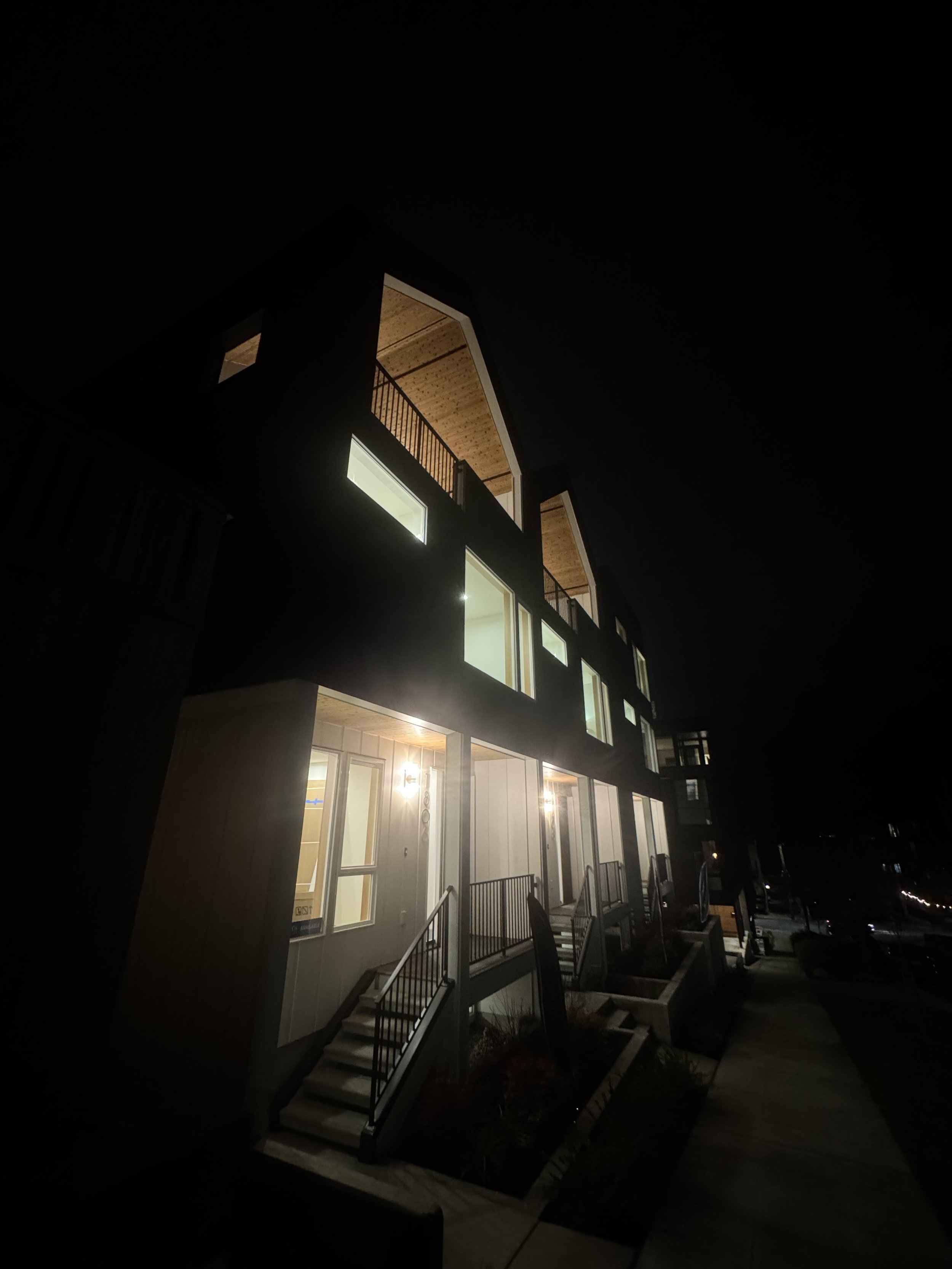
3/16/26
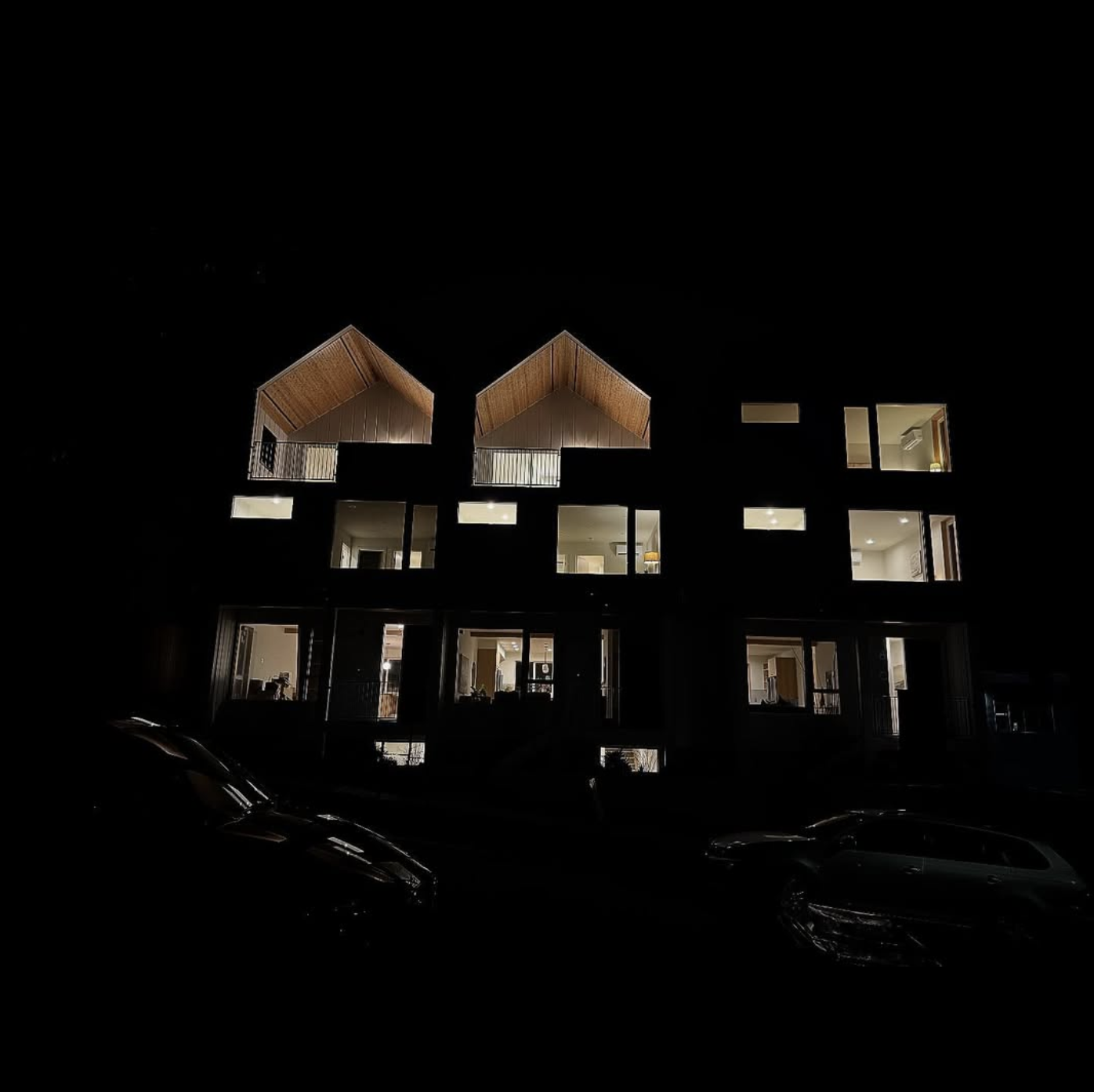
Obsessed last month too, 2/14/26
2) Low-Brow Capitalism
Web pages that idle in circular logic. International phone numbers no longer in service. Third-party subcontractors with mysterious urls spiked with dashes, misplaced capital letters, and pound signs. Customer service reps who speak like HAL from 2001: A Space Odyssey. This is the hybrid world of internet enshitification [I’m All Lost In, #106, 10/26/25] and submerged capitalism that I found myself in Monday afternoon as I tried to retrieve a refund from the hotel I’d stayed at two weeks ago. No shade on the owners of the hotel; they were mensches [I’m All Lost In, #126, 3/14/26.] In fact, they suggested the refund themselves, profusely apologizing for the faulty lock on the door to my room.
When the refund failed to show up in my credit card account, I reached out to the hotel. They told me the refund had been deposited into the Expedia.com account connected to my reservation. The thing is: I hadn’t made my reservation through Expedia; I had made it through Booking.com, Expedia’s competitor.
And so started my journey into the brownfields of capitalism. I called Expedia first. They seemed to be the ones last seen with my reservation. When I eventually reached a live customer service rep, he asked me for an “itinerary” number. All I had was a “confirmation” number, of course.
“This conversation can serve no purpose unless you have the itinerary number,” the human Expedia rep told me. I eventually pressed him to look for my reservation with my confirmation number.
“There it is,” he said, though he suddenly sounded anxious. He abruptly provided me with a phone number for a company called M-Tu.com. And after reading me a separate, comically lengthy string of numbers, he told me to provide them with that. The phone number for M-Tu.com didn’t work. Nor did a second one I found on their lo-fi website. I sent them an email, but did so without hope.
I called Booking.com next. I gave the service rep there the confirmation number from the original sale. She was about to tell me the name of a “Partner Offer Company” that had apparently taken over the reservation. But then I got disconnected. I called back and reenacted the same series of pro forma computerized options before connecting to another human. This led once more to the mystery of Booking.com’s “Partner Offer Company,” for which it turned out there was no name nor contact information.
The folks at the hotel were as bewildered and frustrated as me. At this point, they simply Venmoed me the $184 refund.
My hypothesis is that my MIA reservation was channeled into a crude, penny-ante commodity market where third-party subcontractors come together to trade, nickel & dime, and survive on the detritus of an economy in collapse.
3) Low-IQ AI
A similar dispatch from the shoddy world this week: Startled by a Downtown Seattle Association fact sheet describing five discrete categories of trendy, affluent Seattle consumers who are supposedly keeping our local economy flush, I wrote a column for PubliCola about the unstable political situation we’re in. French Revolution Vibes, as my headline had it.
There was something else I could have written about, though. And I alluded to it in the column: ”[the report] reads like [it was] written by AI, an intern, or both.”
The shimmering, banal, and redundant prose the DSA used to describe Seattle’s rarefied consumers seemed like a warning sign in its own right about Seattle’s economy. Namely: That’s AI behind the curtain.
As with the three-card monte runaround I got trying to find my hotel refund, it was the same trick trying to make sense of the Downtown Seattle Association fact sheet. When I asked some basic questions—such as how they first identified the five discrete sets of consumers (“Was it based on surveys that member businesses had done with customers?”); how they came up with the descriptions; and why the percentages they’d divvied up between the five groups didn’t add up to 100—I got an unusually complicated answer from the usually helpful DSA spokesperson.
He told me: “These are not narrative descriptions that we authored but were generated” from an ArcGIS platform called Esri Tapestry that’s “used by retail brokers...”
He explained that the DSA hired a consultant called Downtown Works who oversees the program. I sent my questions to the owner of Downtown Works. She never responded.
I ended my PubliCola column with this:
The DSA profiles don’t add up to 100 percent of downtown Seattle’s customer base. Evidently, shoppers who account for 10 percent of downtown customers are going unnamed.