
I’m All Lost In…
the 3 things I’m obsessing about THIS week…
#158
The Week in X (is greater than) > Y
Clothes Shopping in Person > Clothes Shopping Online I turned to online shopping therapy this week to soothe a case of the blues. I ordered a T-shirt, a William Gibson paperback, a plastic-mushroom desk lamp, a coffee-table photo book, and two pairs of Banana Republic trousers. The trousers, which I got with my cherished GAP credit card, were a disaster. Too baggy. Too long. I need to return them.
Having a Strategy Going into Your Tennis Match > Not Having a Strategy This is not a guarantee you’ll win. This week I drew up a clever attack plan based on advice I got from a trio of tennis vets at work. I had messaged them in advance of my regular Saturday match against Valium Tom. Still, Tom beat me again. However, having a specific game plan—which I won’t reveal here—did keep me focused and energized despite the dispiriting scoreline. Having a plan also energizes you to revise your plan.
Turning to Hieu Minh Nguyen’s New Poetry Collection for a Break while Reading Theodore Dreiser’s 500-page American Classic Sister Carrie > Turning to Ashton Politanoff’s New Novel I’m reading American novelist Theodore Dreiser’s 1900 proto-Realist classic, Sister Carrie; more on that below. This is just to say I had Ashton Politanoff’s 2026 novel Dad Had a Bad Day on my bedside table at the ready so I could periodically come up for air if necessary to shake off Dreiser’s 19th-century prose with easy-going contemporary reading. And while Dad Had a Bad Day—written in quick anecdotes—is a page-turner, the toxic machismo is a turn off, spoof or not.
Luckily, and entirely because poet Hieu Minh Nguyen’s new collection, Staying Still, has a picture of lit apartment building windows on the cover, I bought a copy recently and had it handy. I’ve been reading it in between chapters of Sister Carrie.
Nguyen’s intimate, domestic poems are written from his POV as the queer son of Vietnamese refugees. The collection includes tangible scenes of cognizant loneliness. For example, the punchline to one observant poem, “The New City,” is written from his perspective as a solo diner sitting near all the friends and couples sharing nights out around him: “Someone is making their way through the bar,/coat tucked under an arm, a drink in each hand.”
One standout snippet in “From Paradise,” a montage poem of scenes about traveling alone, reads: “A couple, a family, a group of friends stop me/at the market, on the trail, at the cafe to ask/if I could take their photo. I sneak my thumb/into the corner of the frame.”
Nguyen is also very funny. From the same poem: “One one-star review of the ocean reads: looks / nothing like the photos.”
And existential too. From another montage poem titled “Come On Over”: “the only destination we knew was distance.”
This Week’s Obsessions
1) Theodore Dreiser’s Sister Carrie
So, yes, I’m reading 500-page Naturalist American lit classic Sister Carrie, working-class newspaper reporter-turned novelist Theodore Dreiser’s first book. It was published in 1900 at the advent of the modern city; it’s No. 1 on Valium Tom’s list of recommendations to our City Canon [I’m All Lost In, #156, 10/10/26]. He’s been nudging me to read it for years.
Despite my assumption that I’d need some fast-paced backup reading to occasionally come up for air from Dreiser’s old-fashioned prose (see above), Sister Carrie is a total page turner itself. It’s about a young woman who moves from her small Wisconsin town to Chicago where she’s initially ensnared in near-poverty, cramped tenement living, and factory drudgery even as she’s enchanted by the atmospherics of bright-light city dreams. Soon though, the over-the-top attention of male suitors from different rungs on the social class ladder gives her a segue into petite-bourgeois and legit-bourgeois dreams. City life also helps her segue into a theater (“theatricals”) career and also into stardom and tragedy in the brightest city of all, NYC
The 19th-into-20th century’s hyper advance into machine-age capitalism created an explosion of discrete new urban classes. Dreiser is great at describing the macro and micro-facets that differentiate one from the other. But more so, he clinically shows how the era also re-arranged and re-mapped the physics of the city itself. Phrases such as “what was then” or “was at the time” or “had originally been built as”— gives Dreiser’s prose the feel of a world in the rush of dramatic transition. He’s an obsessive reporter breathlessly trying to chronicle the onslaught. “The boulevard in question was at the time little more than a country road…” “They took. a cab to what was then a pleasant evening resort…”
Dreiser isn’t known for being a particularly good writer. But this attention to the iterative urban landscape makes for great reading:
Avery Hall was a three-story red brick building containing stores and a lobby upon the ground floor and a few offices upstairs, the larger portion being devoted to disuse, for it was not very popular any more as a theater. It had originally been built as part of a larger summer garden, when the ground upon which it was located was not more than a mile from the city limits. The city had grown so rapidly and extended its borders so far that the summer garden idea had been abandoned and the surrounding ground parceled out into one-story store buildings which were largely vacant.
2) I Walked with a Zombie
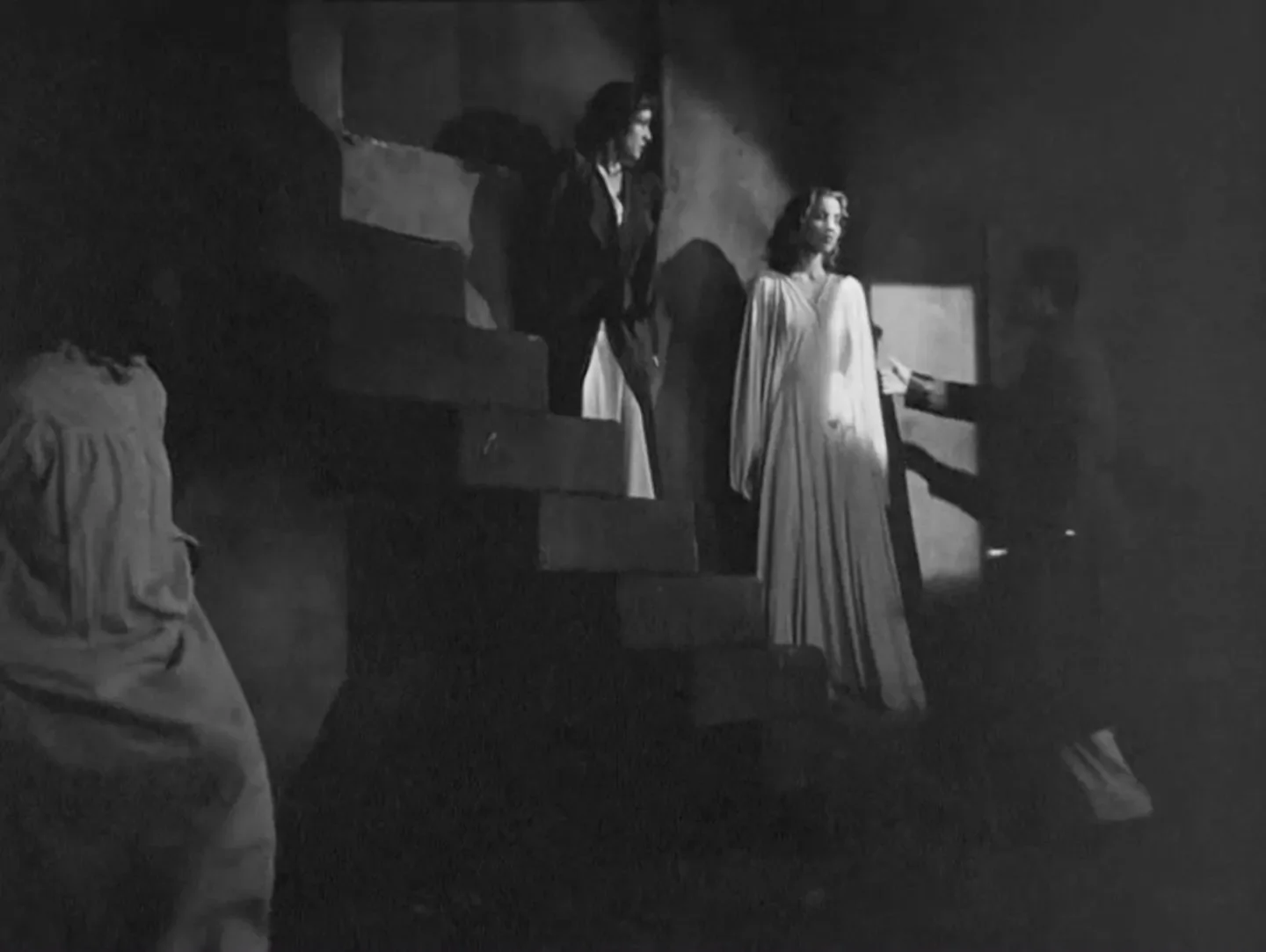
Frances Dee as the alarmed nurse (left) and Christine Gordon as the somnambulant zombie in 1943’s I Walked with a Zombie.
To follow-up to his oddly unnerving 1942 low-budget RKO hit, Cat People, French-American auteur Jacques Tourneur directed the elusive I Walked with a Zombie. This 1943 film, which lingers between B-movie horror flick and light-and-shadows art film, is a meditation on slavery in the Caribbean; Tourneur, along with producer Val Lewton and screenwriters Kurt Siodmak and Ardel Wray were outré, well-intentioned, but clunky white liberals. They were also adventurous artists.
I Walked with a Zombie is creepier than it is scary; though an early sleepwalking scene (a classy homage to expressionist German masterpiece The Cabinet of Dr. Caligari) is a little frightening, honestly. It’s also moodier than it is truly philosophical; though the humanist message (delivered in a voice-over conclusion by a Black Islander instead of by the white female lead who narrates the rest of the film) gets it right about the sins of colonialism poisoning the masters. That doesn’t undo the movie’s awful stereotypes about the “Voodoo” natives nor excuse the focus on white redemption. But the surprising epilogue does match some of this candid movie’s other daring choices. The unexpurgated portrayal of alcoholism. Trinidadian singer Sir Lancelot’s Calypso recitative as a narrative set piece. An atmospheric midnight walk through the sugarcane fields. This shadowy and windswept sugarcane scene, the film’s main action sequence, is the only thing I remembered from the first time I saw this movie 30+ years ago on VHS.
Zombies of course work as a metaphor here for the dark past—both domestic and historical—that haunt the present. And the two literal zombies in the film, one somnambulant and the other with agency (a white woman and a Black man, respectively) tell an entangled tale. Tourneur uses it to cast the soughing Caribbean winds as another haunted and rich metaphor in his strange movie.
I saw I Walked with a Zombie at SIFF’s Seattle Center location last Saturday evening (it was a soon-to-be revived Grand Illusion Cinema pop-up), and I savored my atmospheric walk home afterward.
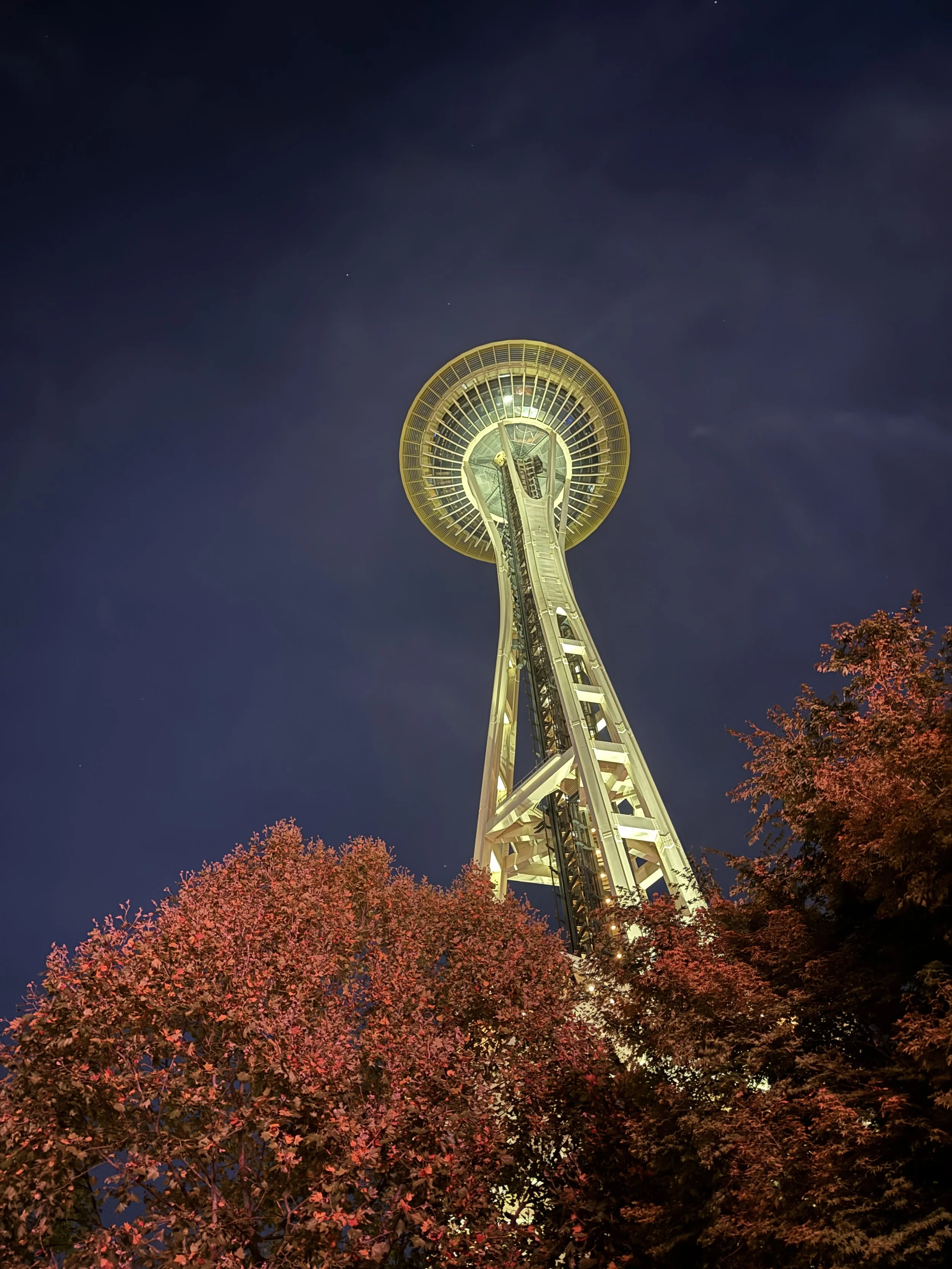
Seattle Center, 10/17/26
3) What Does the Women’s Tennis Association Have to do with Urbanism?
My obsession with the WTA has started showing up in my city-centric poetry manuscript. Chinese tennis phenom Qinwen Zheng, for example, appears as a character in two of the poems, “Like All My Friends, Qinwen is a Poet” and “Sorrow for a Former Top-5 Operator.” Turkish player Zeynep Sönmez is the main character in another poem, “The Ball Kid Faints.” There are also references to WTA stars Amanda Anisimova and Juliia Starodubtseva; I couldn’t resist such poetic names. There’s a poem about historic women’s tennis star Pam Shriver too, “Poem for 16-Year-Old Pam Shriver.” That one echoes another tennis poem in the collection, “Poem for 15-Year-Old Michael Chang.”
It all made sense to me to place tennis stars alongside the pantheon of city gods I’d already gathered in my collection, including: Charles Dickens’ wayward-youth pickpocket the Artful Dodger; insomniac and revolutionary-era Moscow poet Marina Tsvetaeva (not a tennis player!); and Swinging ‘60s London fashion designer Mary Quant.
But I realized the connection could be murky in a book of poetry that’s otherwise hyper focused on explicit urbanist texts like Jane Jacobs’ 1961 city-planning masterpiece The Death of Life of Great American Cities, current transit agency data sets, and Greek mythology like the Thebes origin story.
What do Coco Gauff, Marta Kostyuk, Elina Svitolina and Aryna Sabalenka have to do with any of that?
I’d started offering a flip explanation in my cover letter to poetry presses as a humorous aside: “My poetry is often prompted by city planning and mass transit to reflect the hopes cities generate in the heart. However, lately I’m more into the Women’s Tennis Association.”
But it’s a question I needed to take seriously and answer. And I knew exactly where to start: With the fact that the professional women’s tennis tour, the WTA, is defined by a global circuit of 50+ cities. Whenever I watch a match on the Tennis Channel, I’m energized by the bold white script emblazoned on every court announcing the city where it’s being played instead of the corporate name. For example, rather than “the Vanda Pharmaceuticals Berlin Tennis Open,” the sole bold word “Berlin” is stamped there. Similarly, it’s “Miami” and not “the Miami Open Presented by Itaú;” And it’s “Doha” and not “the Qatar TotalEnergies Open.”
Much like the urban archipelago that ties blue American cities together, the WTA’s conscious city identity creates a global community. Fittingly, women’s tennis features a diverse cast of players who themselves are drawn from countries all over the world as the tour’s network of discrete host cities welcomes them to compete.
The WTA’s instant internationalism is a confident rejoinder to today's Trumpist era of isolationism, nativist elitism, and racism.
I realized that the best way to make this urbanist tennis theme clear to readers was to put a poem in my manuscript itself that spelled out the WTA’s connection to the city states conceit. I wrote that poem this week. It’s called “Mercury and Marta.” And it starts:
What does the Women’s Tennis Association have to do with the classical myth of Thebes?
It begins at the airport. Go with Iga from Poland or with Coco from America or with Qinwen from Beijing. Go with Marta, Zeynep or Mayar.
And it ends. like this:
Jane Jacobs’ Death and Life of Great American Cities. does not have a protagonist. Euripides’ story of Thebes does. Mercury gives the golden lyre—tortoise shell strung with gut—to Amphion. Amphion strums the rich plains and clay into ziggurats.
I’m trying to say when wing-footed Marta won Madrid, and celebrated with an Olympic backflip on the red dirt, Mercury, god of travelers, saw that it was good.