
I’m All Lost In, #143: 17 Pilgrimages. Plus the Week in X>Y
I’m All Lost In…
the 3 things I’m obsessing about THIS week
#143
The Week in X> (is greater than) Y
Chlorhexidine Gluconate > Swollen Gums My year of dental care continues. And this prescription-strength antimicrobial is the latest magic remedy on the regimen. Meanwhile, the nitrous oxide continues to make dental surgery a 2026 highlight.
U-Lock > Chain Lock I was happy to replace my precarious and clunky chain link bike lock—I could never quite tell if it was securely fastened or not—with a handy U-lock. I know thieves can supposedly cut right through U-locks, but the comfort and ease of the intelligible U-lock versus the awkward, heavy chain has prompted me to start biking again.
The Bill when You’re Drinking > The Bill when You’re Not Drinking I’m approaching five months booze-free (with the exception of the night Mom died when I had two glasses of wine.) I’m still not seeing any effects on my health, though; i.e., I don’t seem to be losing any weight.
However, I did note this week how significantly less expensive my bills are for the black bean burger dinners or orders of vegan tacos when there’s no habitual glass or two of whiskey on the check.
Speaking of which, my bottles of NA whiskey from the Louisville, Kentucky-based NKD Distillery arrived in the mail this week. It tastes as good as I remember [I’m All Lost In, #137, 6/2/26.]
This Week’s Obsessions
1) 17 Secular Pilgrimages
My poet pal Dallas texted me from his summer road trip this week to say he’d stopped in Martins Ferry, Ohio, the hometown of James Wright; Wright was one of Dallas’ favorite poets back in college and high school.
Inspired by Dallas’ update, I started thinking about some of my own pilgrimages over the years.
To amend John Waters’ quote about how “Life is nothing unless you’re obsessed,” I say: Life is nothing unless you’re on a pilgrimage.
1. John Dillinger. In the fall of 1987, I took advantage of going to college in the Midwest by visiting some nearby, hallowed Indiana locations that historian John Toland had marked on a turquoise-tinged map in his book The Dillinger Days. There were banks, penitentiaries, and the scenes of famous shootouts to see. Toland’s classic biography of 1930s bank robber John Dillinger had been one of my favorite books in junior high. Specifically, I was obsessed with the turquoise map.
My college girlfriend and I borrowed her parents’ car and ventured off from Ohio into Indiana. This was the week of the 1987 stock market crash, which cast an appropriate Great Depression-era shadow on our Great Depression-era nostalgia trip. It was also the same week that a jet had crashed into a Ramada Inn in Indianapolis. As we crested I-70 into Indianapolis and the Ramada Inn came into view, we could see with cartoon clarity that a plane had smashed into the side of the building. It was a dramatic start to our trip.
After visiting places like Mooresville, Indiana (Dillinger’s hometown) and a bank Dillinger had robbed in Montpelier, Indiana, we made it to the Biograph Theater on North Lincoln Ave. in downtown Chicago. That’s where the FBI ambushed Dillinger in July 1934. The feds had been tipped off by “the Woman in Red,” a friend of Dillinger’s girlfriend Polly Hamilton: Dillinger and the two women were going to a Clark Gable/Myrna Loy movie at 8:30, Sunday night, July 22 at the Biograph. When Dillinger emerged from the theater after the show, lead agent Melvin Purvis positively ID’d him, signaling to his fellow agents positioned across the street by lighting a cigar. Dillinger, having made eye contact with Purvis and glancing across the street at the other agents, sensed something was up. He reached into his jacket pocket for his semi-automic Colt pistol and sprinted into the alley. The three FBI agents across the street chased Dillinger into the alley with their guns drawn. They got off six shots between them, hitting Dillinger four times. One of the bullets killed the infamous outlaw.
My college girlfriend subsequently told me the highlight of the trip was when I bought us vodka; I’d recently turned 21, she was 19. Back at our Interstate 70 motel, we mixed the booze into some Slurpees.
In August 2013, I visited another Dillinger site: The Lincoln Court Apartments on Lexington Ave. in St. Paul, MN; I was back in the Midwest for a wedding in Iowa. Dillinger hid out in apartment 303 at Lincoln Court in late March, 1934. He escaped in a shootout with the FBI on March 31. He was armed with a machine gun this time. He had about four more months to live.
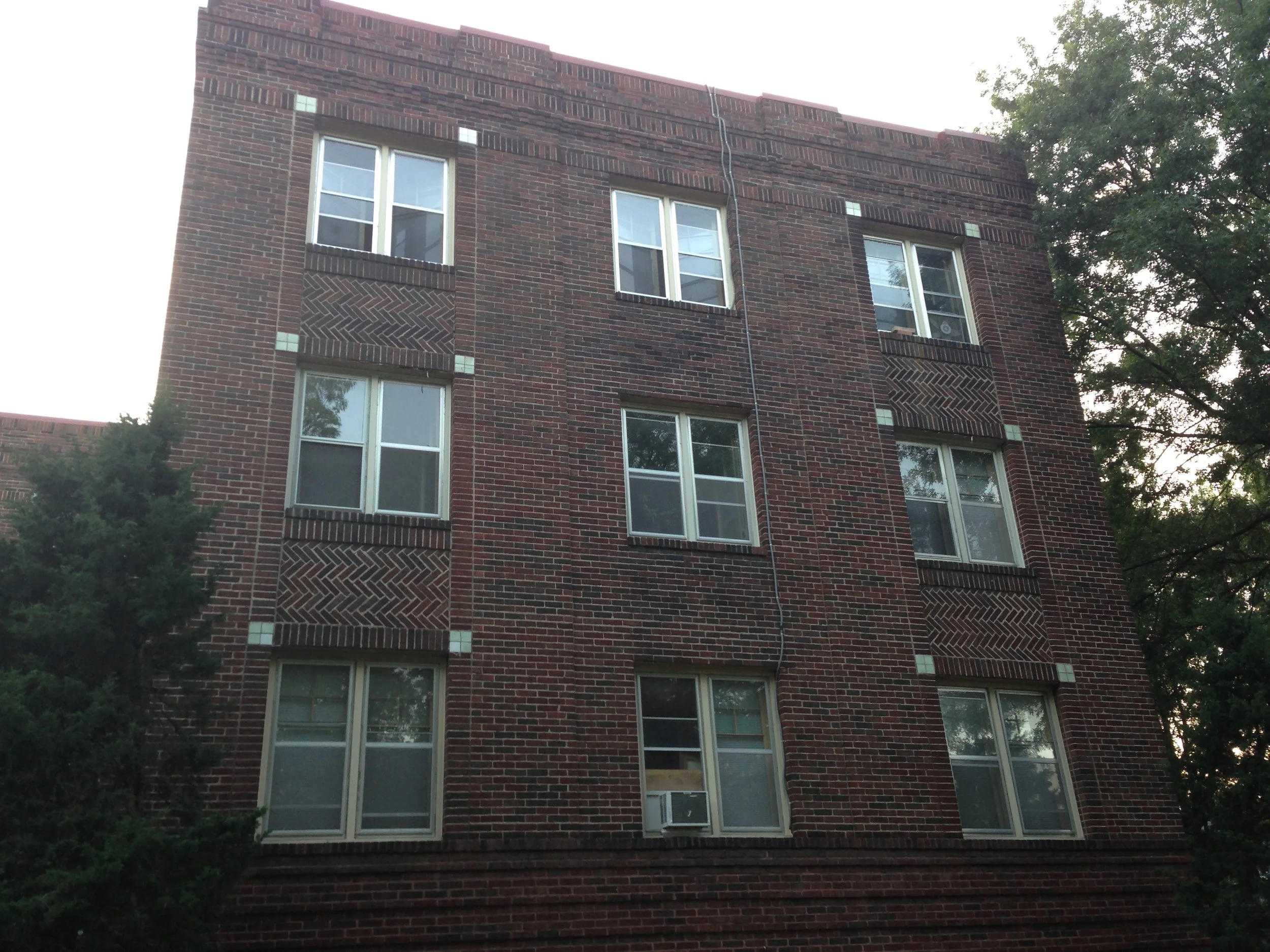
Dillinger hideout, the Lincoln Court Apts., St. Paul, MN., 8/11/2013
2. U.S. Rep. John Lewis In 2006, while on assignment for the Stranger to do a feature story about U.S. Sen. Maria Cantwell and her fight against the Republican effort to repeal habeas corpus, I set aside some time to sneak over to the Cannon Building. I wanted to meet one of my heroes, Student Nonviolent Coordinating Committee legend, U.S. Rep. John Lewis.
In addition to the Cantwell story, I ended up writing a column for the paper about my spontaneous John Lewis pilgrimage:
“Can I help you?” a woman behind the desk asked after I tentatively walked through the large closed wooden door to his offices, Room 343.
“Yes. I’m a reporter in town working on a story about the senator from Washington State, but I wanted to stop in here and see… well, you probably get this about once every few months, but you know, you guys work for a living legend… and, well, he’s my hero, and…”
The woman broke into a friendly smile. “Unfortunately, the representative is out of town this week…”
I’m sure I looked crestfallen, because she got up from her desk and said, “Come on, follow me.” Next thing I know, I’m in Lewis’s office and she’s showing me all this amazing memorabilia. Basically, Lewis has a civil-rights-era museum in his office—including rare and stunning photos from the early ’60s of Lewis and other civil-rights kids making history.
Alas. Civil rights, shmivel rights. The next day I hung out back on the Senate side and watched 51 senators make history by shelving the right to habeas corpus.
3. The Boston Tea Party. In 2006, my friend Jason and I visited our mutual friend Marco at Harvard’s Kennedy School of Government. We had a list of Revolutionary War spots to see during the trip such as the Lexington & Concord battlefields and the Boston Tea Party site on Congress Street near the harbor.
Oddly, there was no exhibit, no museum, nor even a marker for the famous Tea Party; I subsequently learned that a museum opened at the historic site in 1973 but was closed between 2001 and 2012 due to a fire. We sneaked behind some construction staging and scaffolding and threw Starbucks coffee into the water.
4. Jane Jacobs. When I made a pilgrimage to 555 Hudson St. in Greenwich Village in September 2015, and then again in July 2016, and once more in June 2019, there was no plaque marking the plain three-story brick building. Some 60 years earlier, urbanist patron saint Jane Jacobs lived at this address.
It was here in the second and third-floor duplex apartment at 555 Hudson that Jacobs wrote her urban planning classic The Death and Life of Great American Cities(1961) where she famously described the “sidewalk ballet” of folks working, running errands, shopping, socializing, and taking care of each other outside on the street below her window. The block she memorialized would become the human-scale ideal for modern city life. (One could also make the case that Sesame Street has emerged as the template as well.)
On my first few visits, 555 Hudson housed a luxury real estate office on the ground floor; the well-dressed woman who worked there knew all about Jacobs and happily let my friend Noah and I snap selfies in the doorway.
Now, I make the pilgrimage every time I visit New York. It’s currently an upscale gift shop. And there is a plaque these days; the Greenwich Village Society for Historic Preservation, likely NIMBYs ironically, dedicated the building in October 2020. I always stop by to honor the plaque before heading up the street to 567 Hudson where I visit Jacobs’ old haunt, the equally historic White Horse Tavern where the great poet Dylan Thomas also hung out [I’m All Lost In, #100, 9/14/25].
5. West Side Story and The New York Dolls In the summer of 2016, my girlfriend Hester and I went to W. 56th St. between 9th and 10th in New York City’s Hell’s Kitchen neighborhood and re-staged the theatrical photo from the cover of the 1957 West Side Story LP. That’s the Broadway version.
West Side Story is the great American opera.
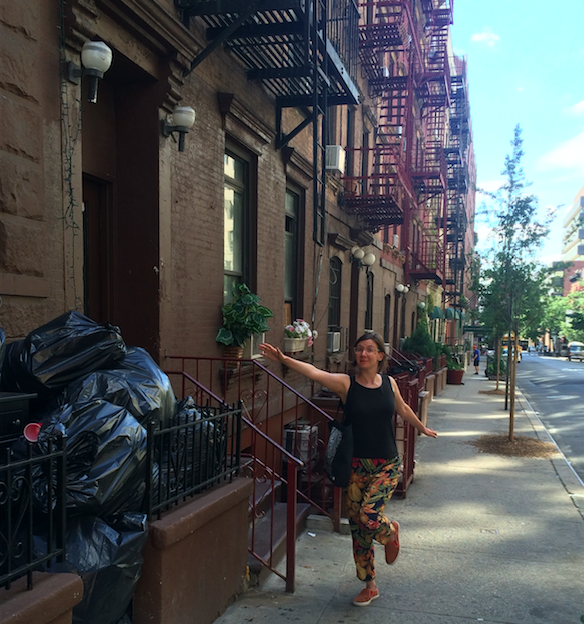
7/11/16
On the same day, we also re-staged the Freewheelin’ Bob Dylan cover on W. 4th St. in Greenwich Village, visited the Andy Warhol-era Max’s Kansas City site near Union Square (now a loft space), and went to Gem Spa to stage the back cover of the New York Dolls’ self-titled first album, a high school favorite of mine. Gem Spa closed in 2020.
To complete the New York Dolls circuit, in December 2025 I visited the old site of the Mercer Arts Center at 240 Mercer St., now an NYU dorm tower.
6. The Notting Hill Riots In late June and early July 2017, I spent a few days in London. This gave me the opportunity to visit album cover photo sites for some of my other favorite records from high school: The Jam’s This is the Modern World; the Clash’s first LP, and David Bowie’s The Rise & Fall of Ziggy Stardust and the Spiders of Mars.
I was able to find addresses for the Clash and Bowie sites, but I had to track down 70-year-old photographer Gered Mankowitz to get the details on his Jam photo shoot.
The best place to head for is Bramley Road W11—nearest tube station is Latimer Road—turn left out of the station on Bramley Road and head towards the Westway, walk underneath it and to your right hand side you should be able to access some pedestrian area where you will get a sense of where we took the shot—the pair of tower block buildings that you see on the cover are still there but an awful lot else has changed and access is very different to how it was back in the day.
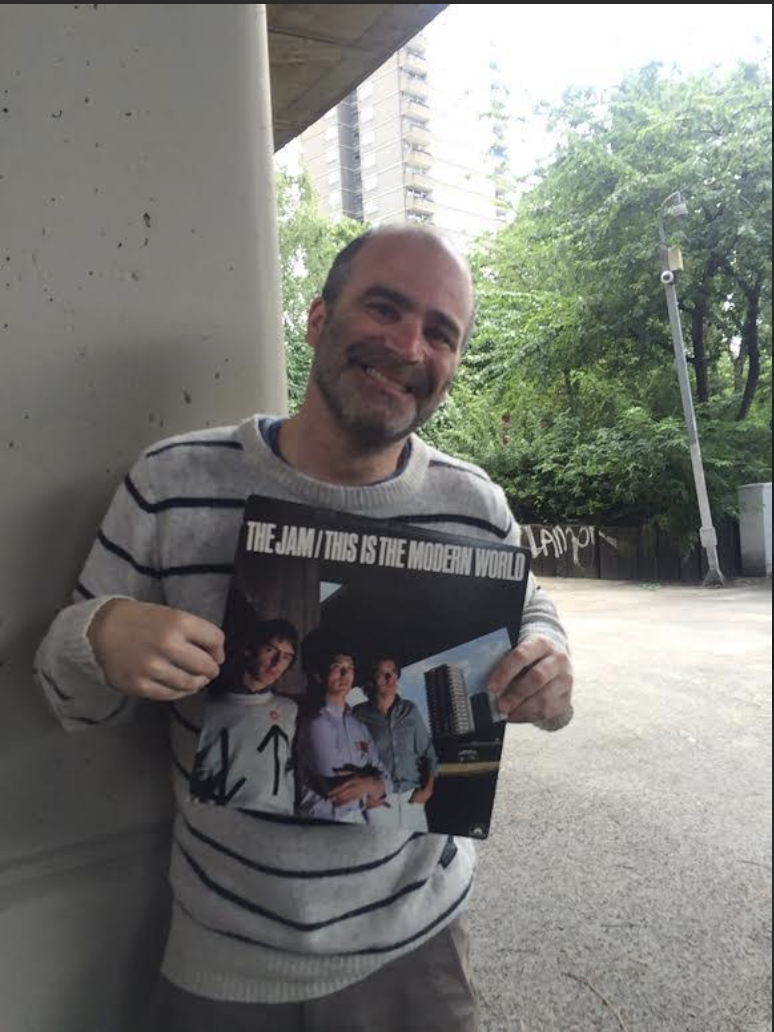
7/1/17, Under the Westway, London
The Latimer Rd. tube station was also ground zero of the 1958 race riots when right-wing Teddy Boys rampaged through the surrounding post-WWII Caribbean immigrant community there; the Notting Hill Race Riots are dramatized in one of my favorite books, Colin MacInnes’ 1959 novel, Absolute Beginners.
In July 2017, as I was alighting at the Latimer Rd. station with MacInnes’ character Crêpe Suzette in my head—she was a fictional stand-in for real-life Notting Hill riot victim Majbritt Morrison— I immediately came upon the shocking sight of the then-recent Grenfell Tower fire. Some 60 years after the riots, the charred building looming like the council houses on the Jam’s LP cover, alongside the left-wing posters and graffiti declaring “Justice for Grenfell,” told the same old story: African and Muslim immigrant communities were still facing dire discrimination.
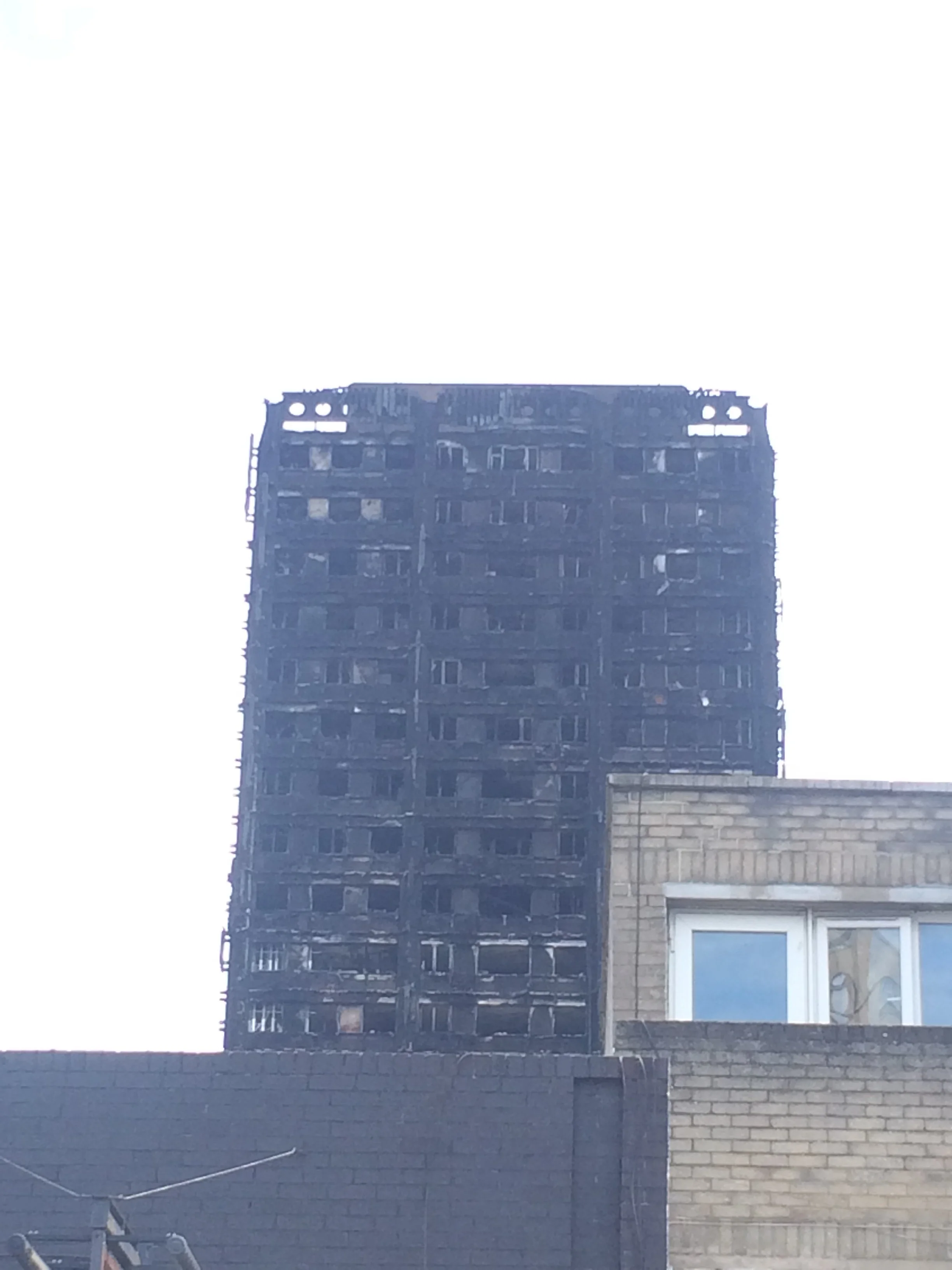
Grenfell Tower, seen from Latimer Rd. Station, two weeks after the fire, 7/1/17
When I returned to Seattle, I sent Mankowitz a report and the photos from my pilgrimage. He responded:
Pleased to hear that your visit was a success, but sad that you had to witness the horror of Grenfell!
Excellent snaps – you got close!!
7. Dr Jekyll & Mr Hyde, Fagin’s Gang I spent the rest of my brief trip to London visiting sites from two of my favorite books. I’ve lovingly read Robert Louis Stevenson’s The Strange Case of Dr Jekyll & Mr Hyde several times, first as a chilling horror story, later as an existential tragedy, and more recently as a tale of the city. While I was in London, I visited Regent’s Park, taking my seat on a bench in the green space to commemorate one of the novella’s most significant moments. In the book’s final chapter, written as a confessional letter from Dr. Jekyll to his close friend Mr. Utterson, Jekyll details his mad science and his moral ordeal, noting that the first time he changed, unplanned, spontaneously, and worst of all, in public(!), into Mr. Hyde, he’d simply been sitting on a park bench in Regent’s Park. No mad science nor transformation for me, but fun to daydream among these central London gardens.
As part of my Dr Jekyll & Mr. Hyde homage, I also visited Cavendish Square just south of Regent’s Park. This is where Dr. Jekyll’s former scientific associate, but estranged and disapproving critic Dr. Lanyon lived. And upon a midnight visit there from Mr. Hyde, Dr. Lanyon witnesses Mr. Hyde’s mind-boggling transformation back into Dr. Jekyll.
My other literary London excursion took me to Farringdon Rd. just north of historic central London in the Clerkenwell neighborhood. I triangulated the spot on Farringdon, a block south of Clerkenwell Rd and parallel to Saffron Hill, as the location of Fagin’s secret hideout from Charles’ Dickens’ Oliver Twist.
“Now, then!” cried a voice from below, in reply to a whistle from the Dodger. “Plummy and slam!” was the reply. This seemed to be some watchword or signal that all was right —Ch. 8, Oliver Twist
Oliver Twist isn’t a particularly great book, but it includes perhaps my favorite scene in literature. It comes in Ch. 8 when Oliver, after journeying from the parish suburbs to big city London for the first time, meets the Artful Dodger, Hermes in human form. Or more accurately, Hermes in juvenile delinquent form. This meeting immediately prompts Oliver’s submergence into Fagin’s gang of young pickpockets and establishes the exhilarating DNA of all coming-of-age narratives. There’s also something very West Side Story and “Jets gang” about the Artful Dodger (if you’re searching for a theme in all these pilgrimages.)
8. Chess Records In February 2018, while visiting Chicago, I went to the Chess Records studio. This is where Muddy Waters, Chuck Berry, Howlin’ Wolf, and in-house bassist Willie Dixon—along with R&B zealots Phil and Leonard Chess—helped invent and hone rock & roll music in the early and mid-1950s. The museum isn’t well maintained—mainly it sold Barack Obama souvenirs. And I had to make a special appointment to tour the space; the tour was given by Willie Dixon’s grandson who offered non sequitur family anecdotes and very little historic info or insight. Thankfully, in the middle of the listless tour, two young guys who’d driven all night from Cleveland joined us. They were as excited about Chuck Berry as I was, and I was able to geek out with them.
This modern-day Chess experience offered a sad contrast to the old Sun Records studio site, the admittedly equally seismic indie rock & roll label at the Southern end of the Mississippi in Memphis. I visited Sun a month later in March 2018 while I was on a trip to see the National Civil Rights Museum at the Lorraine Motel.
Sun, of Elvis fame obviously (but also home to other rock & roll pioneers like Junior Parker, Roscoe Gordon, the Prisonaires, Jackie Brenston, and Howlin’ Wolf too), was a slick Disneyland experience compared to the neglected scene at Chess. And mobbed. However, the two original studios themselves looked exactly the same.
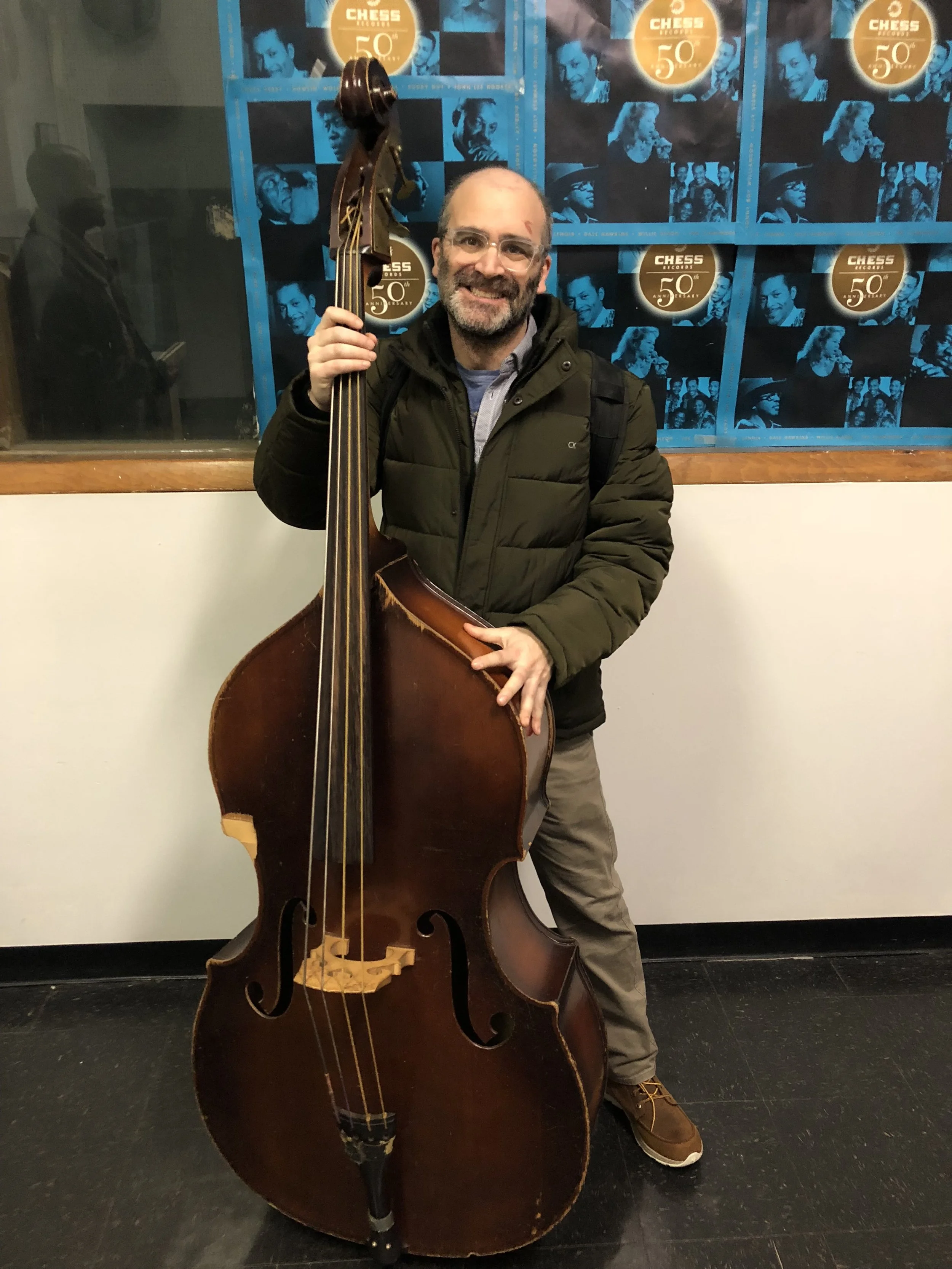
2/17/18, with Willie Dixon’s bass at Chess Records, 2120 South Michigan Ave., Chicago.
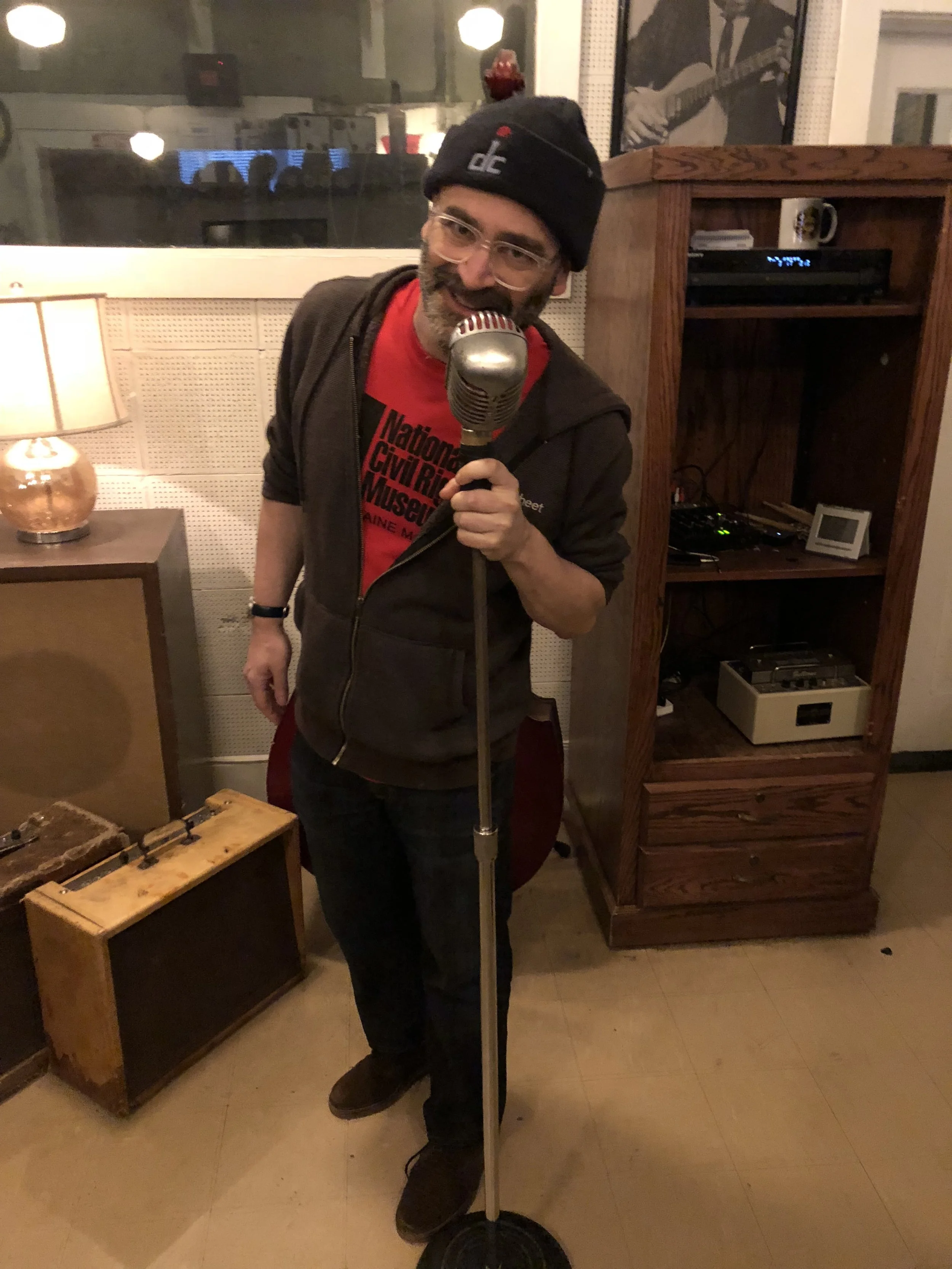
3/25/18, Sun Studios, Memphis, TN
9. Snediker Ave. & Thomas Jefferson High School In December 2018, on a visit to New York, my friend Lee and I went to East New York, the far-flung Brooklyn neighborhood where my parents grew up in the 1930s and ‘40s wedged in by Cyprus Hill, Brownsville, East Flatbush, and Canarsie; Lee lives in Williamsburg to the northwest. We took the subway over, about a 30-minute trip. As long as I could remember, I’d had images in my head of East New York as a dilapidated wasteland. This imagery came thanks to my parents’ 1970s white-flight racism: When I was about 7 years old, and we were visiting family in Long Island, I asked my parents if I could see where they grew up. My dad said, “No, it’s bombed out”—powerful worlds to the ears of a 7-year-old. And ones that stick.
The neighborhood was hardly “bombed out.” It was relatively suburban and residential—and looked almost idyllic, though yes, the crime stats tell a rough story. And it was, by all accounts a grim scene in the 1970s. I found Dad’s house at 641 Snediker Ave.; I was surprised that it was a Spanish Colonial-style house that looked more California than Brooklyn. A three-block, five-plus-minute walk away along New Lots Ave. at my mom’s address, 77 Malta St., we found an empty lot next to a small mosque.
The most surprising find? Their high school, Thomas Jefferson, was still standing. It had a huge footprint and a busy, welcoming aura. Mom and Dad were Class of 1947 and 1951, respectively.
10. East Village Witchcraft Bookshop With all due respect to Jane Jacobs’ beatnik-era West Village paradise, my template for city life happened about 20 blocks east of her place and 10 years later in the hippie-era East Village. Famed rock critic Robert Christgau captured the mood I love, albeit derisively, while reviewing Black Sabbath’s 1970 debut LP:
I've been worried something like this was going to happen since the first time I saw a numerology column in an underground newspaper. C-
Much like the indie bike shops of today, Christgau’s reference to “a numerology column” conjures the occult bookshops of the 1970s as markers of urban counterculture—and my daydreams of a city youth heyday.
In June 2019, I went to Enchantments witchcraft store on Avenue B in the East Village. Enchantments is the oldest witchcraft shop in NYC and the closest remnant to the founding archetypes of this far out genre like the legendary, long-gone Magickal Childe in the Village.
11. The Sunset Strip Teenage Curfew Riots Many of the places on this list of pilgrimages are what I like to call socio-personal locations.
For example, like the Absolute Beginners site at the Latimer tube station, or my parents’ old neighborhood, or the Jam photo-shoot site under the Westway, these geographical coordinates pinpoint emotional landmarks from my own history rather than known tourist attractions. As such, there aren’t often plaques marking the spots.
This was the case when I went to the bland intersection of Sunset Blvd and Crescent Heights in Los Angeles in September, 2019. The overgrown, triangular traffic island there used to be home to Pandora’s Box—a youth coffee house and rock club. In 1966, Pandora’s Box was at the center of the teen curfew riots, a watershed moment from counterculture history that officially marked youth as a political strain in its own right alongside the anti-war, civil rights, women’s rights, gay rights, and rock and fashion upheavals that were shaking up society at the time.
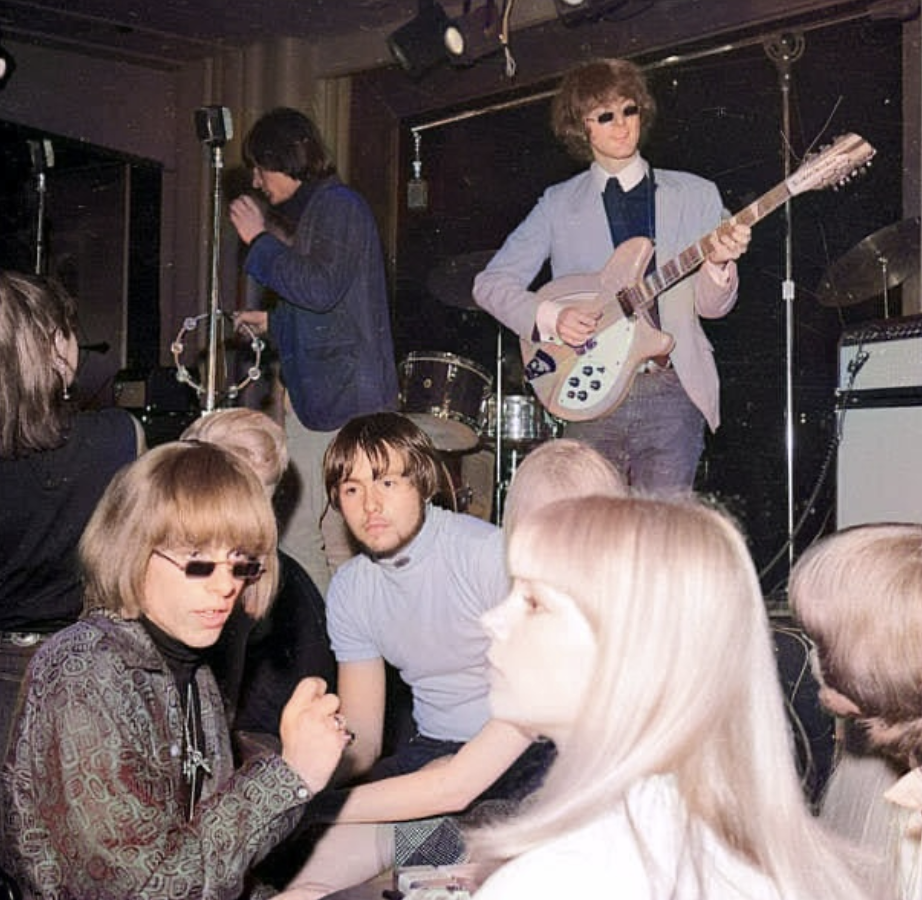
LA teens—urged on at the behest of the new FM rock-radio medium—showed up en masse in November 1966 to protest a new city curfew on the Sunset strip. The curfew was clearly city hall’s attempt to outlaw L.A.’s burgeoning mid-1960s youth culture. The club closed down for good shortly after the riots.
I wrote a poem about the fact that there’s no marker at the site. It’s called “Sidewalk Plaque;” it’s in my first collection Shops Close Too Early.
While there’s no plaque, there is a Chase Bank across the intersection from the empty traffic island at Sunset and Crescent.
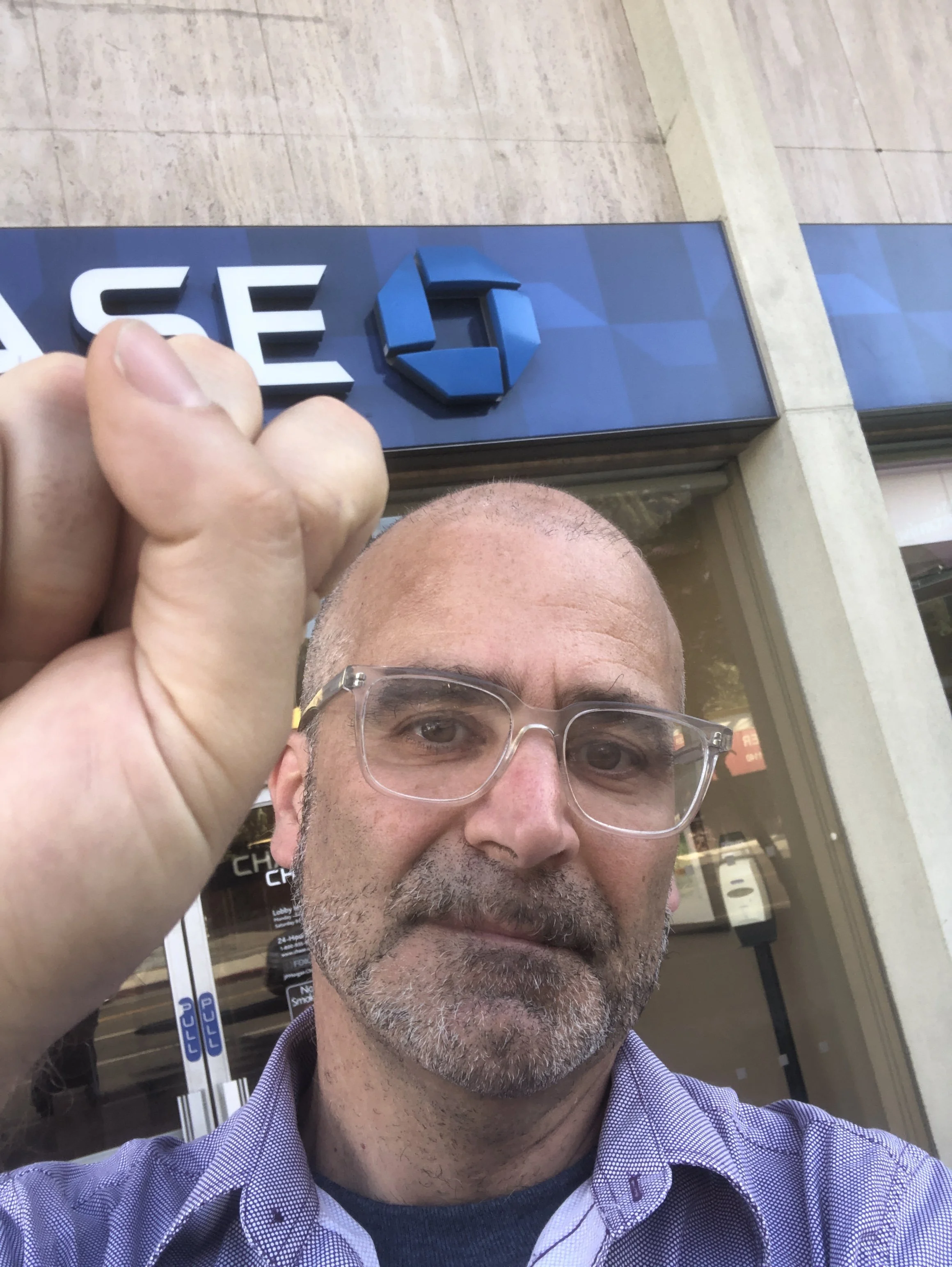
9/21/19, Paying homage to the Teen Riots at Sunset & Crescent, Los Angeles.
12. Raymond Chandler’s Los Angeles On the same trip to L.A., and fitted with a map designed by Raymond Chandler aficionado Kim Cooper, I visited a bunch of the real-life L.A. spots that figure in Chandler’s classic hard-boiled novel The Big Sleep. Chandler’s 1939 novel, along with all his other Philip Marlowe books, stars dark L.A. as much as featuring Marlowe. These paperbacks were personal favorites when I was young—and they were a delightful source of bonding between me and my dad as we traded tough-guy similes in the family room like a wizened bartender sparring with a well-dressed stranger at some dim gin joint. Dad gave me his collection of Chandler’s witty noir fiction when I was a kid [I’m All Lost In, #103, 10/4/25].
At each location—the Greystone Mansion in Beverly Hills (re-named the Sternwood Mansion in the Big Sleep), the Art Deco Bullocks Wilshire Building, Geiger's Rare (smut) Books and Deluxe Editions—I ceremonially broke out dad’s copy of The Big Sleep and read excerpts out loud.
13. Evelyn McHale Briefly but intensely possessed by the story of Evelyn McHale, the 24-year-old bookkeeper who leaped from the 86th-floor observatory of the Empire State Building on May 1, 1947, I wrote the longest poem I’ve ever published, “Evelyn McHale Chooses the Tallest Building in the City.” The poem runs five pages and appears in both my collections. I worked on the poem day and night (during COVID) in a manic fit, ultimately having to abide by a self-imposed deadline to walk away from it. One of my favorite poetry memories is reading the poem live at Valium Tom’s bookstore in September 2022 for the Shops Close Too Early book release event.
About a year prior to the reading, in July 2021 I visited a couple of unmarked Evelyn McHale locations: the house in Baldwin, Long Island where she was living with her brother and his wife at the time of her suicide; the Art Deco Governor Clinton Hotel, now the Stewart Hotel, at West 31st and 7th Ave. in midtown Manhattan where Evelyn likely wrote her suicide note (“He is much better off without me”); and 34th St. and 5th Ave. where McHale landed unscathed while demolishing the roof of a parked U.N. limousine. McHale’s suicide was immortalized in a stunning photograph by photography student Robert Wiles who happened to be standing across the street when she crashed down on the car.
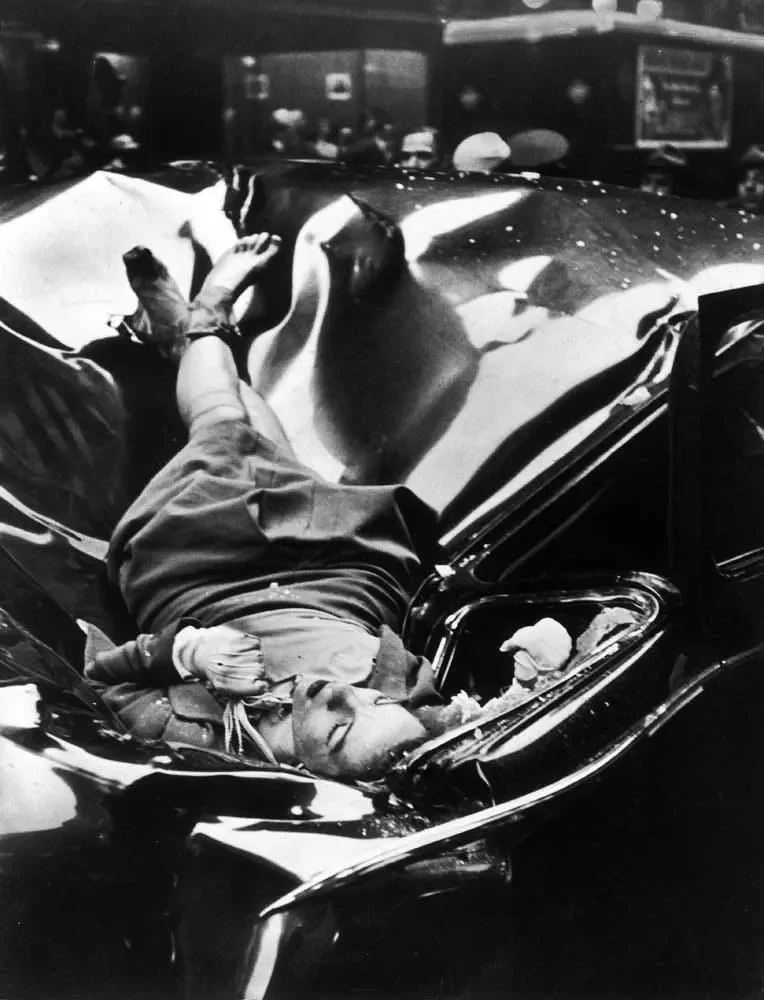
Evelyn McHale, 5/1/1947
14. Billie Holiday’s Early Recording Sessions I have a poem that includes these lines:
A week after visiting the Parthenon in Athens, I’m eating a pretzel with mustard in Manhattan when I realize the building where Billie Holiday dethroned Athena as Goddess of Cities on July 2, 1935 is only a few blocks away. The Lazarus.
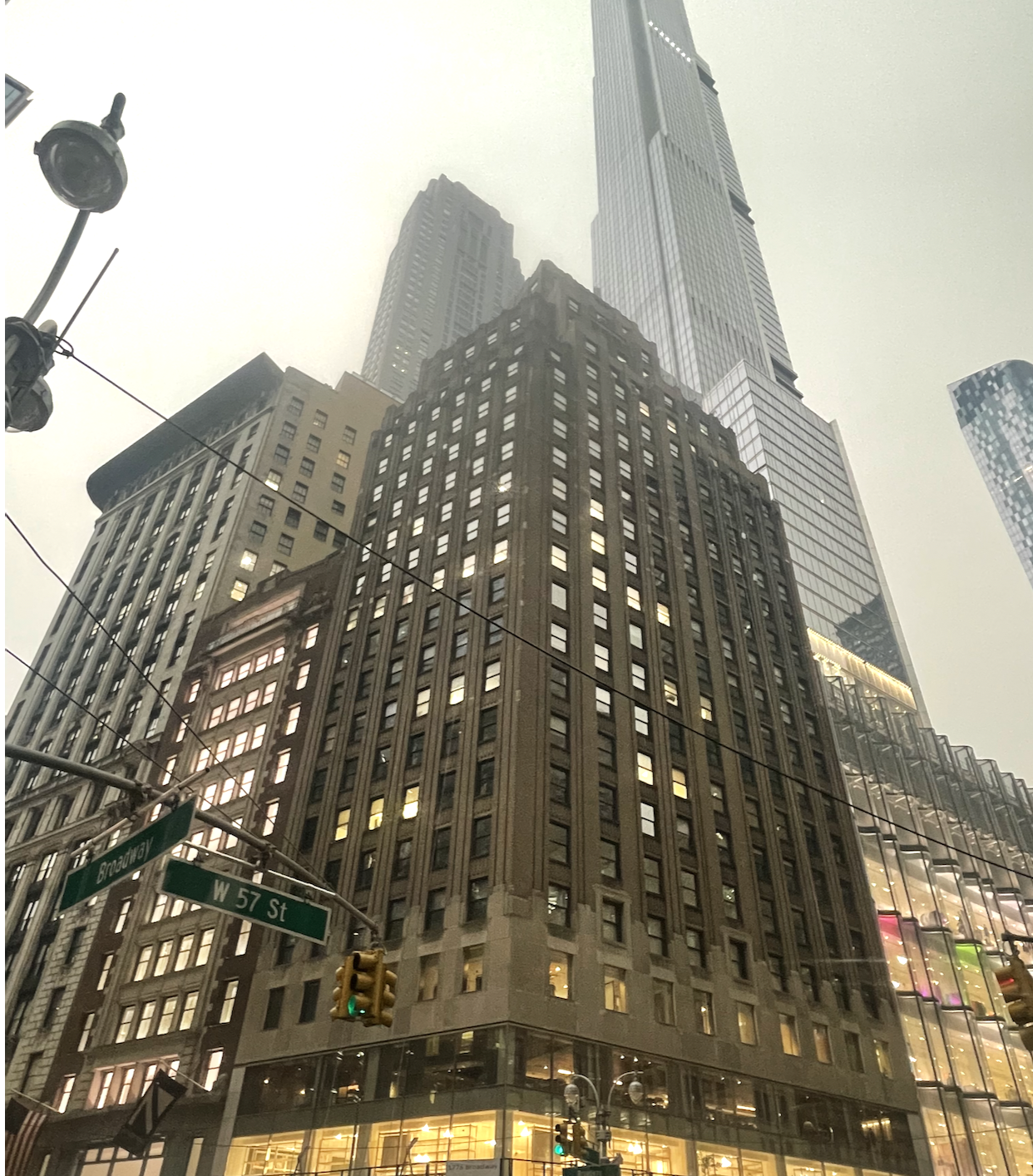
Formerly the Lazarus Building, home of Brunswick Records in the 1930s, 6/6/23
The former Lazarus Building at Broadway and W. 57th St.—now simply known as 1776 Broadway and home to a Nordstrom on the bottom floor— is the Art Deco building where young Billie Holiday recorded her breakthrough releases: What a Little Moonlight Can Do, I Wished on the Moon, and Miss Brown to You. These early Billie Holiday recordings were also my favorite tracks on the Best of Billie Holiday LP I swiped from my Mom the summer before I left for college. I played the record up in my room late at night pretending to be a wise jazz DJ
The July 1935 Lazarus Building sessions were done for the American Record Corporation (ARC) and their successful jazz subsidiary Brunswick at ARC’s 14th-floor studios. Like Holiday’s only previous recording session two years prior, she once again teamed up with King-of-Swing clarinet player Benny Goodman. For this fateful session though, they were joined by one of the Brunswick label’s top acts, the Teddy Wilson Orchestra, a small jazz combo that included Wilson on piano, Ben Webster on tenor sax, Roy Eldridge on trumpet, Cozy Cole on drums, and John Kirby on bass. This exemplary cast’s easy jazz renditions sound like ice cubes tinkling and melting in a glass of bourbon.
What a state she’s in. Yes, yes she sings as the small orchestra makes its case with slender melodies. Benny, Teddy, and Cozy wend and unspool and she wishes upon the moon.
When Holiday burst onto the scene with these records, she created the archetype for the songstress of city cool.
The concierge wouldn’t let me up to 14, but I was able to channel the history outside on Broadway. If you listen closely at the 0:31 mark in Miss Brown to You you can hear a car from the street below honking and making its way into the mix alongside Goodman and Eldridge as they trade horn solos.
15. The Hackers Conference In August 2023, ECB and I visited an important spot from our co-obsession—the 2003 movie, Shattered Glass, an open homage to All the President’s Men and a gripping film in its own right. Shattered Glass recounts the obnoxious and delicious rise and fall of New Republic reporter-turned-fabulist, Stephen Glass.
On a trip to D.C. to visit my parents, ECB and I went to the Marriott in downtown Bethesda (where I’m from) and up the escalator to the infamous mezzanine where Glass got busted by his editor Chuck Lane. In Glass’ calamitous phony story “Hack Heaven,” he’d written that a hackers conference had taken place there on a recent Sunday afternoon. During the finale of Shattered Glass, Lane, played by Peter Sarsgaard, goes on a fact-finding mission with a sulking Glass (Hayden Christensen) in tow. They land at the second-floor mezzanine. The key line in the scene comes from the security guard (a sly reference to All the President’s Men!) The guard tells Lane: “We’re closed on Sundays.”
Last year, ECB and I briefly did a podcast dedicated exclusively to Shattered Glass, including an episode with Shattered Glass director and writer Billy Ray. He certainly thought we were nuts. We also had Chuck Lane on the show.
16. WHBQ, Red, Hot, and Blue at The Hotel Chisca, Memphis, TN In a follow-up to my earlier March 2018 Sun Records visit, I went to the Hotel Chisca in downtown Memphis, the former home of WHBQ where jive-talking DJ Dewey Phillips did a pioneering late-night rock & roll radio show (Red, Hot, and Blue). On Thursday night, July 8, 1954, Phillips made history by spinning an unreleased acetate pressing of “That’s All Right Mama” by an unknown, local singer named Elvis Presley; I wrote about Phillips and this important night at length in an essay titled “Absolute Beginner Blues” back in 2021.
In September 2024, on a sudden trip to Mississippi with ECB for her grandfather’s funeral, I nudged us to take a quick detour to the Chisca immediately after we picked up our rental car at the Memphis Airport. The Chisca was a plain nine-story brick building that looked less like it had once been a swank downtown hotel and more like it had housed claims adjusters and private detectives. The doors were locked on this rainy Memphis afternoon, so I simply communed with the music history landmark under its beaux arts awning.
17.Goodman, Chaney, and Schwerner Memorial A few days later, on our trip out of Mississippi back to the Memphis airport, we visited another site from the churning civil rights era: The marker on Mississippi Highway 19 outside Meridian (where ECB is from) memorializing slain voting rights volunteers Andrew Goodman (20), James Cheney (21), and Michael Schwerner (24). In June 1964, KKK vigilantes working in collusion with the local police carjacked this integrated trio of young, Freedom-Summer activists and brutally murdered them.
The Mississippi-Department-of-Archives &-History sign marking the spot where the young men were abducted is weathered. And it’s eerie how the winding stretch of road seems lost to 1964. But someone had recently set a trio of bright new American flags in the ground at the foot of the marker. It was a classy tribute to these long-dead patriotic men who may have been happy to learn that a Black woman was the Democratic nominee for president at that moment.
I imagine Goodman, Chaney, and Schwerner also wouldn’t have been surprised to learn that she lost the election to a man whose presidency is all about undoing the civil rights movement and erasing any record of its history.
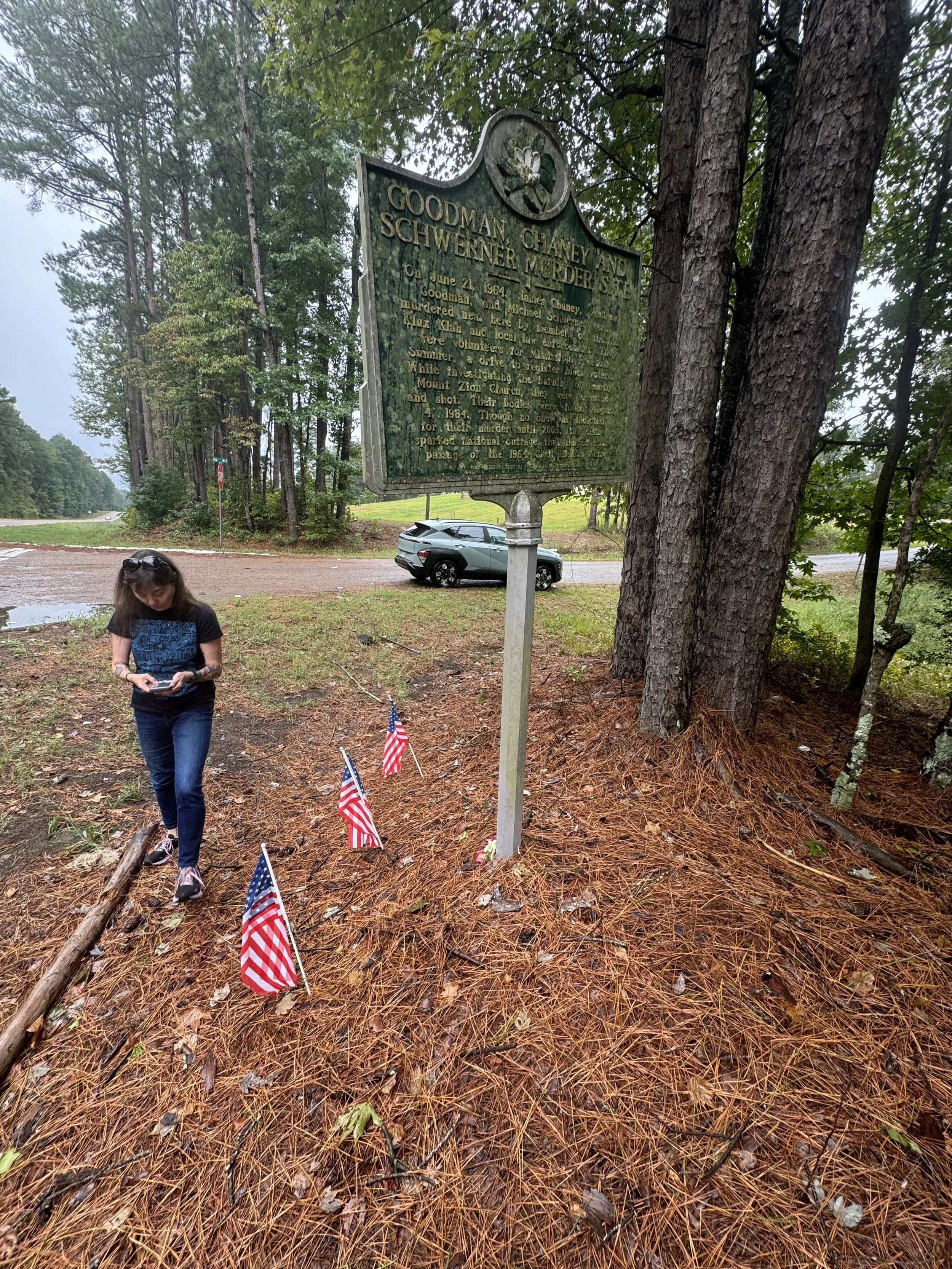
9/15/24, ECB at Goodman, Chaney, Schwerner site, Neshoba County, MS
There have been other pilgrimages such as one to Power Memorial Academy where Kareem Abdul-Jabbar played high school basketball; his name was Lew Alcindor at that time. My visit was more about honoring Basketball Diaries poet Jim Carroll though, and the whole thing was unplanned; I simply stumbled upon the W. 61st St. site (now a 38-story condo building) during a trip to New York in June, 2023. I did get the chills when I saw the sign.
I suppose I’m forgetting some other sacred visits. And there are pilgrimages I still need to make, such as getting to Thebes, the city that Amphion built by animating boulders with his magic lyre. I was thinking about going to Thebes during my 2023 trip to Athens, but the tour guide at the Parthenon scoffed: “Thebes? Why Thebes? Thebes is nothing more than a truck stop!”
And a park bench is nothing more than a park bench, and a vacant traffic island is nothing more than a vacant traffic island, and a duplex upstairs from a gift shop is nothing more than a duplex upstairs from a gift shop.
…
Two other obsessions this week:
2) Playing Blondie’s Dreaming and Picture This on Piano
Last Sunday, as I was plinking out David Bowie’s All the Young Dudes on piano, I asked ECB to guess what I was playing.
Blondie? She said.
Her guess reminded me that I had two great Blondie songs in my repertoire. 1979’s Dreaming with its murky opening minor and leading chords and 1978’s Picture This with its perfect lyrics—I will give you my finest hour/the one I spent watching you shower—and its irresistible chorus: Get a pocket computer try to do what you used to do, yeah.
3) French New Wave Filmmaker Eric Rohmer’s First and Only Novel
Eric Rohmer wrote this lackadaisically chatty novel when he was 27 in 1947 long before he started making movies. The oblique dialogue—snippets from awkward and intimate conversations in upstairs rooms at summer beach houses—read like the philosophically arch scripts that would later define his art films.