
I’m All Lost In, #113: a Sprawl tax; an inciting octave; a book on Alcaraz and Sinner.
I’m All Lost In…
the 3 things I’m obsessing about THIS week
#113
1) A Tax on Sprawl
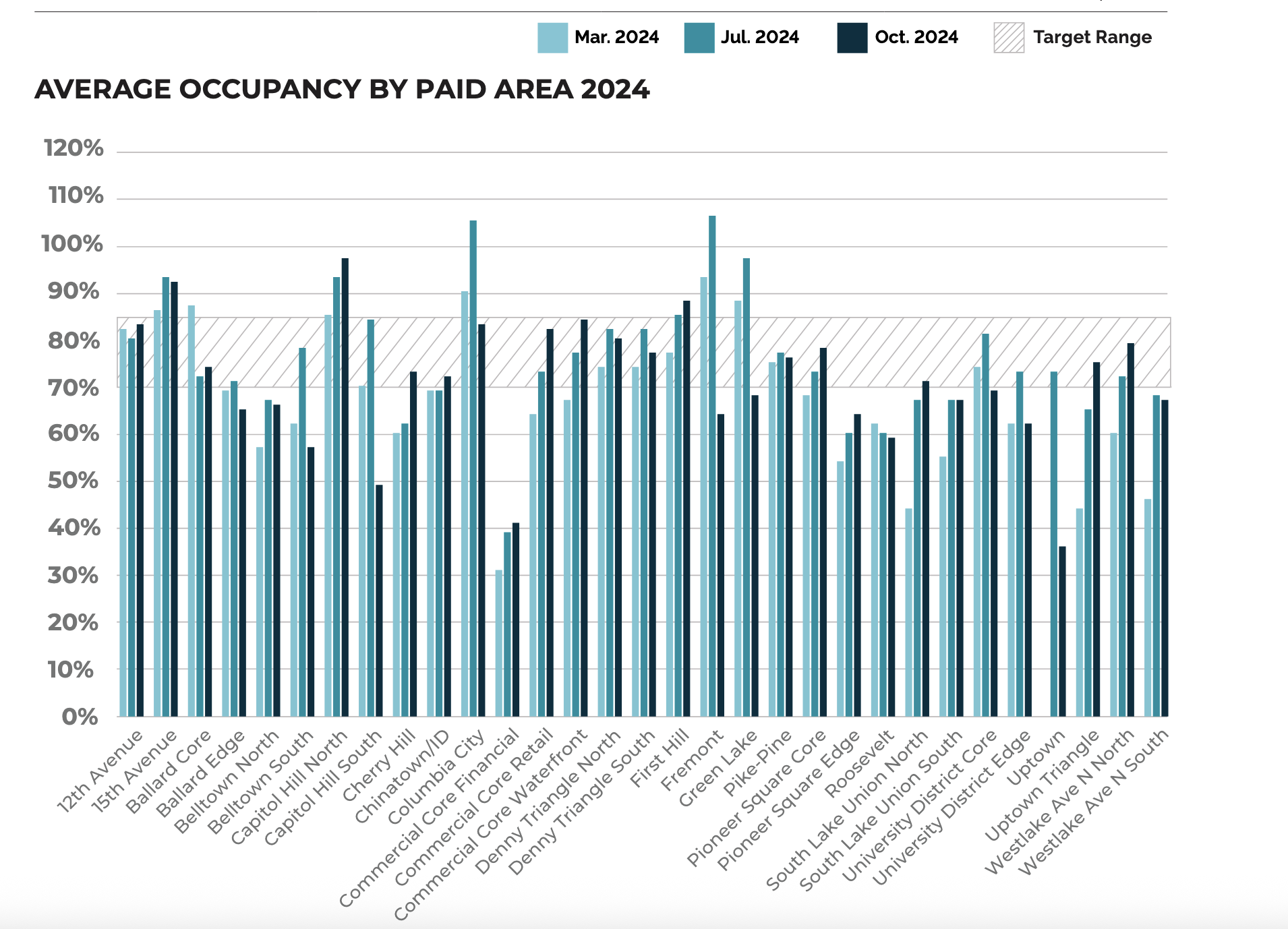
This week on PubliCola, Erica and I published an epic: Our 14-point platform for incoming Seattle Mayor Katie Wilson. Our 14-points angle was a reference to U.S. president Woodrow Wilson (1913-1921) and his idealistic enumerated plan for a lasting post-WWI peace..
Of our 14, it’s the call for an Urban Pass I’m most invested in. Here’s the idea: People can purchase a monthly parking permit for high-demand parking zones citywide. Paying for this monthly permit would give commuters a discount on parking rates in these popular destination neighborhoods; to keep the current city budget whole, the city would raise its current parking rates in concert with instituting the option for the Urban Pass discount.
The idea is kind of based on NYC’s congestion pricing plan [I’m All Lost In, #71, 2/23/25] which charges people for driving into the city proper. But there are key differences from Manhattan’s program. First, the Urban Pass isn’t just about downtown. It’s about driving into any popular Seattle neighborhood, i.e., all 32 of the formally designated districts where commercial hubs thrive thanks to mixed-use and high-density zoning. Second, the monthly Urban Pass fee for parking in these electric neighborhoods wouldn’t go to support transit infrastructure. Instead, the revenue would go to build affordable, multi-family housing in the low-density neighborhoods where many of these commuters are driving in from. In other words, the fee would be directed back to the people who are paying it.
Why? Because I’m a brat. As I summed up the idea in the PubliCola post: “Clearly, the people who drive in to visit popular neighborhoods are fond of density too. So let’s give them some.”
What I didn’t say on PubliCola, but maybe I should have because it’s more to the point: This is a sprawl tax. Low-density neighborhoods are only possible because of the efficient urban centers that offset the selfishness of isolation defined by single family zones. Collecting money from commuters to eventually pay for increasing density in their own neighborhoods would be akin to “teaching a man to fish.”
2) At the Hop
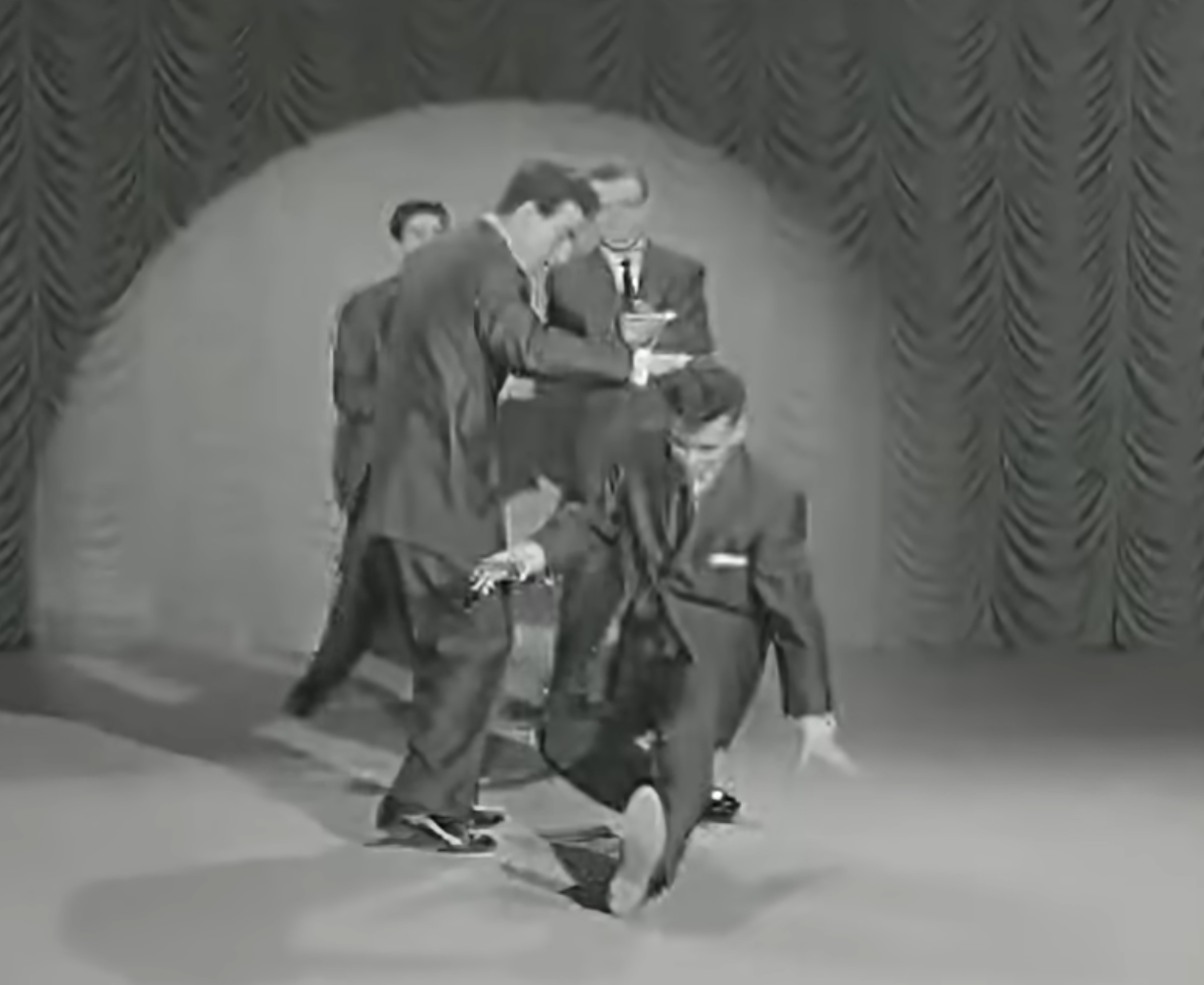
All the cats and chicks can get their kicks at the hop, 1958
The leading right hand melody in the catchy intro to Danny & the Junior’s 1958 No. 1 hit “At the Hop” capitalizes on the sudden pop construction of the left hand accompaniment: A modified blues scale that stops short of reaching the traditional flatted (bluesy) VII note and instead descends from the VI back to the V. That right hand? It goes all in on ascension, soaring octaves: D up to D, E up to E, F# up to F# all as the sad-to-glad alteration below locks in.
These climbing right hand sprints not only echo the glee club rewrite of the altered R&B left hand (presumably for a “broader” audience), but also create some wonderful tension. In forsaking the blue VII note, the modified left-hand scale teeters between the V and the VI into a descending line that eventually lands back on the III. This pulls the song in the opposite direction of the far-reaching melody.
There’s certainly more to this wonderful rock & roll hit than its inciting intro—the internally rhyming teen slang, a deep-cut shout out to calypso, and the full-fledged blues chorus payoff with a flat 3 leading the way. I wrote about all of that in a wordy 2021 essay.
But as I continue to obsess over my piano set [I’m All Lost In, #104, 10/12/25], I spent this week working on Danny & the Junior’s expansive minor ode to the octave.
3) A Book about Alcaraz and Sinner
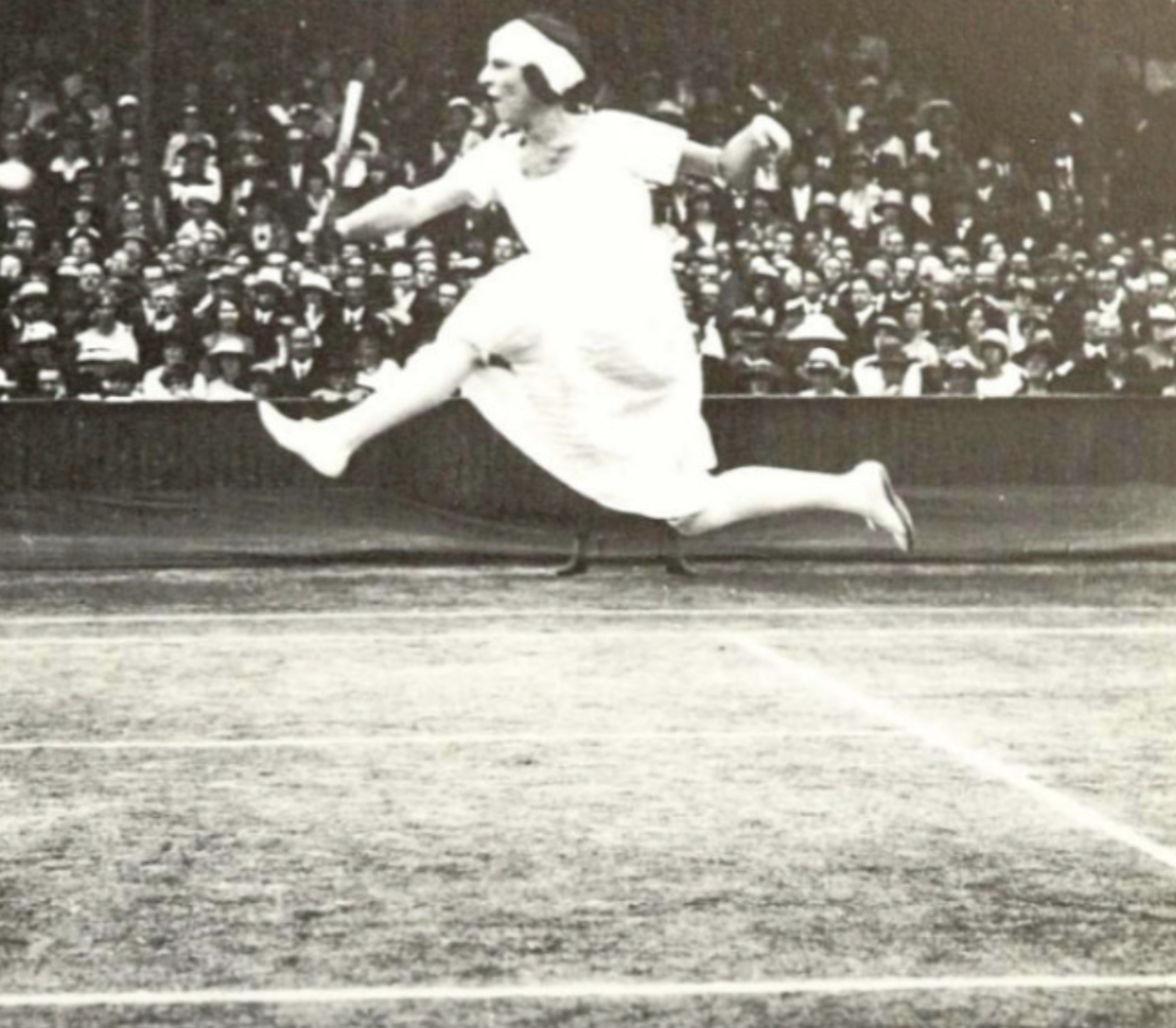
Suzanne Lenglen, circa 1925
My favorite 2025 read was a 1988 dual biography I read at the beginning of the year about the two dominant female tennis stars of the 1920s, Suzanne Lenglen and Helen Wills: The Goddess and the American Girl, The Story of Suzanne Lenglen and Helen Wills by Larry Engelmann [I’m All Lost In, #76, 3/28/25.]
I’m Team Lenglen, or, in sync with the title of Engelmann’s book, Team Goddess. And—as the book reports, Lenglen wore streaming head bandeaus on court and sneaked sips of cognac before monumental points. She won Wimbledon six times between 1919 and 1925.
In what turns out to be some unplanned year-end bookend symmetry, this week I’m reading a dual biography of the dominant male tennis stars of the 2020s, Carlos Alcaraz and Jannik Sinner: Changeover: A Young Rivalry and a New Era of Men’s Tennis by Giri Nathan. I think I passed Nathan hawking his book on the boardwalk runway up to the Billie Jean King Tennis Center when I alighted the 7 train and joined my pals Dave and Lee for the first night of the U.S. Open in late August [I’m All Lost In, #98, 8/31/25.]
However, it wasn’t until last week when I settled in with Changeover on audiobook that I got interested. Nathan writes in the colloquial chatty tone of a Substack sports writer—”And then yet another generation emerged. Surely, this would be the one to break the spell? Reader, it would not…” he says about another crop of players who can’t dislodge the Big Three, Roger Federer, Rafael Nadal, and Novak Djokovic. But Nathan’s also in the habit of turning excellent phrases. I like this pretty one about the San Jacinto mountain range as seen from the stands at Indian Wells: “Dark and crumbly, like piles of cocoa powder.” Or this about Sinner: “[He] has perfect timing like a singer might have perfect pitch.”
Wanting to hold on to Nathan’s fine descriptions—”He might get fixated on ideas that amuse him but do not win him points,” he says hyper accurately of Alcaraz—I switched from the audiobook to the hard copy midweek. Now, I can savor and underline.
I flagged these lines as a potential epigraph for some unknown poetry collection: “Never watch highlights, which perverts the reality of the tennis match, reducing it to its flashiest moments. Always watch at least one full set.”
I haven’t yet finished Nathan’s book on these promising young stars in medias res. I’m on Chapter 5. I guess we’ll all eventually find out how their story ends.