I’m All Lost In, #122: A cyberpunk classic; a directorial debut; and garbage TV.
Before I get to this atypical all-movies & TV version of my weekly obsessions list, here’s the latest in X > (is greater than) Y.
Alleys > Streets
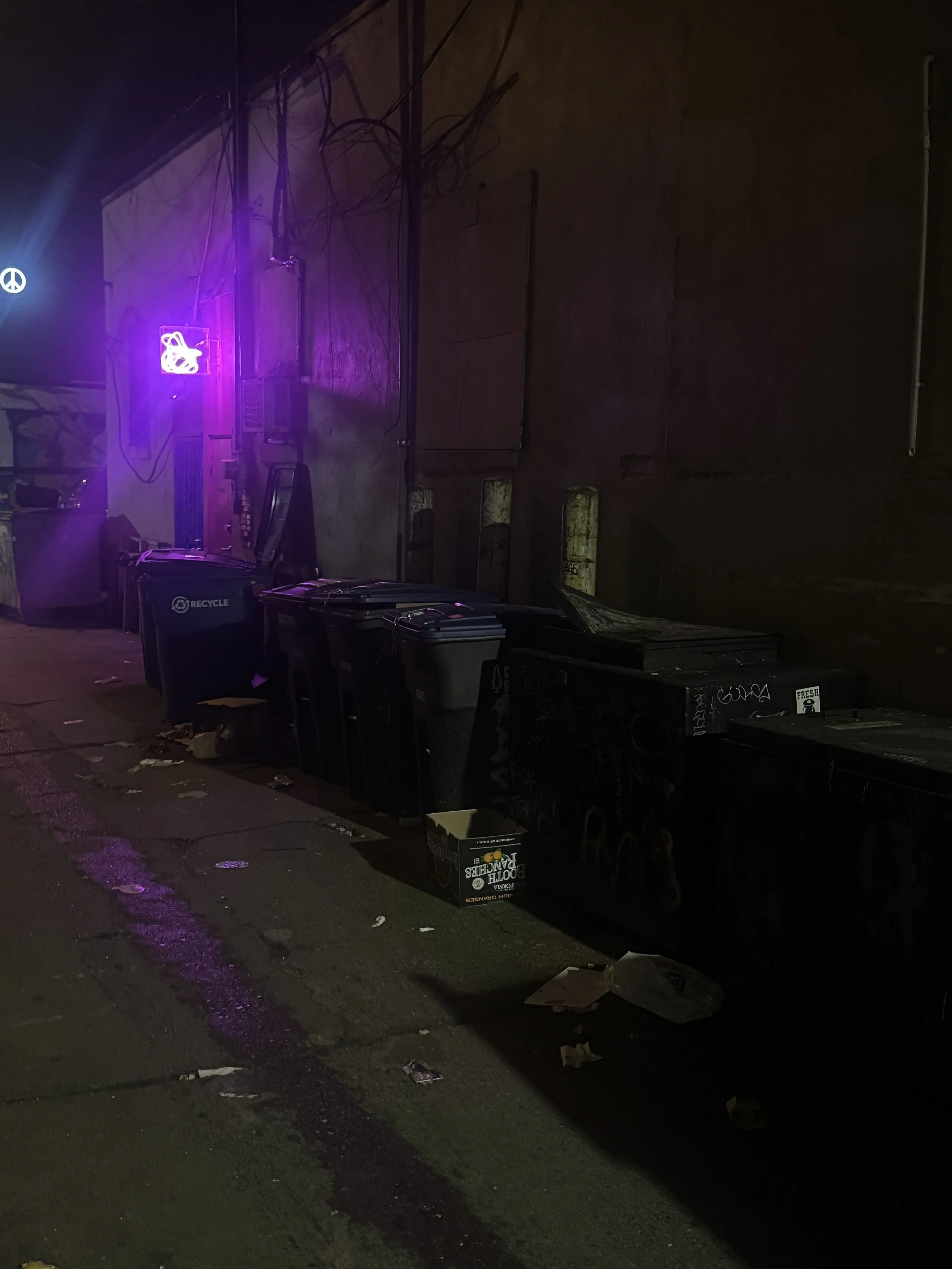
The alley off Mercer St. between 1st Ave. N. and Queen Ann Ave. N., 2/10/26
I had just spent two hours immersed in New Port City circa 2029, aka near-future Tokyo as envisioned by the 1995 cyberpunk classic Ghost in the Shell. No wonder coming upon Rich Rich, a downtempo bar located off Mercer St. and tucked in an alley between 1st & Queen Anne Ave. N., made me feel like I’d been transported to Tokyo’s legendary, narrow backstreets of misadventure and black-market commerce.
This new, small-scale and dimly-lit night spot seems more aligned with flamboyant fishbowl cocktails than with film noir and whiskey neat, but marked by a tawdry splash of pink neon tubing hanging over a weathered door and trash cans, this is the kind of clandestine hideaway Seattle needs more of.
I’ve never been to Tokyo, but I experienced some divine alley culture when I went to Istanbul more than a decade ago. Pioneer Square tries, but I’m still waiting for Seattle to activate its alleys. Rich Rich is a promising and unassuming start.
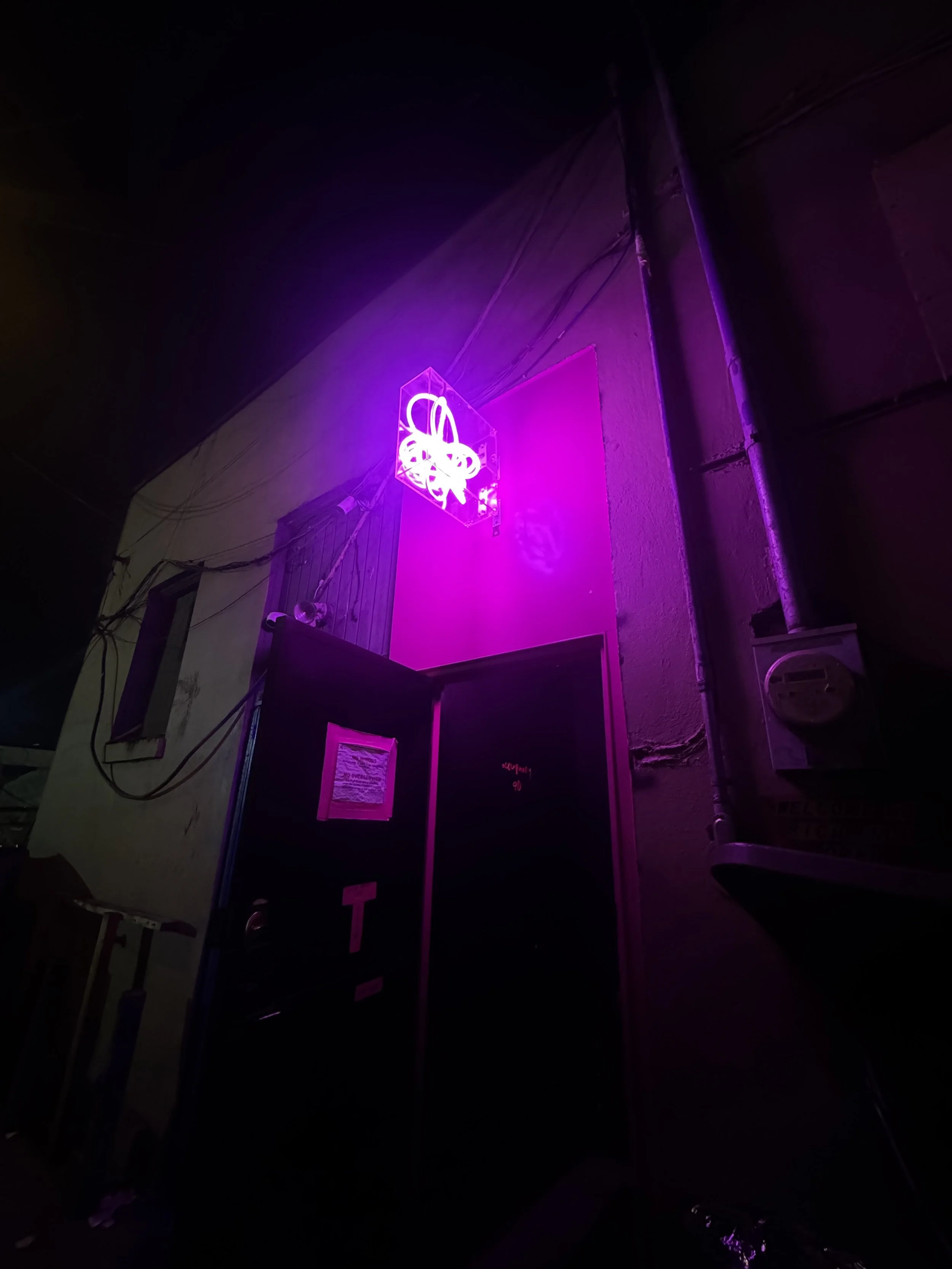
Back again, 2/12/26
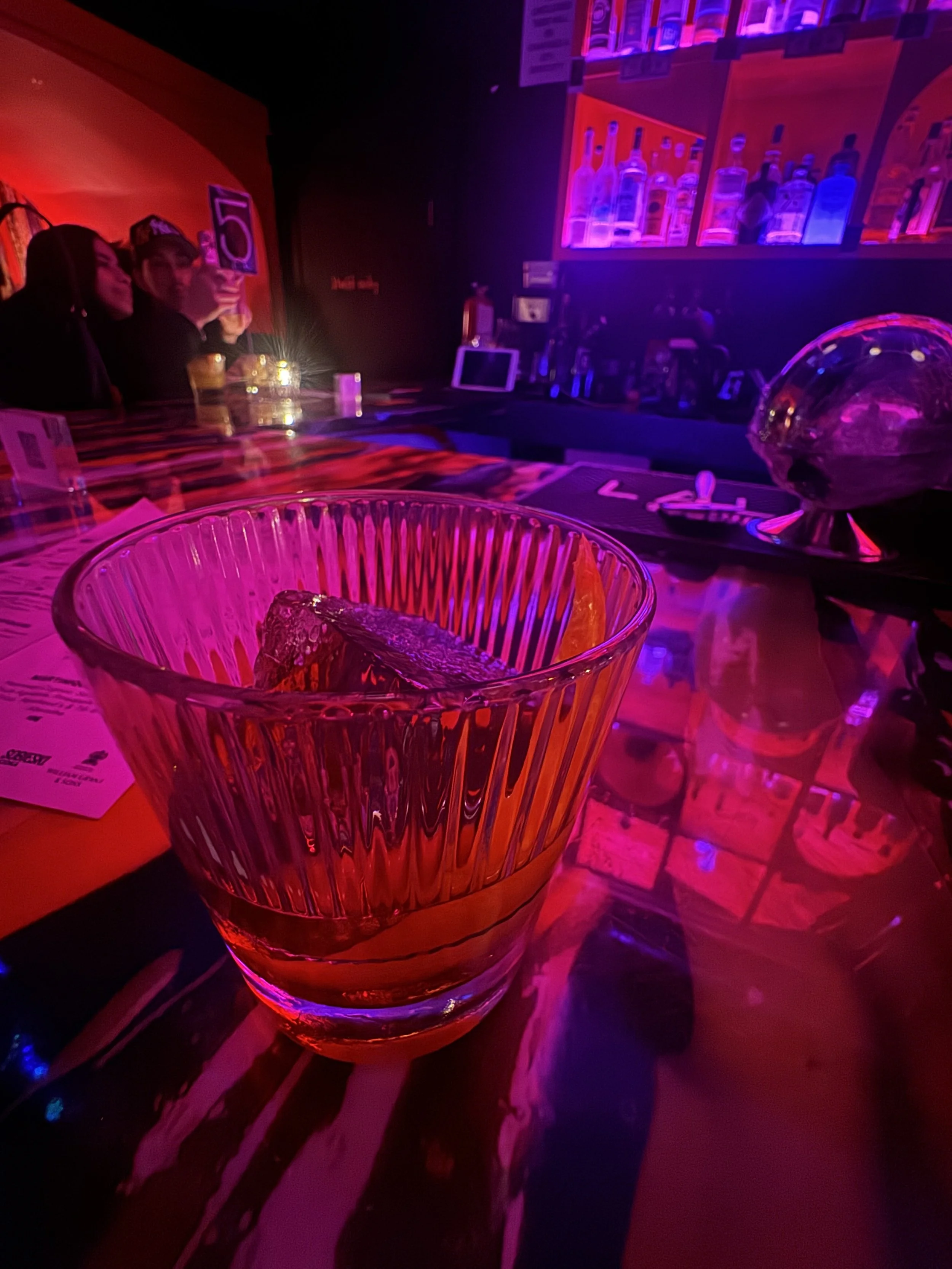
Rich Rich, 2/12/26
Turning Off Smart Features in Gmail > Leaving it on as the Default
You can get rid of those Gemini gmail summaries by going into your settings and unchecking “Smart Features.” I committed this minor act of resistance on Tuesday after yet another A.I. summary sneaked into my life trying to be a surrogate for actual engagement.
When you disconnect from these dumb dispatches it feels like that moment when the crying baby on your flight finally falls asleep.
Custard Pies > Fruit Pies
That’s always been my preference. Malty pumpkin over sticky apple at Thanksgiving, for example.
And it was sweet bean pie at XDX’s on Saturday night.

Sweet Bean Pie from classic Seattle bakery Baked from the Hart, 2/7/26
You could also title this item: Staying In, Eating Pie, and Falling Asleep on the Couch > Going Out; we were supposed to go to the LSDXOXO show at Substation.
XDX bought the pie earlier in the day at Baked from the Hart, a South Seattle cafe on MLK Way located a block from the Mt. Baker light rail station. This legendary local business—it’s been around since 1971—is owned by Seattle’s premier pie-maker Bill Hart.
….
Okay, prompted by an unprecedented streak of movie theater outings, it’s time for this week’s list of obsessions.
Going to movies used to be a mainstay of my existence. Until about 15 years ago. Does anyone go to the movie theater anymore? Yes. But not nearly as much as they used to. And I’m certainly part of the 20% decline in attendance that’s happening in the 2020s. It was actually back in 2010 or 2011 that I decided movies weren’t relevant anymore. That they’d become remote, like jazz. I don’t watch them at home much either. And similarly, despite the days of prestige TV, I also don’t binge on shows. After overexposure to the tube during my 1970s childhood, I ran screaming from TV in the early 1980s.
There are recent exceptions. Like the super trashy HULU drama Tell Me Lies and the omnipresent The Bear [I’m All Lost In, #64, 1/4/25 & I’m All Lost In, #39, 7/11/24.] And in the last 10 days, I hit all three SIFF Cinema locations, going to movies at: Cinerama downtown (I saw current Academy-Award-Best-Picture nominee The Secret Agent); SIFF Uptown in Queen Anne (I saw 1995’s Ghost in the Shell); and SIFF Center at Seattle Center (I saw an arty new release, The Chronology of Water). I also binged on a TV show (The Summer I Turned Pretty) at my apartment.
1) Ghost in the Shell
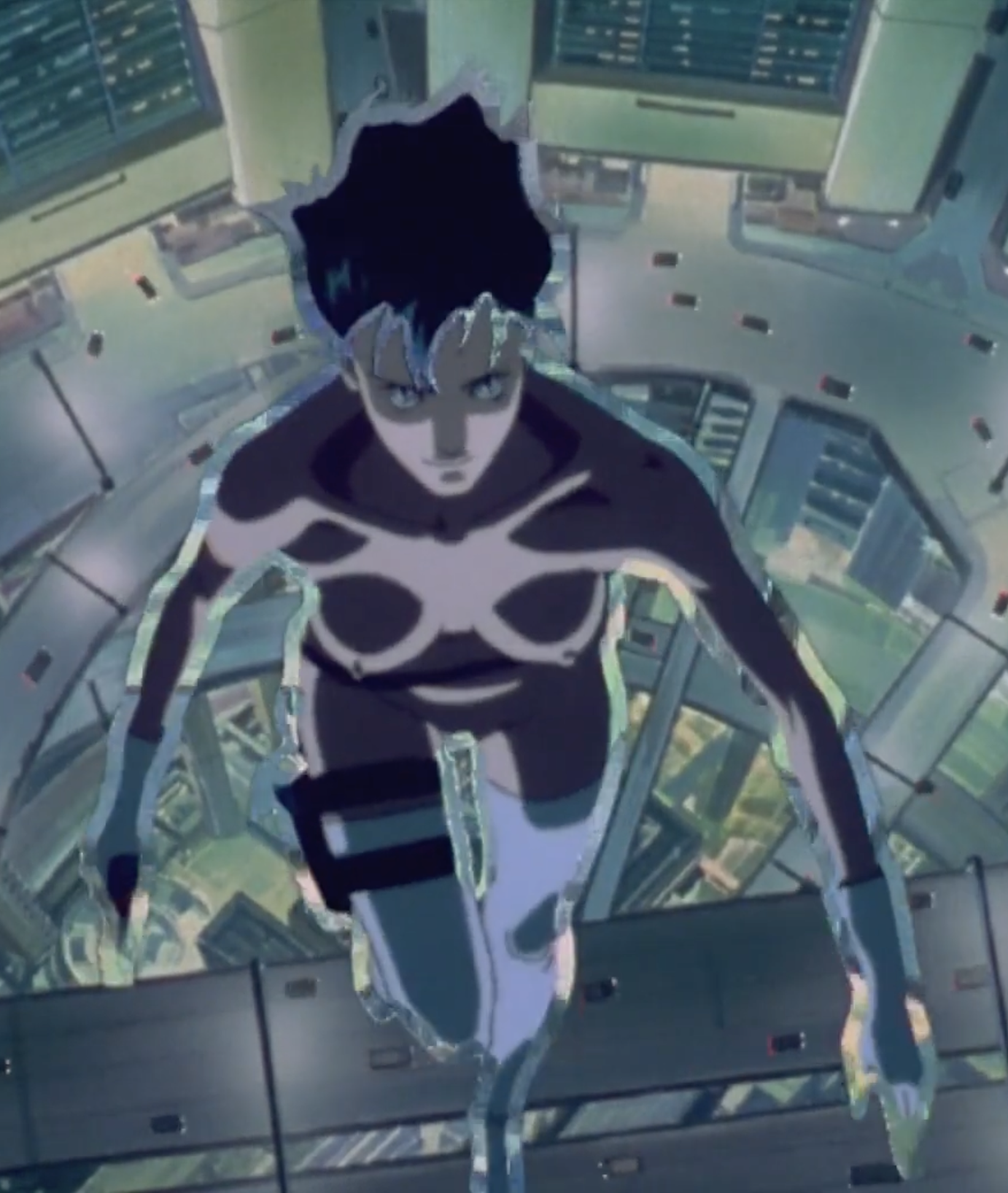
Cyborg Motoko Kusanagi in Mamoru Oshii’s anime classic, Ghost in the Shell, 1995
As I said, I was immersed in Ghost In the Shell, anime filmmaker Mamoru Oshii’s 1995 tour de force rendition of the late 1980s cyberpunk manga series by Masamune Shirow.
Thank You to SIFF Uptown’s Tuesday night theatrical screening for said immersive experience. Their big screen showcased the film’s maximalist but somehow subdued dystopian canvasses along with its avant-garde soundtrack—an eerie score of somber Gregorian arias for the hip hop era.
The panel discussion afterward emphasized the movie’s influence on subsequent films like the Matrix, Avatar, Ex-Machina, Her, as well as its prescience on today’s hot topics like LLMs, A.I, and pre-programmed identity. Check.
But I see the movie as a culmination of earlier and similar 20th century obsessions about techno-fascism, robotics, cybernetics, transnational corporatism, and—as voiced in 1940s hard-boiled detective narratives—existentialism.
I’m thinking a little bit about Fritz Lang’s 1927 demagogue-android epic Metropolis.
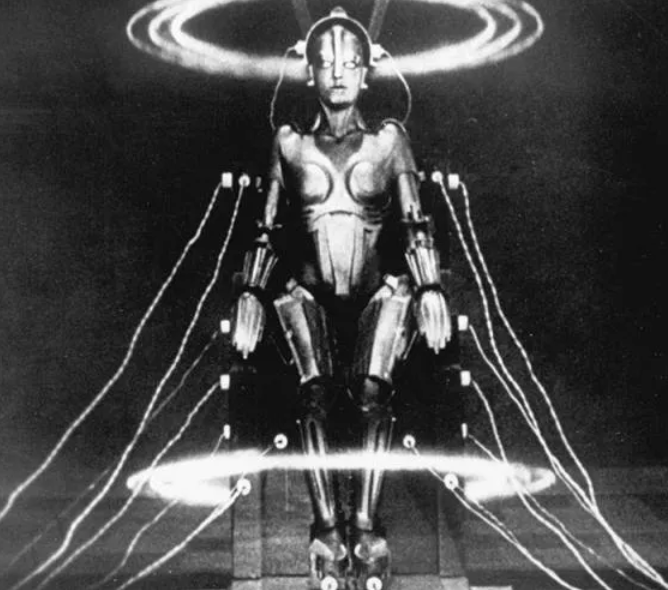
Fritz Lang’s diabolical Android in 1927’s Metropolis
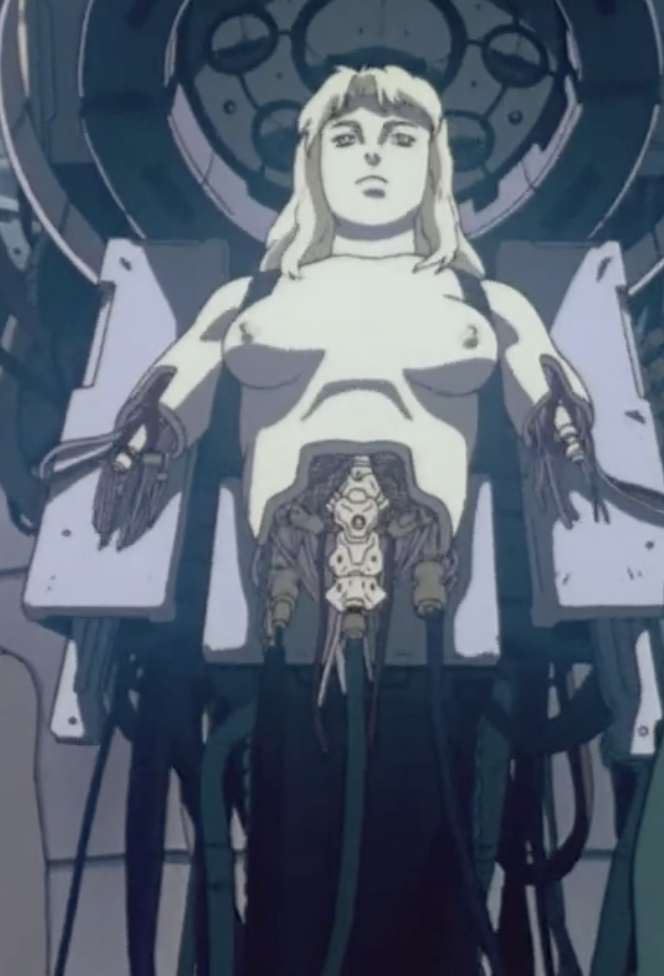
Mamoru Oshii’s Puppet Master A.I. in 1995’s Ghost in the Shell
There’s also Philip K. Dick’s philosophical 1968 novel Do Androids Dream of Electric Sheep; credit to Ridley Scott’s Blade Runner, the 1982 film version, for bringing PKD’s gaudy and sullen urbanism to the fore.
But mostly, I’m thinking of William Gibson’s 1984 novel Neuromancer. Much like Ghost in the Shell, Gibson’s masterpiece confronts the calculus of merging A.I.’s. Both stories also present their lofty questions about technology in rainy metropolis landscapes where the masses are caught in a violent crossfire between deceptive governments, megacorps, A.I.s, and underworld criminals.
Most important, the mercenary protagonists in both Neuromancer and Ghost in the Shell, hustler/hacker Case and cyborg Motoko Kusanagi, respectively, play the role of angst-ridden humanist envoys in these corrupt worlds. Ghost in the Shell’s Motoko is, in fact, an amalgam of Neuromancer’s main character Case, Case’s bionic-“razorgirl”-assassin compatriot Molly, and the novel’s eponymous A.I. itself. This may be where Ghost In the Shell’s brilliance lies: Making its protagonist Motoko Kusanagi the embodiment of questions about consciousness rather than merely facing technology’s spooky evolution as a witness.
Ghost in the Shell is breathtaking. Watching it made me feel joyous about being a human being. Not because of Motoko’s cyborg conundrum. More: I was thrilled that a magnum opus like this existed in its own right, captured on film as proof of human artistry. As I watched each frame shimmy and morph, I pictured thousands of paintings contained in one dusty film canister. I took comfort imagining someone unearthing it in the future.
More data to enter into the A.I. processors.
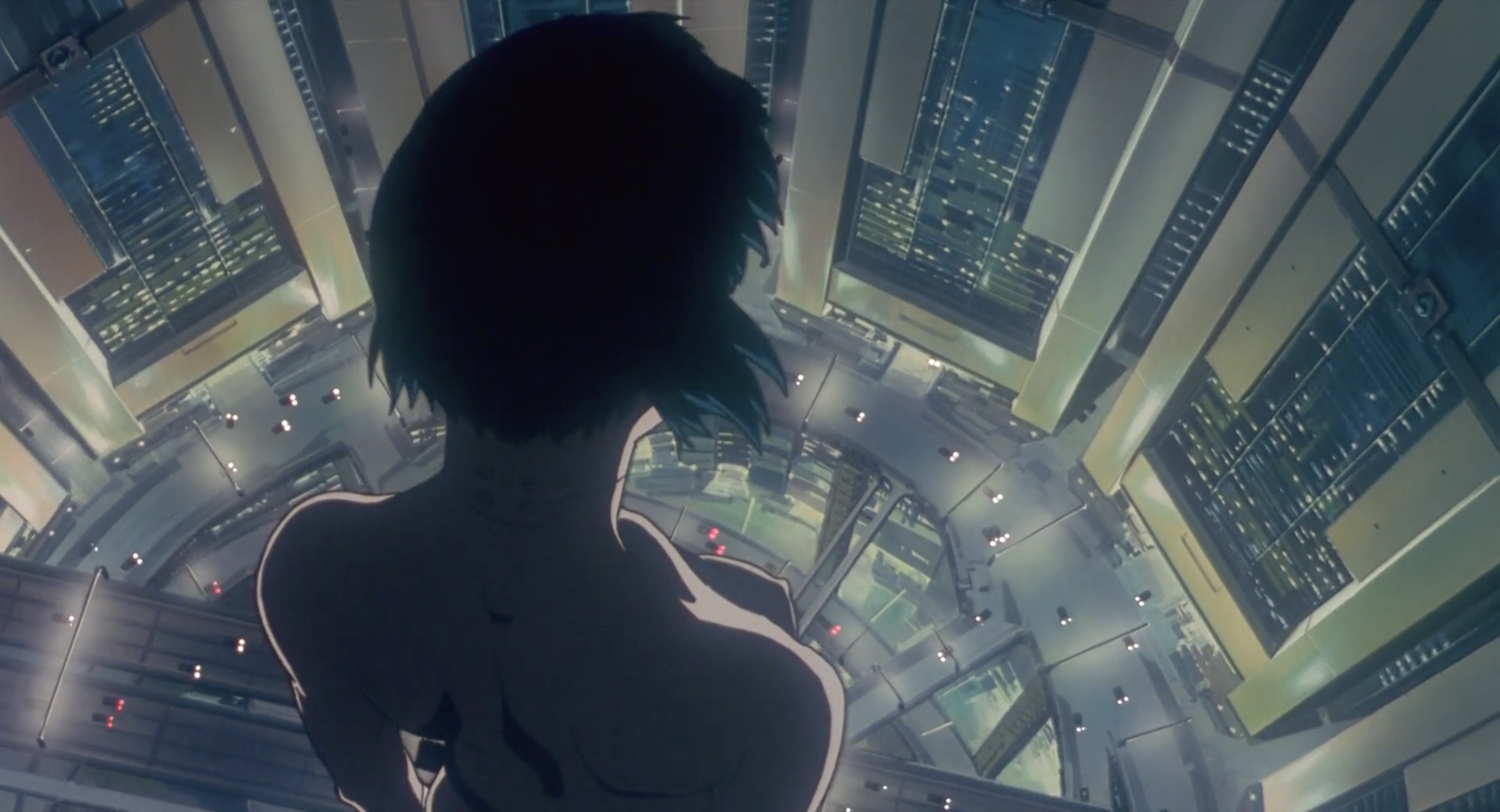
Motoko Kusanagi approaches her assassin skydive.
2) The Chronology of Water
The Chronology of Water, Kristen Stewart’s directorial debut (yes, the Twilight Kristen Stewart), premiered at the Cannes Film Festival in May 2025 where it got a 6-plus minute standing ovation. Nearly a year later, the movie is finally in wide release. I saw it on Thursday night at SIFF Center with my film aficionado pal Annie.
Like Ghost in the Shell, it also harks back. Specifically to the trippy intro of 1969’s Midnight Cowboy. But whereas director John Schlesinger’s flickering montage of past traumas serves as a brief backstory prologue (with occasional flashbacks throughout the rest of the film), Stewart’s lysergic-pastiche-mode of story telling (and nightmarish close ups) works as the film’s main narrative MO.
The film is based on writer Lidia Yuknavitch’s 2011 memoir about her monstrous father, her escape into competitive swimming, her alcoholism, her precarious marriage (Lidia’s the monster now), and her redemption as a writer. Watching these nonlinear snippets collide in Stewart’s stream-of-consciousness narrative seems akin to how Gen Z experiences pop music history in the streaming era: As separate items that coexist on one platform. Donna Summer, Charlie XCX, Ella Fitzgerald, James Blake exist simultaneously.
New Yorker film critic Richard Brody points out how Stewart’s apparent free-for-all represents the opposite of freedom (ha, maybe like Spotify’s algorithm) and thus becomes a powerful metaphor to Yuknavitch’s trauma:
The Chronology of Water compresses the overflowing story of Lidia’s turbulent life into aphoristic flashes and lyrical outpourings. The leaps in time have the eerie effect of effacing time—the layered succession of images implying their simultaneity in Lidia’s mind. Stewart’s method of memory leaps suggests that a storehouse of memories is, essentially, simultaneous, with no fixed sequence beside the deep grooves of connection cut in the mind by the inescapable force of emotion. The movie’s remarkable approach to memory presents it as the opposite of free association—call it compulsory association, the suppression of freedom by the power of ingrained and imposed patterns.
I was riveted by Stewart’s REM-sleep approach to plot. It took 10 minutes or so, but after I synced up with the dreamlike cadence I felt like I’d learned a new language. I almost turned to Annie to declare that Chronology of Water was important cinema and unapologetically great.
But a moment later, almost as if on cue, the movie settled into a more traditional mode. This shift, about a third of the way into the film, coincided with the movie’s sudden and overblown (and generic) tale of artistic angst and genius. Perfectly, this uninspired section focused on bloviating counterculture bro Ken Kesey. (Yuknavitch studied with Kesey at the University of Oregon in the late 1980s.) The Chronology of Water never got its flow back.
I’m inclined to agree with the New Yorker’s Brody, who called the movie an “an Extraordinary Directorial Debut” while concluding: “Stewart’s adaptation, for all its ingenuity and audacity, falls short of transformation.”
3) Season 3: The Summer I Turned Pretty
I imagine my earlier outburst about movies (no longer relevant) and TV (I don’t watch) marks me as a snob. But here I am binge watching this sappy teen drama.
Worse than sappy, I should say. The retrograde gender stereotypes aren’t merely prevalent in this script, they write it.
No matter. I’m hooked. I’ve been watching Season 3 all week, invariably siding with one stock character over another in college junior Isabel “Belly” Conklin’s comfy, corny coming-of-age story.
As the banal soap opera unfolds you’ll never take her boring boyfriend’s side and probably always agree with Belly’s smart, smart-aleck, and slightly prim but teen-hearted mom.
…By the way, The Secret Agent was fine. Maybe too long. I hope it wins the Oscar for best picture.