
I’m All Lost In, #115: Aries Spears on reels; Paisley Rekdal on poetry; live jazz in Seattle.
I’m All Lost In…
the 3 things I’m obsessing about THIS week.
#115
1) Comedian Aries Spears
Last Friday evening, I bought a hot cocoa at the yuppie market downstairs from my apartment. They served it to me cold. This was yet another metaphor about my Charlie Brown holiday season.
In another sad sack scene: On Xmas Eve, I was in my apartment scrolling through Facebook reels.
Silver lining, though. I came across a comedian named Aries Spears.
And because I kept pausing whenever his devious crowd-work repartee appeared on my screen, the algorithm perked up and started rewarding me with a parade of his hilarious clips. In turn, some belly-laugh Aries Spears’ monologues lightened my holidays.
Here’s what taps on my funny bone: Confusing situations that become increasingly unclear as successive comedic counterfactuals unfold. Spears seems to divine these moments by directing the house lights onto rogue members of the audience. His escalating bafflement at these cuckoo characters echoes his comic timing as he proceeds to tie it all up in silly string.

Comedian Aries Spears turns bafflement into belly laughs.
When one unintelligible guy in the crowd tried to clarify his non sequitur outburst about “crack to the black jack” with an even more inscrutable bit of refrigerator poetry (calling out to say: “Sky to the sea!”), Spears went into an extended monologue, spoofing the dude for his apparent “cocaine smoothies” habit.
Happy New Year to me: Spears, who apparently has a podcast called Spears & Steinberg: The Jew and The Jerk, is coming to Seattle’s Emerald City Comedy Club in April.
Rather than scrolling on my laptop, I will be at the comedy club this spring.
2) Poet and Poetry Professor Paisley Rekdal
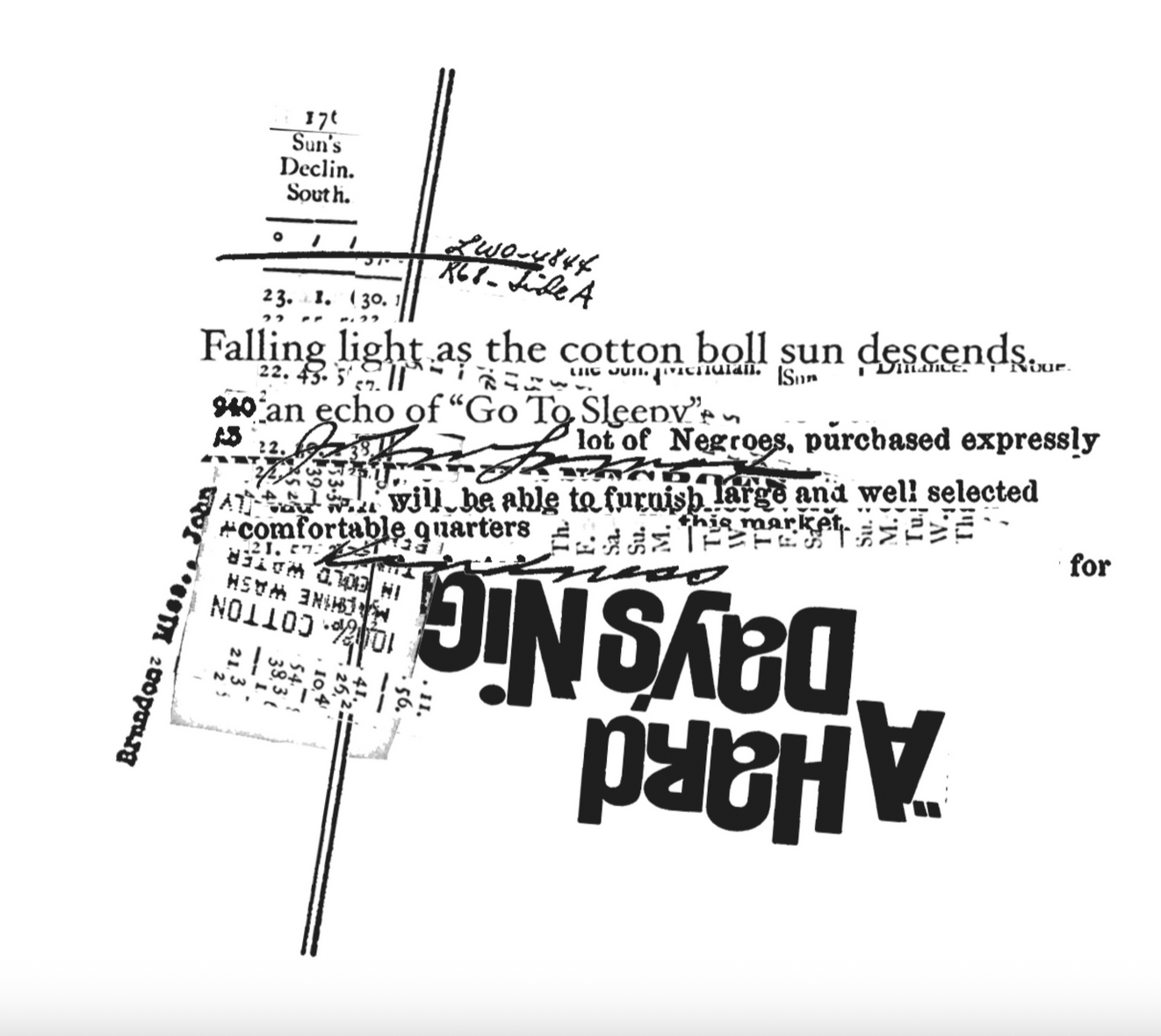
What the hell am I supposed to make of this poem by Douglas Kearney?
Or this one by Scott Helmes?
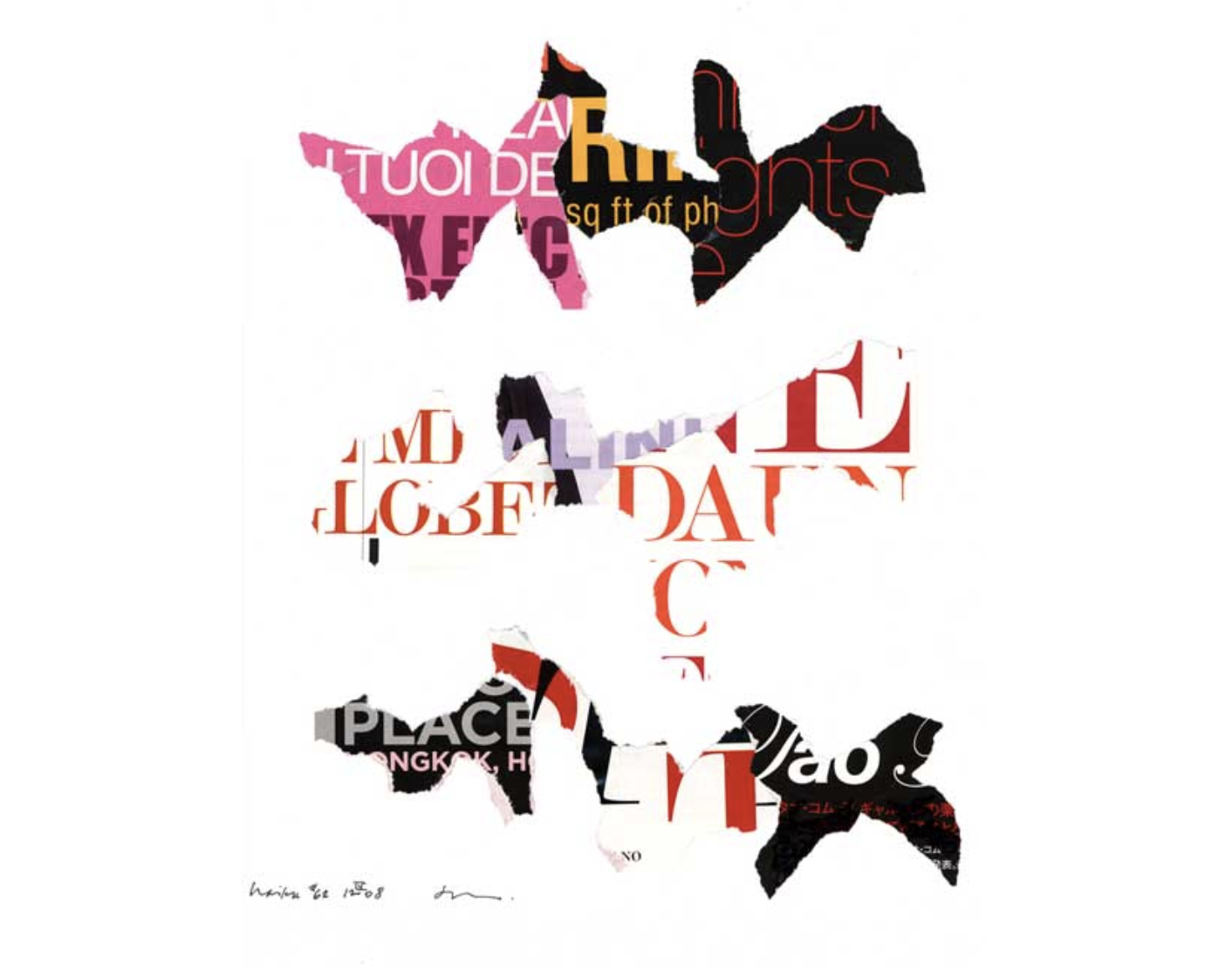
Thankfully, university poetry professor and distinguished poet in her own right Paisley Rekdal suggests some questions that may help:
How does your eye move around the page? What is legible and what isn’t? What differences in typefaces do you notice? Is there any relationship between the shape of the poem and what is being said? How does the title influence what you see? The titles, by the way, are: Falling Dark at the Quarters and haiku #62, respectively.
This cross examination comes at the end of chapter one in Rekdal’s fun 2024 poetry primer: Real Toads, Imaginary Gardens. On Reading and Writing Poetry Forensically. It’s a clear yet free-form workbook that recommends a series of experiments and questions, like the ones above, that readers should direct at the discrete fundamentals of poetic craft.
With a chapter dedicated to each fundamental—including imagery, syntax, rhythm, and formal conventions—Rekdal sets out to show how a poem “accrues meaning through the intersection of these identifiable elements.”
Preferring readers to focus on how a poem works as opposed to what it means, she writes: “Rather than taking in the whole of [a poem] at once, start with an image, or a particular phrase, or a specifically noteworthy rhyme. From there, move outward.”
Each chapter also includes Rekdal’s own example interpretations. For instance, there’s Rekdal’s take on Carol Ann Duffy’s Warming Her Pearls—where she interrogates the narrator’s motives in order to draw out the significance of stand-out phrases and words.
“You might first characterize the maid [the narrator] as passive,” Rekdal writes of Warming Her Pearls. “But notice that many of her fantasies suggest the mistress reciprocates her interest” as the Lady finds herself “puzzled” by her own distraction.
This bit of forensics captures Rekdal practicing what she preaches. She’s doing a close reading based on singular observations as the way to build, rather than receive, meaning. She concludes her advice about “mov[ing] outward,” stating:
This book will, ideally, help you move from the smallest building blocks of a poem to more global concerns of mode and form.
Wonderfully, Rekdal frequently uses that word: “mode.”
I like this analogy to music theory. In a piece of music, you are given the mode in advance. Ionian, the bright major scale, for example. Or Aeolian, the sad minor scale. But according to Rekdal, readers should realize it’s the arrangement of notes in the first place that builds that mode.
3) Live Jazz in Seattle
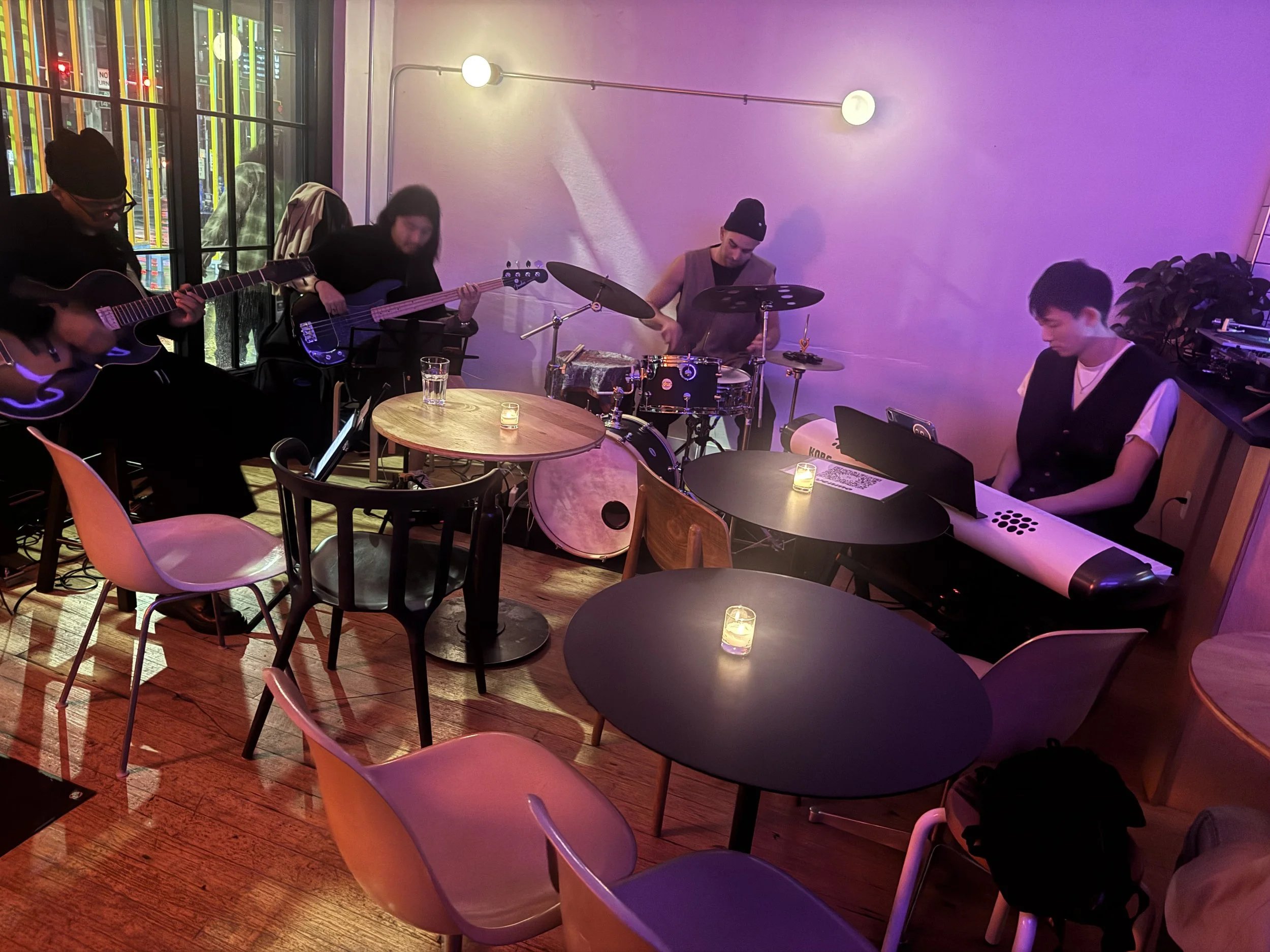
Pocket Theory Jazz at Otherworld wine bar, 12/20/25.
Speaking of musical modes, there were some jazz-friendly scales in action at Otherworld Wine Bar last Saturday night.
Though I mentioned Otherworld as a favorite writing spot back in 2024 [I’m All Lost In, #21, 3/7/24], I’m surprised this cozy place has never merited a full-fledged review in my weekly account. XDX and I started going to this popular hang out for bourgeois-tech youngsters on its opening weekend in the spring of 2023. This was right before our trip to Athens; Otherworld’s eager owner set us up with our Agora tour guide.
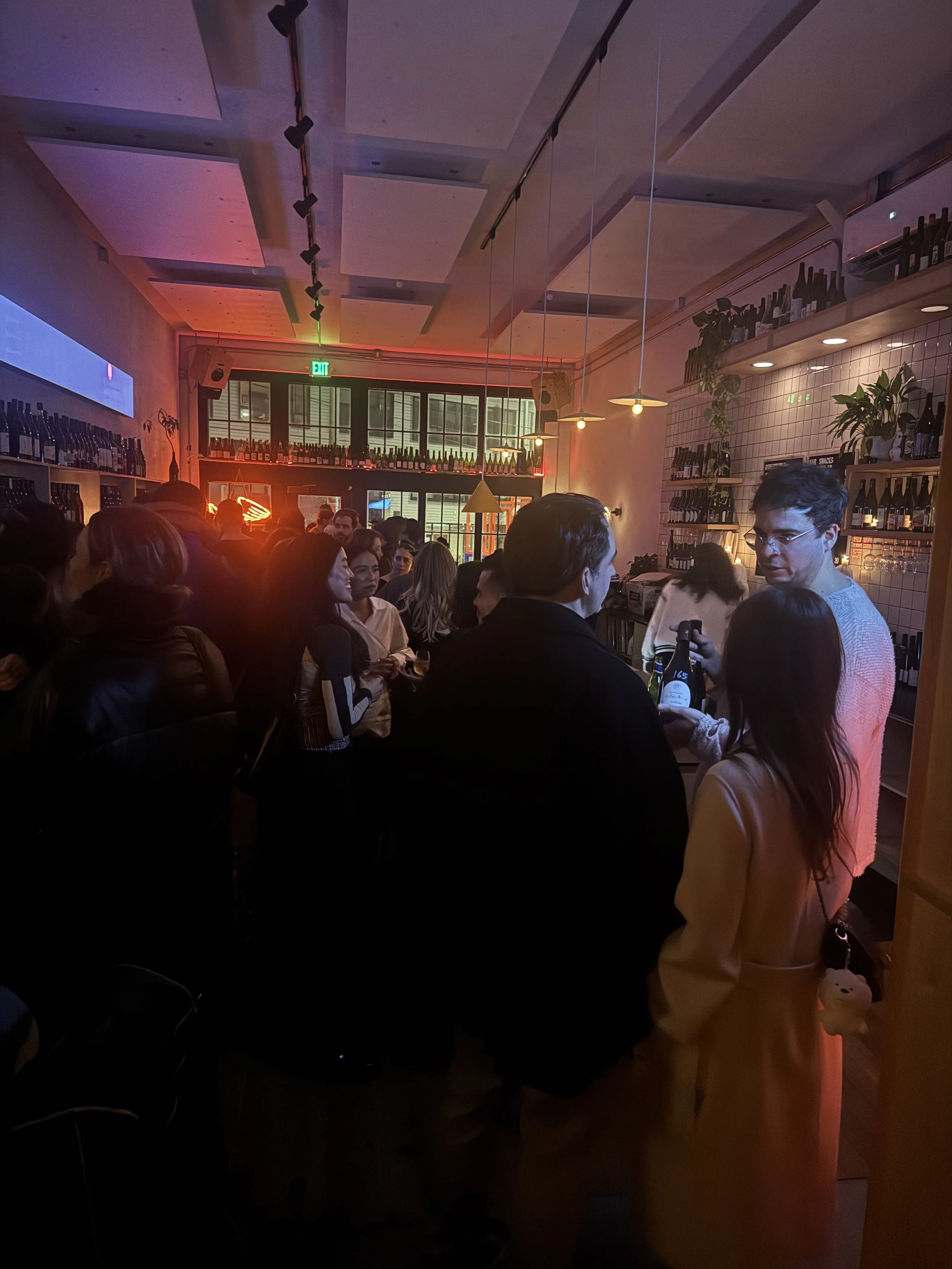
Big crowd at Otherworld wine bar, Seattle, 12/20/25.
That’s a lot of backstory to say: In the last two years, I’ve watched Otherworld blow up into a Capitol Hill neighborhood hit. I typically show up at 6 pm on Fridays. Grab a seat at the empty bar and start writing while watching the place fill up over the course of the next few hours like time-lapsed photography. Standing-room-only. A DJ spinning a set of international grooves, 1970s R &B, and sexy 2025 electronica.
There’s never a cover and nor was there one this past Friday when there was an exciting addition to the Otherworld itinerary. An electric guitar, electric bass, drums, and electric piano-combo plugged in to play some live jazz, setting up in the corner as if Otherworld were a corner bar in NYC.
A young, dedicated fan grabbed the seat next to me, cheering her approval and talking to me about Ethiopian jazz.
The band, more soft bop than Ethiopian jazz to my ear, was called Pocket Theory Jazz. This is a reference to “Playing in the pocket,” the term for locking into a comfortable groove. The band leader, the drummer (the key for playing in the pocket), expanded on the definition. After the band’s solid first set, he announced: “We’re Pocket Theory. In your pocket jazz. You can take it with you.” I thought that was a cool image.
Another image, and one I also took with me: A small room in Seattle, packed with patrons listening to live music.
Support this. Seattle needs more evening's like Otherworld’s jazz night.
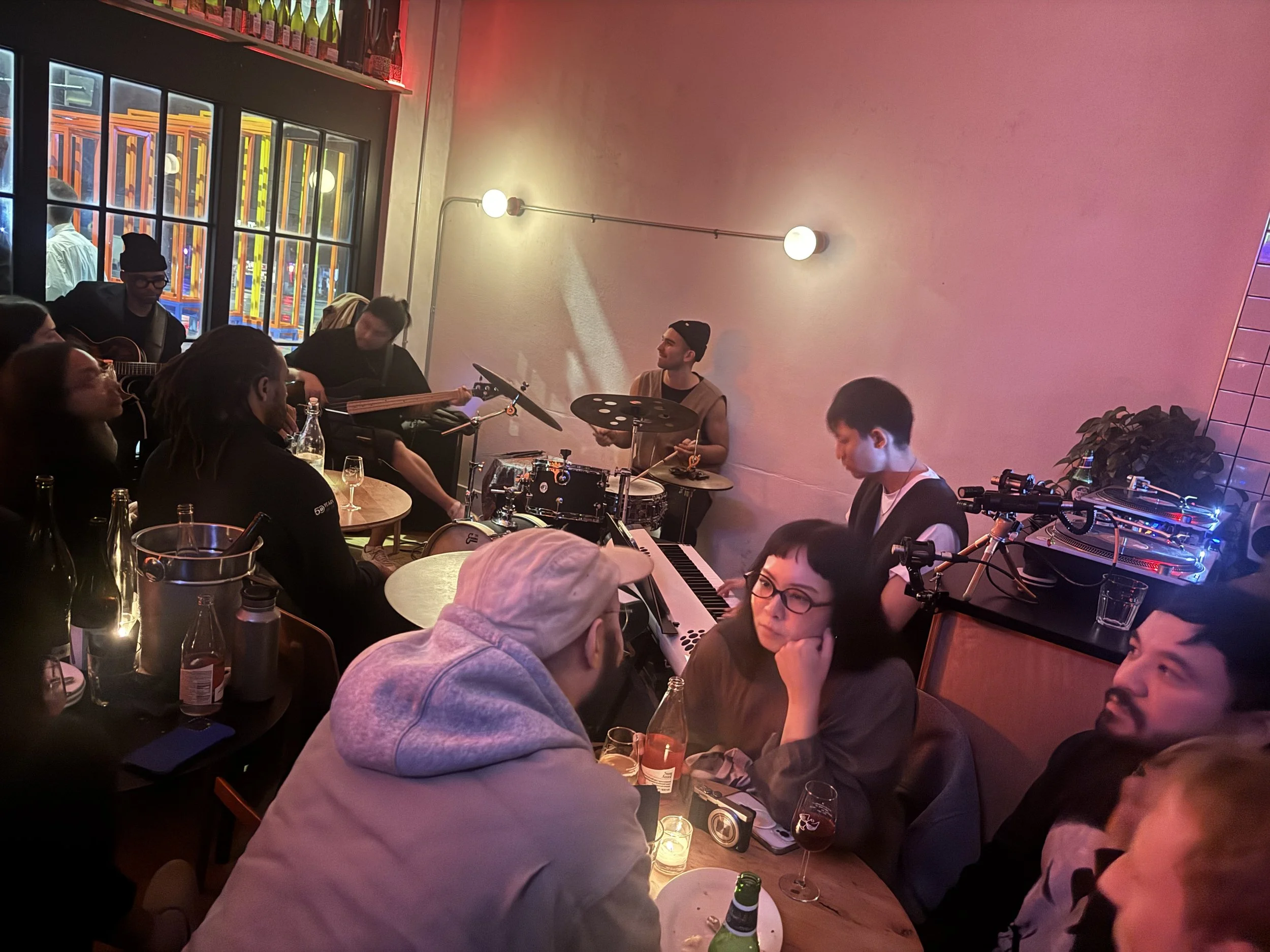
Live jazz at Otherworld, 12/20/25.
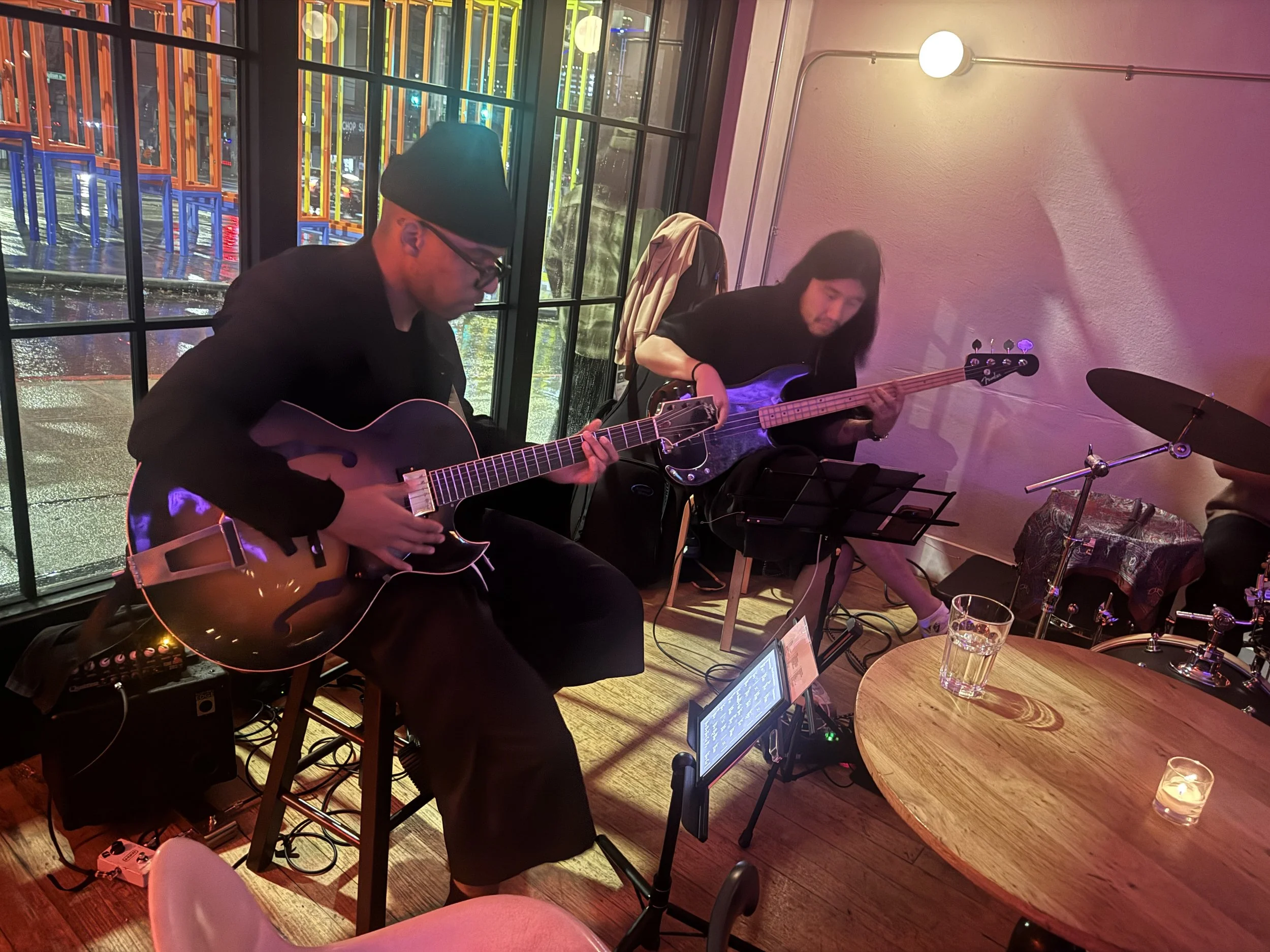
Pocket Theory Jazz at Otherworld, 12/20/25
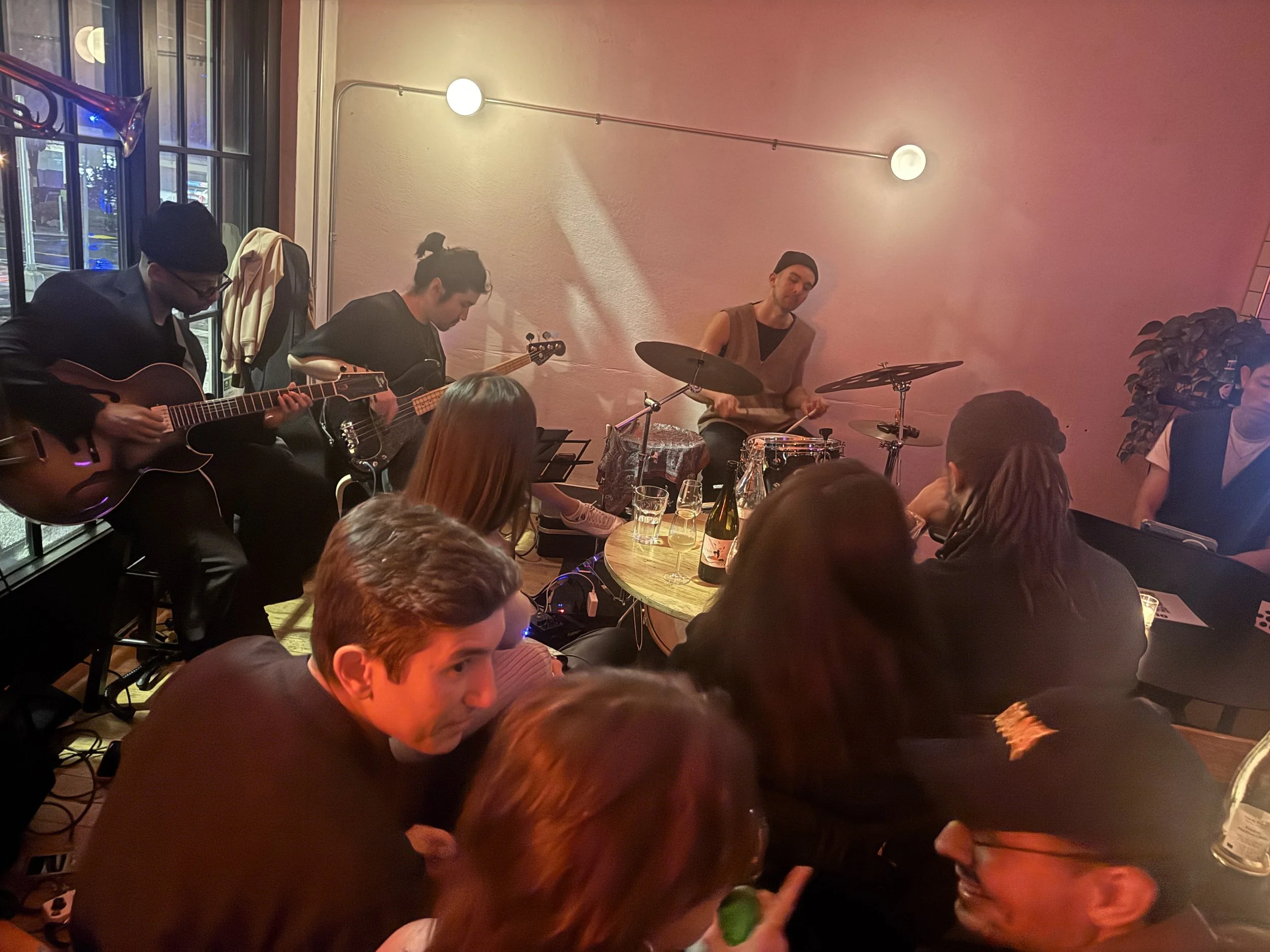
Pocket Theory Jazz at Otherworld, 12/20/25
A closing note: Not an obsession, but something else that diminished the holiday blues this week. A one-and-a-half-hour deep-tissue massage at Belltown’s Urban Calm Spa. I highly recommend the luxury add-ons: the CBD oil and the hot stones finale.